Nowhere in Anthony Trollope’s novels does a woman sleep with a fintech executive and then accept his invitation to strap on a giant dildo. Yet the people and things that preoccupied the 19th-century novelist are everywhere in the BBC’s cult drama, Industry.
The entitled aristocrat frittering away his inheritance and other people’s cash. New money bailing out the old. Corrupted corporations that make their money in places beyond the reach of scrutiny. Clever men who destroy themselves through greed.
Women who use their beauty and intelligence to seize what power they can. Old men trying to get a seat in the Lords. The sneering tribute that vice pays to virtue. And most of all, in this fourth series, fathers who spectacularly fail their children as they pursue money, youth and sex.
Notoriously, there is a lot of sex in Industry. In one of the earlier series, a bloke snorts coke off another man’s bottom and the scene does not even take place in the privacy of a bedroom.
But it would be a mistake to think that Industry is about sex. It is about power and how men and women deploy it. When two or more characters get it on, the encounter is nearly always transactional, and what emerges is the dominance of one and the dependency of the other.
Sometimes the calculation goes entirely wrong. A man pays for sex, but someone else is paying the girl too. That dynamic is at the centre of this series. How much money can you make out of people’s vices? Can you use their weaknesses to destroy them?
The writers cannot have known that just before this series came out, Elon Musk’s AI tool would start offering to create deepfake porn shots from any photo of a woman. If you do not understand how we got here, Industry will help you to grasp the tech mentality that feeds off the juicy flesh of the human attention span. It is no accident that the fintech at the centre of the story is called Tender.
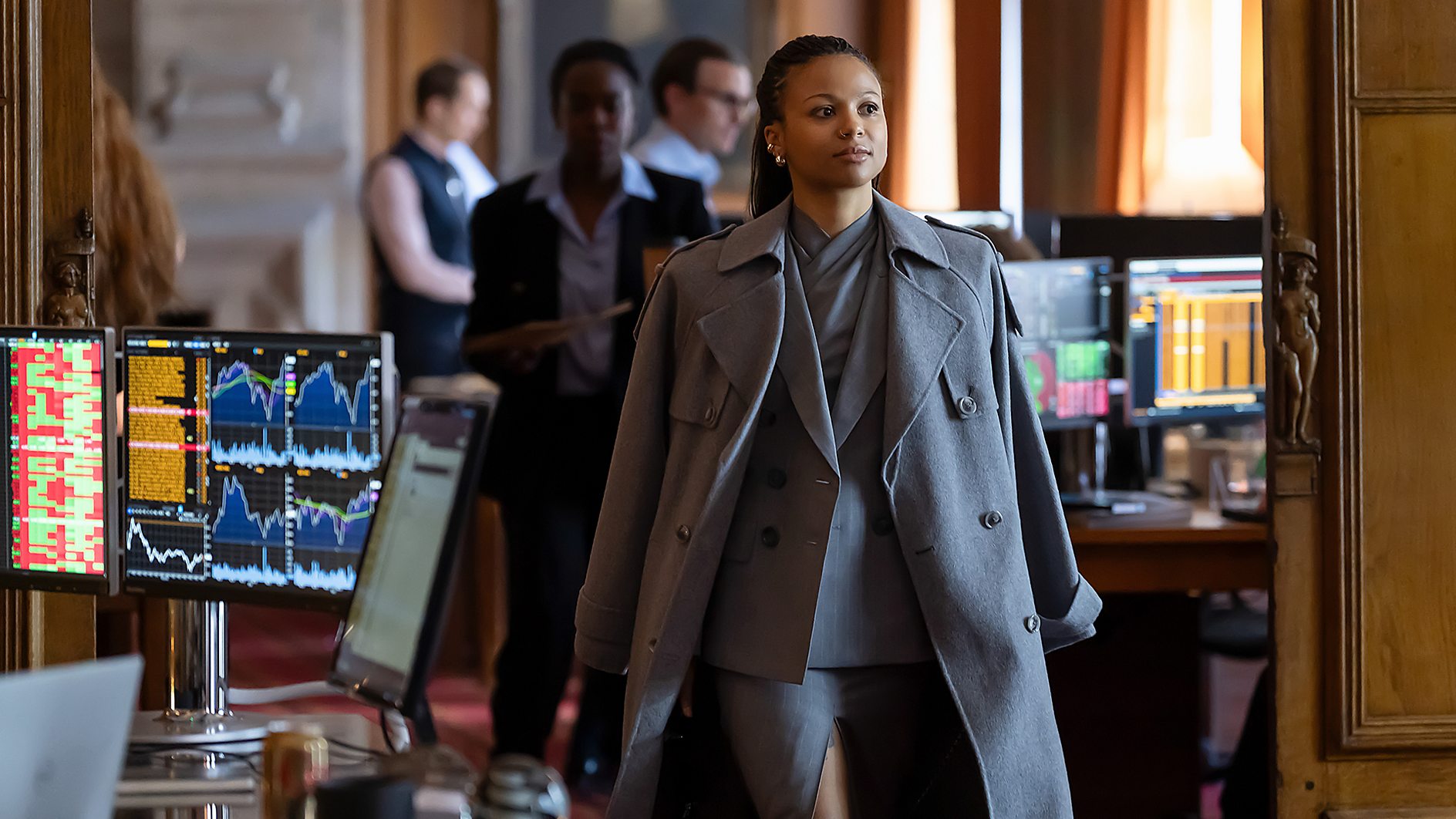
In this series, the Pierpoint investment bank has been taken over by a Middle Eastern bank after the main characters destroyed it. It was not entirely clear how the series could move on from that event. The energy and tension of the trading floor at Pierpoint were utterly compelling, even if you had no idea what any of the jargon meant. The old humiliated the young and the young tried to drive out the old.
Suggested Reading


Prisoner 951 is another drama that shames Britain
Without that stage, Industry was at risk of becoming a show about vile people trying to make money in various incomprehensible ways. Indeed, when Sir Henry Muck (Kit Harington) hits a particularly despicable point at the end of the second episode, it is tempting to just stop watching. The show is cold and repellent, shot in a bluish-grey filter that makes London seem crueller than it is.
And yet the terrible power of Industry is that it pulls you back and forces you to care about the fate of scum like Muck and Rishi Ramdani (who was last seen watching his wife’s brains being blown out over the kitchen table after he failed to pay his drug debts). Just when a character has lost all moral value in our eyes, some small twist gives them a shot at redemption – and here we are again, enthralled.
Although Industry is a hit in America – Myha’la, who plays Harper Stern, says that it is always the first thing LA film executives want to talk to her about – it is also full of pleasingly British detail that only those of us steeped in the class system will understand.
At one point, Harper and Sweetpea have to head north to visit a dubious business location. “Who, what or where is Sunderland?” Shrug: “Sounds cold.” At which the British viewer will seethe: “Sunderland was literally industry! It built the ships that conquered the British empire!… Right. Yeah. I see what you did there.”
Yasmin was an infamous manipulator when she was “at Francis Holland”, an exclusive private girls’ school. Of course she was. Henry messes about in a boat with two other men to the strains of Gilbert and Sullivan’s He Is An Englishman, a song that takes on a special irony.
Naturally, the Trumpian economic order is even more horrible than the old, despite a Labour government that thinks it has a moral compass. “That woke shit no longer moves the needle in this new world,” a peer tells Harper, explaining why black women like her will find it harder to get on. “I accidentally called someone a retard yesterday and you know what, I might do it again.”
The new characters are mostly compelling. Viewers who remember Kiernan Shipka as Sally Draper in Mad Men will realise with a shock that she has grown up and moved on. Amy James-Kelly could be any one of three dozen earnest, ambitious and ineffectual Labour MPs, and is therefore entirely credible. Toheeb Jimoh, who plays a trader, is unusually straightforward and endearing. It can’t last.
The danger, though, is that much more of this will leave us jaded. There is much that is rotten about the British Establishment, and it feels timely for Industry to have introduced a storyline involving the far right. The good-looking quasi-fascist who disapproves of divorce and leaves the soirée before the hookers arrive is a completely plausible invention. But the hints that Tender is under the control of far more powerful forces are taking us away from the drama and into the realms of the spy thriller.
On the other hand, none of it is implausible. Industry used to be shockingly, thrillingly bleak. In 2026, it is somehow fitting that it has become terrifying, too. The people you see in Industry will keep worrying away at your mind. It is an infinitely troubling way to spend eight hours, and that’s the brilliance of it.