
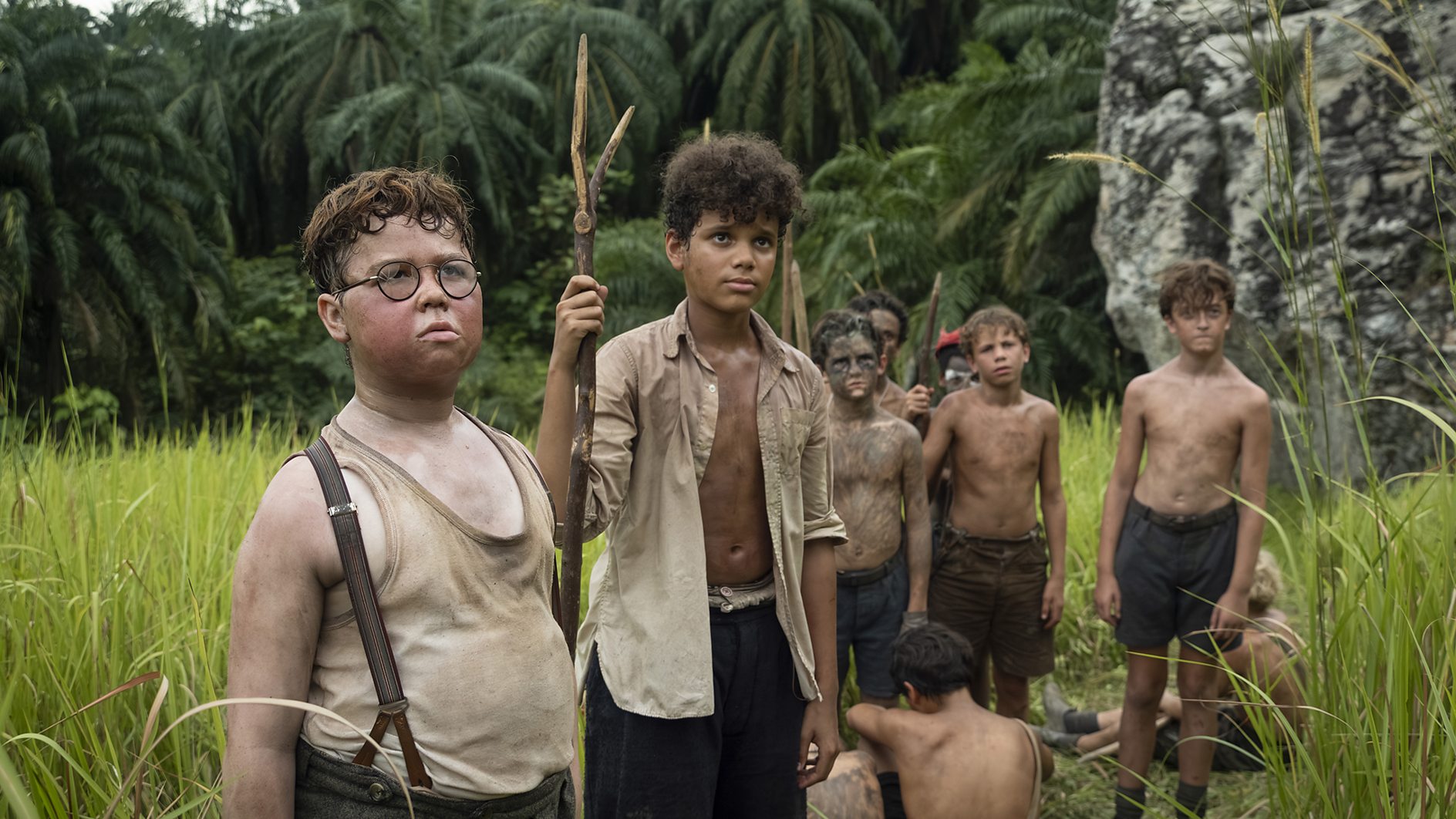
Jack Thorne was the co-writer of Adolescence, the Netflix sensation that alerted millions of parents to the brutal reality of what their sons and daughters were doing on their phones. Now he has adapted Lord of the Flies for the BBC. We are back in the early 1950s. A plane has crashed on an island somewhere in the tropics, with no adult survivors. Mobile phones have not been invented, and the families and schools that kept the boys in check are gone. They are left to their own devices.
We know what William Golding made his boys do. What will Thorne show us about them?
The power of Adolescence was to show us that vulnerability and savagery could not just co-exist but feed off each other in a cycle of fear and revenge. Jamie wanted to act like a man but didn’t know how. Jamie killed a girl. When a female psychologist tried to get him to explain why, he lashed out at her.
There are no girls in Lord of the Flies, of course, just a suitcase belonging to a female flight attendant who disappeared in the crash. One of the boys puts on her petticoat and struts about. The self-appointed leader of the hunters, Jack, observes witheringly that her bra might make a bag for carrying things. He wears a fox-fur as a sort of waistcoat. Jack finds his fellow pupil Simon’s diary and steals it.
This version tells us a lot more about the boys’ history than Golding did – the death of a mother, a choirboy crush. And Thorne shows us how the boys’ memory of their fathers hovers over them, for good or bad. They are proud of them, fear them, despise them, and without them they look to each other for validation.
Piggy’s parents are dead. He is the one who tells stories to the little ‘uns to get them off to sleep.
In the book, Piggy is killed outright by a rock (“His head opened and stuff came out and turned red,” wrote Golding, in the awful, spare language of a child) and washed away by the sea. Thorne has him staggering wounded through the forest with Ralph, who risks his life to fetch him water. Realising he is dying, he soothes him to sleep; and rather than abandoning the body, he buries him.
In earlier flashbacks, we watched him turning down a hunting expedition with his father, preferring to stay with his dying mother. These scenes between Piggy (David McKenna) and Ralph (Winston Sawyers) are almost unbearably tender.
Both are extraordinary, as is Lox Pratt who, although there is much of the Draco Malfoy about him – he plays the role in the forthcoming Harry Potter adaptation – conveys Jack’s pathetic need to prove himself, even as he makes you understand why the rest of the boys decide to ditch Ralph and join his ‘tribe’.
Suggested Reading

Prisoner 951 is another drama that shames Britain
But it is Ike Talbut who is the revelation. In the book, Simon is the uneasy conscience of the island, but Golding gives him very little space to speak. In this version, Jack, Piggy, Ralph and Simon each have an episode following them around the island. It is his first role, and Talbut is astonishingly expressive. Among several gifted young actors, it is his face that holds you.
It is the sight of a boy on the cusp of adolescence trying to understand how Jack, the boy whose company he used to crave, turned from choirboy to killer. In a strange, intimate scene, he smears mud on Jack’s face to prepare him for the pig hunt.
Thorne never labours it, but with time, Golding’s story has taken on a resonance it probably lacked in 1954. When they are finally rescued, Ralph confesses to the Royal Navy officer that two of the boys have been killed.
“I should have thought that a pack of British boys – you’re all British aren’t you? – would have been able to put up a better show than that,” he says. It was a silly thing to say then, and now it evokes an era when we did believe that British people landing on tropical islands would both civilise the inhabitants and make men out of the colonisers.
Much of the series was filmed in Malaysia, which Britain only gave up in the late 1950s. It makes you feel the beauty and the horror of the island, and the sense of things – fire, water, flies – mercilessly consuming other things.
Lord of the Flies is a triumphant piece of work. It is gently optimistic where the original despaired: Ralph emerges with dignity, and Jack’s expression when he sees the naval officer is the mingled disappointment and relief of a boy who realises, suddenly, where his fantasies have taken him.
Most of all, just like Adolescence, it warns us not to abandon boys to their own worlds. They need us.
Ros Taylor hosts the More Jam Tomorrow and Oh God, What Now? podcasts
 Most popular

Yes, it's a genocide
The race to save the Beatles


Matt Goodwin’s road to derision

How Jon Stewart told me the brutal truth about Trump and Hegseth