Half a century ago, Britons were lured to Australia with the promise of a cheap passage, great weather and a culture of ‘mateship’. “You can, and you will if you set your mind to it,” the leaflets urged them. “You may blink in the sun at first, but you’ll love it!”
Now the eulogies are on LinkedIn and the destination is an eight-hour flight away. But the posts – many of them written in strikingly similar prose, attached to the profiles of confident young men on yachts and polished women gazing out of skyscrapers – are familiar.
“It isn’t all beach clubs and blue skies,” says an asset manager, but “people ask what the culture of #Dubai is, and for me it’s centred around positivity”. To these evangelists, Dubai is always what you make it: a perfectly designed society, rewarding the entrepreneurial. The deals never stop coming.
The hustle is working. There are now thought to be nearly a quarter of a million Britons living in the United Arab Emirates, with another 50,000 or so in Qatar and Saudi Arabia. One of the best known is Isabel Oakeshott, the journalist partner of Reform MP Richard Tice. Fed up with Britain and appalled at the imposition of VAT on school fees, she told a Telegraph podcast that Dubai is a “model of multiculturalism”.
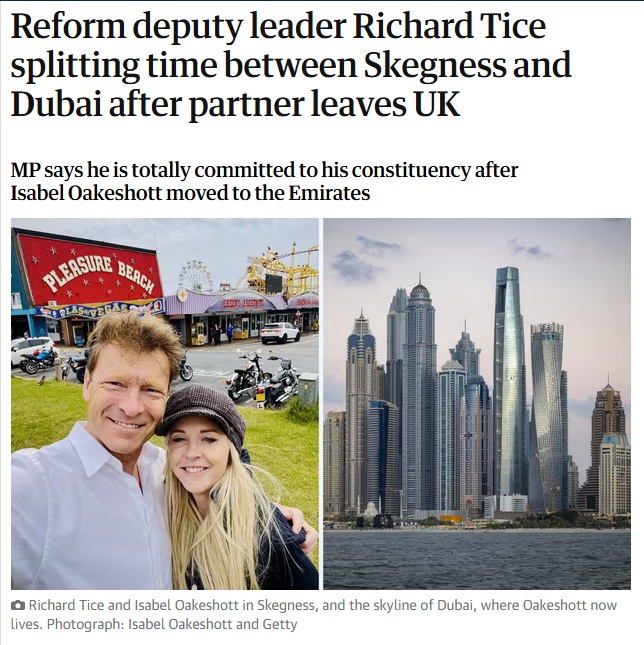
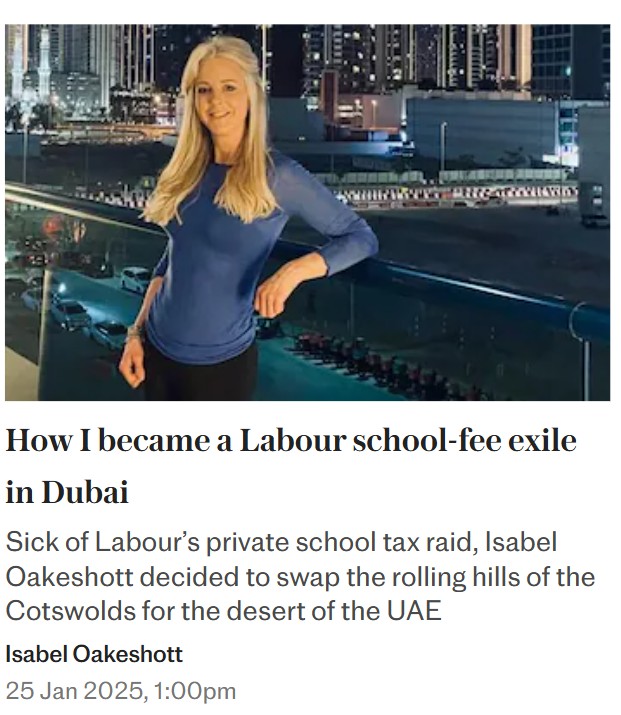
Oakeshott said: “People have such a poor understanding of how it works. It’s not a police state. I literally never see policemen in Dubai. There’s just an understanding that you behave in a certain way. And if you don’t, then it’s bye-bye.”
Well, yes. It was bye-bye to 57 Bangladeshis who made the mistake of protesting against their own country’s government in 2024. They were given sentences of 10 years to life and subsequently deported.
The human rights defender Ahmed Mansoor has been in solitary confinement for eight years, deprived of books, TV or radio; until recently, he was not even allowed a bed or mattress. The charge sheet and court rulings against him have never been made public, according to Human Rights Watch.
The UAE is “not free”, says Freedom House, a US-based monitor of civil liberties around the world. It has no political parties, no meaningful elections, no free media, no independent judiciary.
Does this seem to matter to the Britons who go to live there? Mostly, no. Oakeshott and other women say they feel personally safer in Dubai than in British cities.
The heat, which often exceeds 40C in summer, can be exhausting. The traffic jams are a constant source of annoyance. But you won’t find any Dubai residents, AI-generated or otherwise, who are prepared to criticise the Emirati regime on the record. Their visas depend on “behaving in a certain way”, and that means keeping schtum about the regime that has liberated them from the burden of income tax.
It is through its visa regime that the UAE ensures a steady flow of ambitious and often wealthy migrants. The most coveted is the 10-year Golden Residency, which is offered to ‘Talented Geniuses’, investors, scientists, entrepreneurs and top graduates.
People with a job offer, a bachelor’s degree and a minimum income are eligible for five-year Green Visas, as are the self-employed, providing they earn at least £75,000 a year – which was presumably Oakeshott’s route. You can also get a visa by buying property worth more than £414,000 or investing the same amount in a company. Over-55s can retire to the UAE if their income is over £37,000 and they have decent savings.
This is what makes the wave of migration to the Gulf so different from previous British exoduses. Australia didn’t care about Britons’ education or wealth: it just wanted fit, white bodies to fill jobs.
Suggested Reading
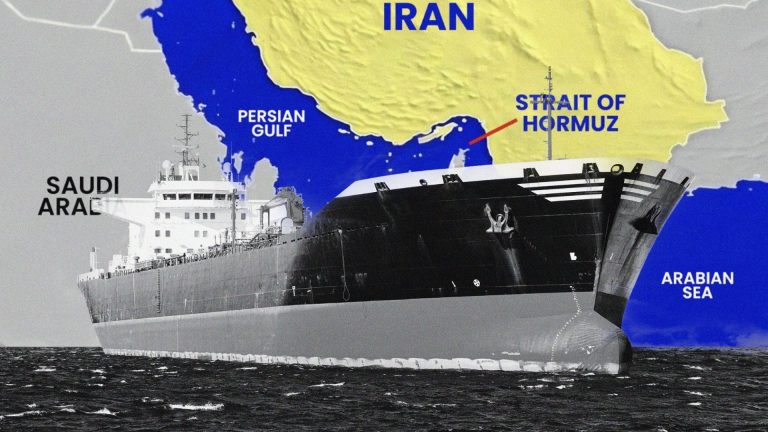

Nerd’s Eye View: 12 things you need to know about the Strait of Hormuz
America also operated a racist admissions policy, but it wasn’t particularly choosy about qualifications either. Both countries offered a clear path to citizenship, basic freedoms and the promise of a good state education for migrants’ children.
None of these things is available in the UAE. Citizenship is extremely difficult to obtain, and very few non-Emiratis attend state schools.
In any case, what benefits would citizenship confer? The rights that Britons normally associate with democratic citizenship are almost non-existent. Indeed, westerners are likely to have more leeway than their Emirati counterparts. Safer to hold on to your British citizenship and take the first flight out if you do get in trouble.
Not every Briton who lives and works in Dubai is content with the deal. “I plan to return as soon as my contract has ended,” an expat in their 40s who works in finance told me anonymously. The lack of democracy and freedom of speech “bothers me. It is a stressful way to live.”
I asked them if Dubai felt like the future, as so many of the LinkedIn evangelists claim. “Fuck, no. It feels like the past, due to the regressive attitudes, the anachronistic theocratic monarchs, the abundant racism, the homophobia, and the sexism.”
Dubai is a more permissive place than it used to be, and it is much more relaxed than Saudi Arabia, which has only recently lifted some of the laws governing women’s movement and behaviour. But sex outside marriage in the UAE is still formerly illegal; gay sex remains completely banned, with the threat of the death penalty.
A gay scene exists in certain international hotels, with parties arranged on WhatsApp. Two queer London School of Economics researchers who have investigated gay expat life there found that any mention of an event on the wider internet instantly leads to a change of name or venue. Dating apps are too risky, and everyone is wary of entrapment by police.
One of the biggest appeals of the Gulf is the ability to insulate yourself from the sight and effects of poverty. The UAE is built on the labour of low-paid migrants whose lives are largely invisible to the wealthy.
Constructing the Burj Khalifa was certainly a ‘multicultural’ endeavour. Over 100 nationalities worked on the site. But they endured “unsanitary living conditions, excessively long working hours, and low wages”, according to Mona Elsayed, also of the LSE.
In the rush to build the COP28 venue last year, the ban on working outside in the midday heat was ignored and migrants said they were denied cold water and shade. Enabling asset managers to embrace their positivity comes at a price.
“If you believe you are a citizen of the world, you are a citizen of nowhere,” Theresa May told us in 2016, as she tried to persuade herself of the merits of Brexit. Not all the Brits now in Dubai would ever have considered working in the EU: for business and leisure purposes, English is spoken everywhere there, which makes life far easier. But unlike most previous waves of ‘expats’ – ‘migrants’ is not a word the British tend to use about themselves – they have given up the UK social contract because an autocratic regime offers them more immediate rewards.
In a bleak British November, ground down by the cost of living and NHS rationing, the appeal of Dubai is not hard to understand. Yet the irony is that to emigrate to the Gulf is to embrace just the sort of rootless globalisation that populists affect to despise.
Time was when Brexiteers like Tice mocked people who talked Britain down. Now their families praise authoritarian regimes. It is a brave move. Maybe even buccaneering. But not one that deserves celebration.
Ros Taylor hosts the More Jam Tomorrow and Oh God, What Now? podcasts