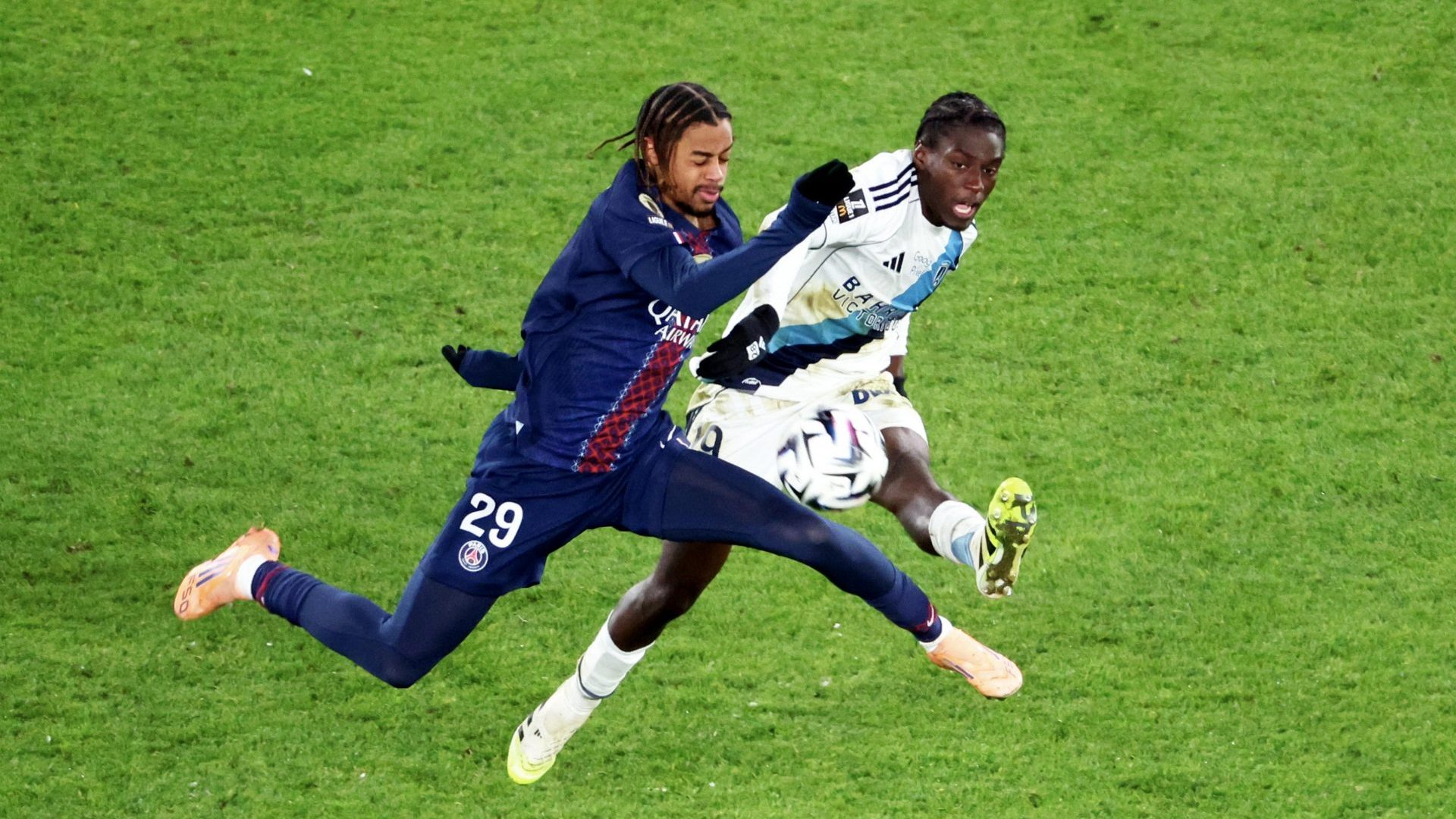
The dream was alive for two minutes. When Willem Geubbels slotted a 51st-minute penalty at the Parc des Princes on Sunday night, newly promoted upstarts Paris FC were level with their mighty neighbours Paris St Germain in the clubs’ first meeting in France’s top division since December 1978.
It couldn’t last. Ousmane Dembélé swept the European champions back into the lead in the 53rd minute and the away side rarely threatened again. But for 120 seconds or so, the notion of Paris as a two-team city was real.
The clubs’ fortunes have been dramatically different since that match in 1978, a 1-1 draw in a season that saw Paris FC relegated. PSG have won Ligue 1 13 times, 11 of those titles coming in the 14 years since a Qatari takeover. In May, they swatted AC Milan aside in the Champions League final and, but for an uncharacteristically poor display against Chelsea, they would be world champions too.
By contrast, Paris FC have spent just three seasons in Ligue 1, even dropping as low as the fifth tier of French football. They have just one trophy to their name: the Championnat National 2, France’s fourth division.
However, they may not be the underdogs for much longer. In November last year, they were bought by Europe’s richest man, Bernard Arnault. Now part of his £200m Global fashion brand LVMH, which includes Christian Dior, Louis Vuitton and Moet Hennessy, Paris FC is the richest non-state-owned team in the world.
The teams have an intimate and at times acrimonious history. Paris FC was formed in 1969 and the following year merged with a team from the suburb of Saint-Germain to form PSG. Two years later, Paris FC broke away, staying in Ligue 1 and continuing to play at the Parc des Princes.
PSG were relegated two divisions to the Championnat National, but in 1974 got promoted back to the top flight, passing Paris FC on their way down and taking ownership of the Parc des Princes.
Corsican businessman Pierre Ferracci, who has owned Les Bleus since 2012, put the club up for sale in 2024. Disheartened by the number of foreign owners in the game, he was determined to sell to a French buyer.
From the Arnaults’ side, the deal was driven by Bernard’s son Antoine, a die-hard Liverpool fan, who has led on a number of sports-related deals for LVMH, such as sponsorship of last year’s Paris Olympics and Las Vegas Grand Prix.
Red Bull also bought a minority stake, although Antoine has been at pains to stress that the club was not becoming part of Red Bull’s multi-ownership group, saying “We won’t be Red Bull Paris FC.”
Effectively operating as high-end consultants, Red Bull, now with former Liverpool manager Jürgen Klopp as its global head of football, are implementing the development model used across the four clubs they own. This is focused on developing young local players and financial sustainability and tallies with the Arnaults’ vision to market Paris FC as distinctly Parisian. To lead on this, former Bayern Munich technical director, Marco Neppe has been brought in as the club’s sporting director, replacing Ferracci’s own son, Francois.
“The victory of PSG in the Champions League shows you can build a team not only with stars but with talented players, young players. This is the idea, to build a team that is Parisian and French, also,” says football sociologist Patrick Mignon.
Suggested Reading
Football’s new coke habit
Despite the Arnaults’ wealth, some doubt whether Paris will be able to sustain a second top-tier team. The French capital and the surrounding metropolitan area has a population of over 12 million, making it the largest in the EU, yet, since 1990, when Racing Paris were relegated, PSG has been its only top-flight football team. (By comparison, London currently boasts seven Premier League teams.)
The capital’s one-club status was not unusual in a country where football had to vie for popularity with rugby, cycling and tennis. Furthermore, in the aftermath of the second world war, funding was largely provided by local governments who favoured single teams, a model that encouraged mergers of the type that led to PSG’s formation.
“It was very difficult to have two clubs at the highest level of professional football, even in Paris,” says Mignon. “There were some big clubs in Paris, but it was very often one at a time. You had Red Star during the war, then after the war it was Racing Club de Paris.”
PSG regularly play in front of sell-out crowds of 47,000 and around 22 per cent of all French football fans say they support the club. By contrast, it is not clear from where Paris FC draws its support.
“We have no real analysis of the club’s audience,” says Mignon. When they were playing in the third tier between 2006 and 2014, their average attendance never exceeded 550. That figure crept up to around 3,000 following promotion to Ligue 2.
Klopp has argued that part of the problem was the club’s home, the Stade Charlety, a run-down athletics stadium. Thus, following promotion, Paris FC have moved to the 19,000-seater Stade Jean-Bouin. The move seems to have paid off. Already this season it has been sold out several times despite the team’s on-field struggles.
The stadium is barely half a football pitch away from PSG’s Parc des Prince home. The two grounds face off across Rue Claude Farrère, making them the closest professional clubs in world football.
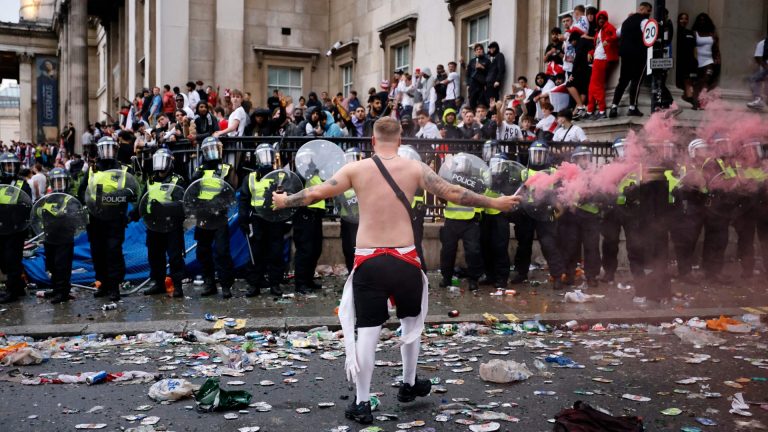
“People in this neighbourhood are not very happy to have one football club, so they won’t be very happy to have two,” says Mignon, who points to hooliganism in the capital which saw one man killed and 491 arrested in the aftermath of PSG’s Champions League win.
Furthermore, in November last year, four people were stabbed – thankfully not fatally – when two groups of Paris FC fans fought each other, leading the French interior ministry to propose banning the club’s ultra group Legion X.
Arnault, a former season ticket holder at PSG, has played down talk of an aggressive rivalry with PSG and has suggested they will be happy with incremental progress. Staying up this season is a clear priority – at the time of writing, Paris FC are only just above the relegation playoff place.
Yet, it is clear that his long-term ambition is to disrupt the status quo. And these noisy neighbours may have rattled the aristocrats slightly. On Sunday, PSG displayed a tifo reading “Paris c’est nous” – “We are Paris”. True now, but for how long?