Most of us know what life is like in Afghanistan from the photographs of the benighted country. From images on TV and in newspapers of gun-toting warlords, weeping families bereft at the death of a loved one, oppressed women condemned to an existence in the shadows. A world of bullets, bombs, and burqas.
But, says photographer Lorenzo Tugnoli, these are little more than cliches. They do not tell what happens behind the headlines or illuminate the complexities of a country that has been beset by violence for decades. How do the people cope? How do they live from day to day? What is it like to be an Afghan in the war-torn 21st century?
Tugnoli knows his subject, having lived in the country from 2009 to 2015 while working for the Washington Post and having returned regularly since. He understands all too well the pressure of working for a newspaper that wanted him to provide the kind of images the US public expected – “the good guys, the bad guys” – the images that perpetuated the cliches.
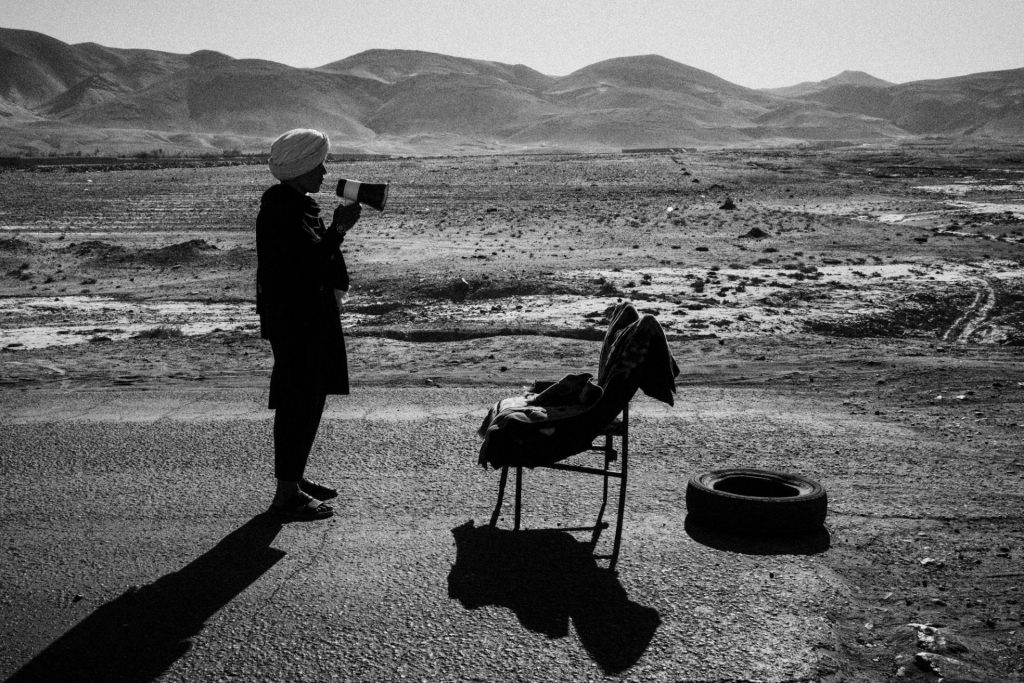
He is redressing the balance with his powerful collection It Can Never Be The Same, in which his subjects inhabit a netherworld where the skies are heavy with dark clouds, the streets are empty and muddy, clouds of dust fill the air and families huddle for comfort against the elements but more, against whichever terror gang might attack and kill them.
“I began to question my understanding of the facts,” says the Barcelona-based photographer. “Am I fully grasping the events that unfold in front of me, or am I just trying to reproduce a certain kind of imagery? Am I looking and properly observing, or am I emulating a movie that repeats itself like a loop in my outsider’s head?”
Tugnoli presents his reader with a challenge. Although there is a moving afterword by the journalist Habib Zahori about the death of a cousin and the “infinite cycle of savagery” that afflicts his country, there is no foreword to explain what Tugnoli is aiming to achieve, and no captions alongside the photographs.
“I wanted the reader to be curious and wander through this world making their own judgement,” he says. “It is my hope that the book might be part of a more comprehensive discussion about how we perceive countries that endure occupation, the ethics of storytelling, and the lasting impacts of foreign interventions on nations such as Afghanistan.”
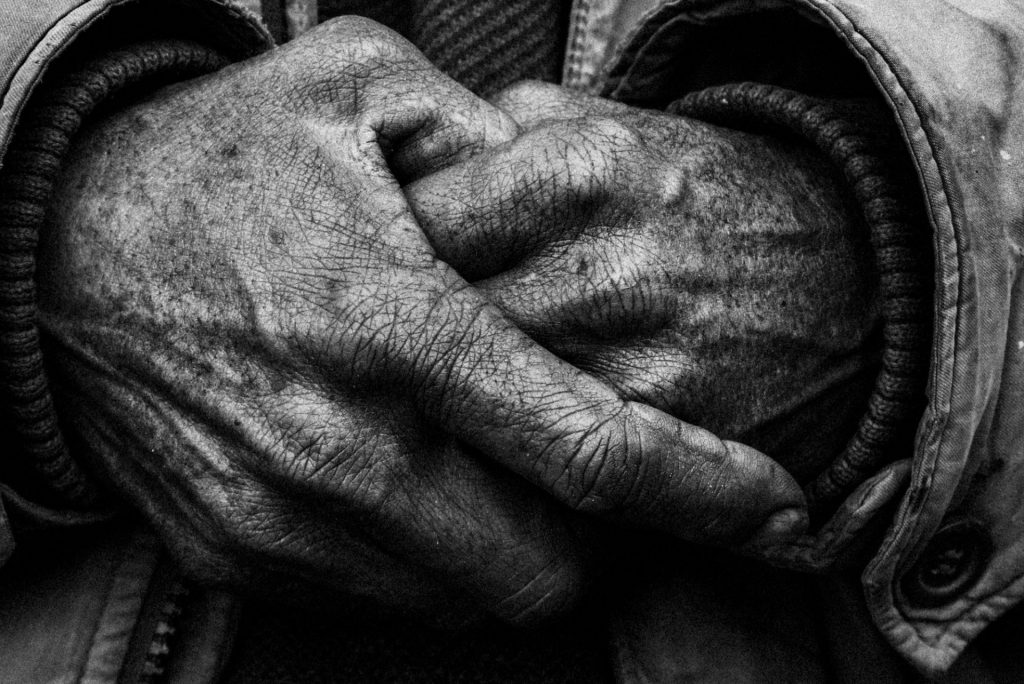
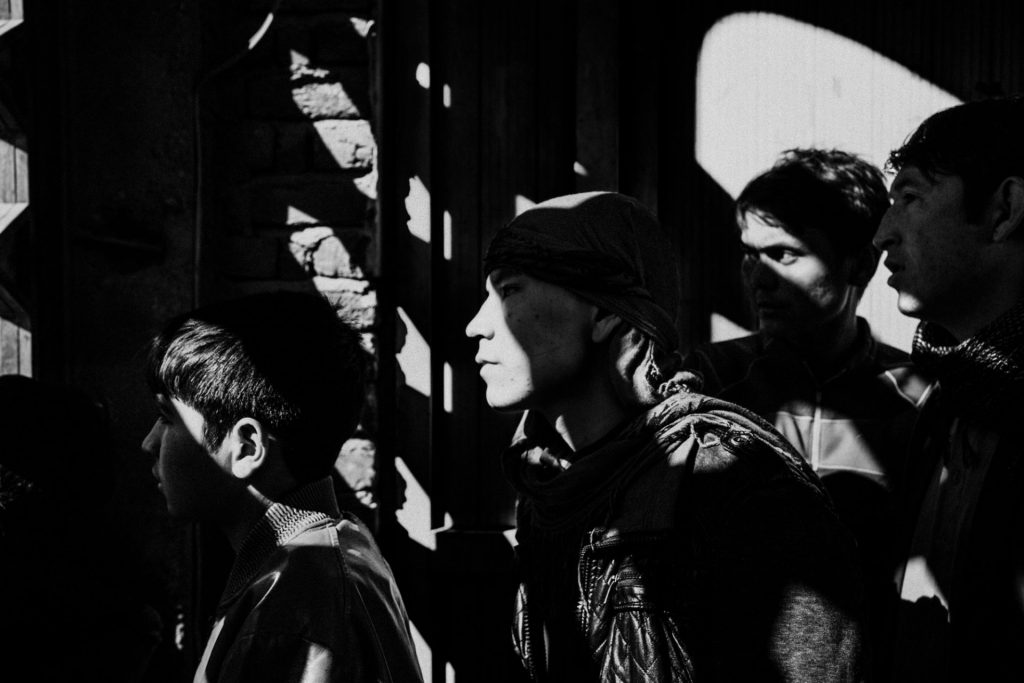
than 80 in Kabul on March 6, 2020
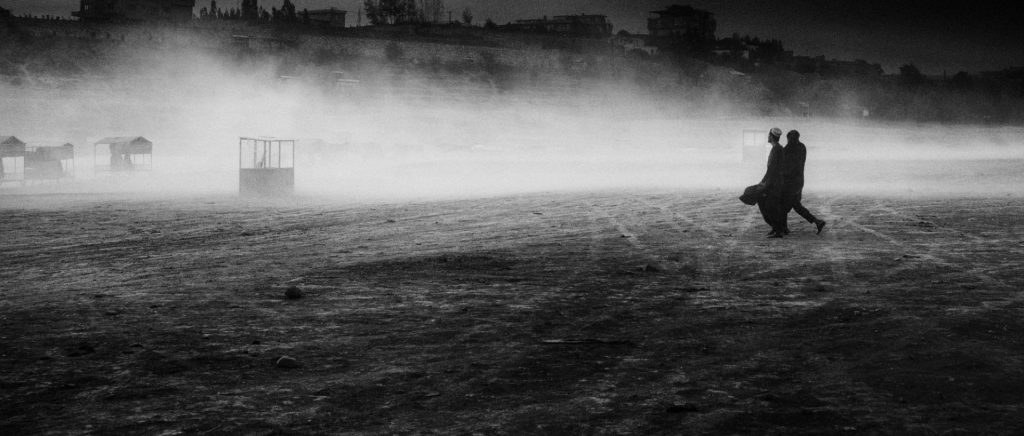
the weekend
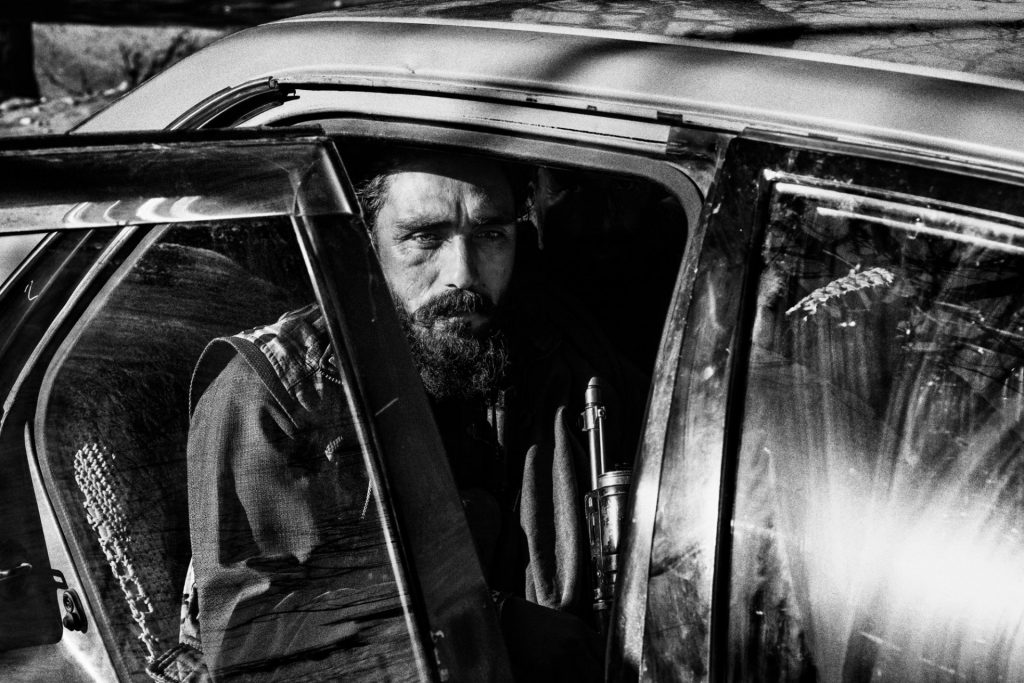
A Taliban fighter waits to move with his unit in Khogiani district, Nangarhar, in December 2019
The collection is drawn from his years of work, rejecting many images that no doubt would have pleased his editors.
Tugnoli bookends the collection with aerial views of the war-torn territory. The results are surreal, like extra-terrestrial ultrasound scans, all swirls and indistinguishable shapes, in which one can just about pick out roads, valleys and mountains but not borders and battlegrounds, no sign of military bases. This is what the generals and diplomats saw as they flew from place to place because travel by road was too dangerous, but, he argues, this also distanced the decision-makers from the battlegrounds and constricted their understanding of the turmoil on the ground.
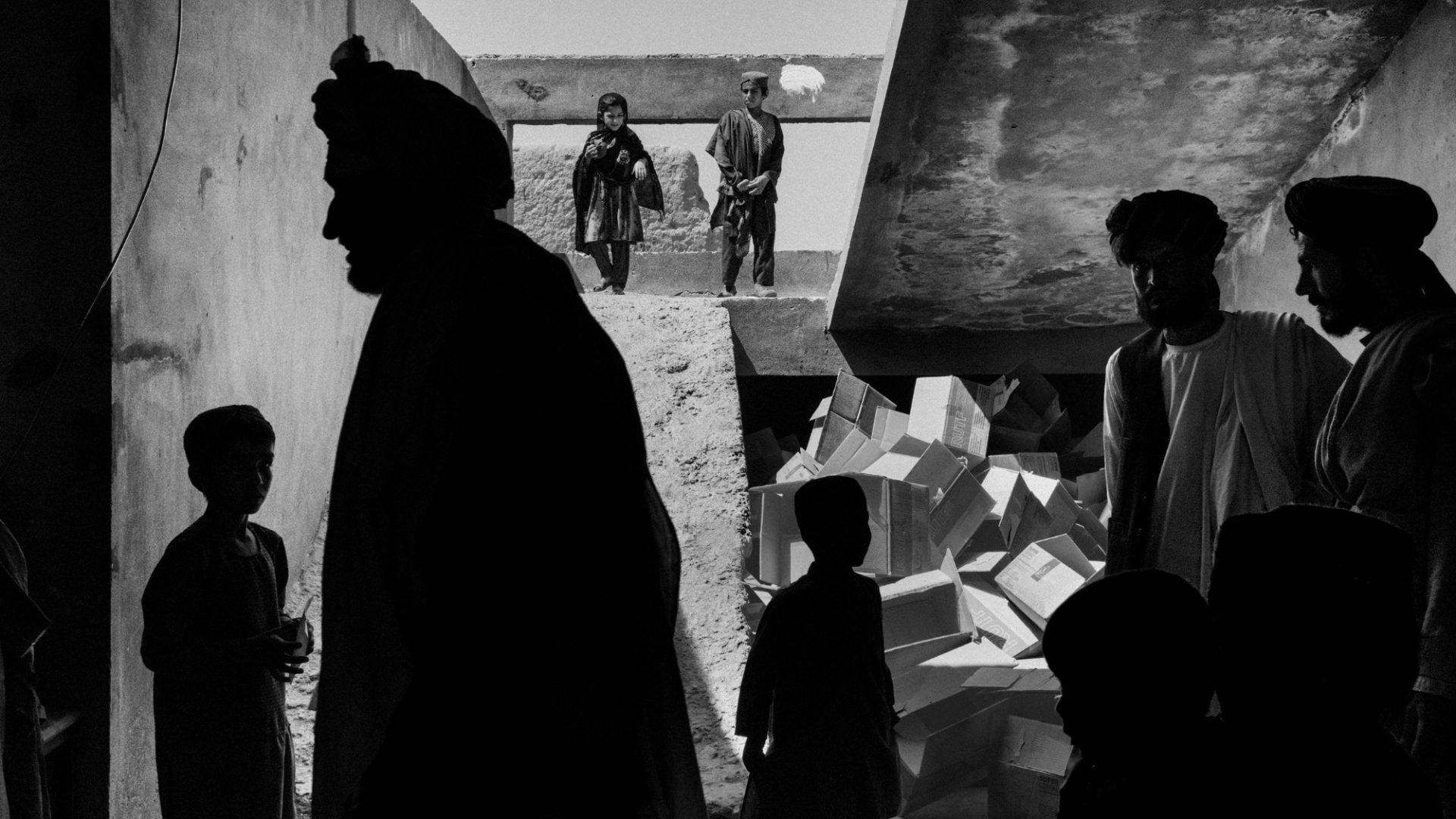
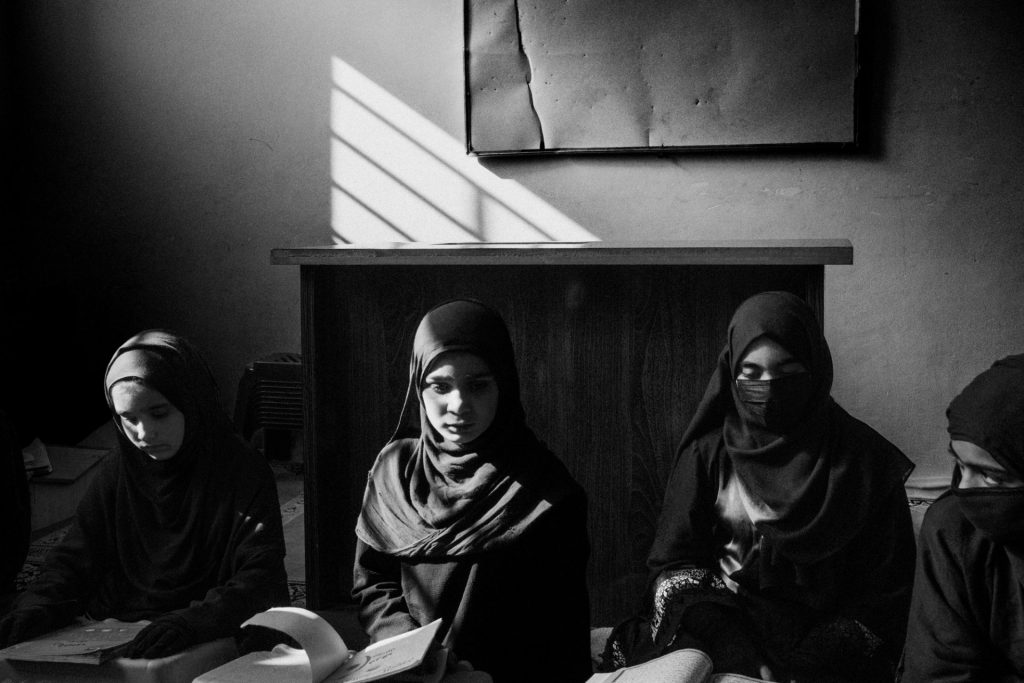
It is in that alien setting that Tugnoli has created an essay in shadows with scenes in black and white, heightened by shafts of light or deadened by lowering skies.
He does include heavily armed US military and glowering Taliban fighters, a wall splattered with blood and hands displaying a pair of grenades – the kind of images that might be expected in any coverage of the conflict, but behind those headlines the camera is turned on the people; a solitary figure picking his way along a muddy path, a family gathered around an open fire, a lone man, stooped against the elements, trudging through a snowy desolation towards a bleak encampment.
We see tented camps with refugees at prayer – but never at play. There is little joy to be found in the 104 photographs. A group of soldiers celebrate a ceasefire, a Taliban militant sporting sinister sunglasses sits holding his gun, though his smile is more the smirk of a man who has power in his hand.
There is no need to explain the graffiti, Fuck you Ame… though a letter signed Twyla and addressed to a US soldier is more of a surprise: “Dear soldier, I just want you to know that I want to thank you surving (sic) for our country.”
Many of the images do stand alone for curious readers to make their own judgement, but those same people – me included – will be frustrated not to know more. What is actually happening here? Happily, for the more literal-minded, there is an index to each photograph at the back of the book.
Take the girl peering out from the cracked mud wall of her home. A curtain hides half of her face. She is looking down thoughtfully, her eyes half closed, perhaps a hint of a smile.
We discover in the index that her brother and uncle had been killed in an airstrike in 2019, her family was caught in the crossfire between the Taliban and the Afghan army and were evacuated to Kabul. An endearing image is now one fraught with pain.
A figure stands against a framed telegraph pole in the midst of ruins. The only bright spot is the way the sun caught him on the heart the second Tugnoli clicked. There is little to show that this dismal spot is Sangin, once a busy market town and a familiar name on news bulletins during US control.
What can we make of the two men standing on stony ground where shoes have been scattered? We don’t see the men, just their feet. The abandoned shoes belonged to victims of an Isis attack on Kabul in 2020 when two gunmen fired into the crowd, killing 32 people.
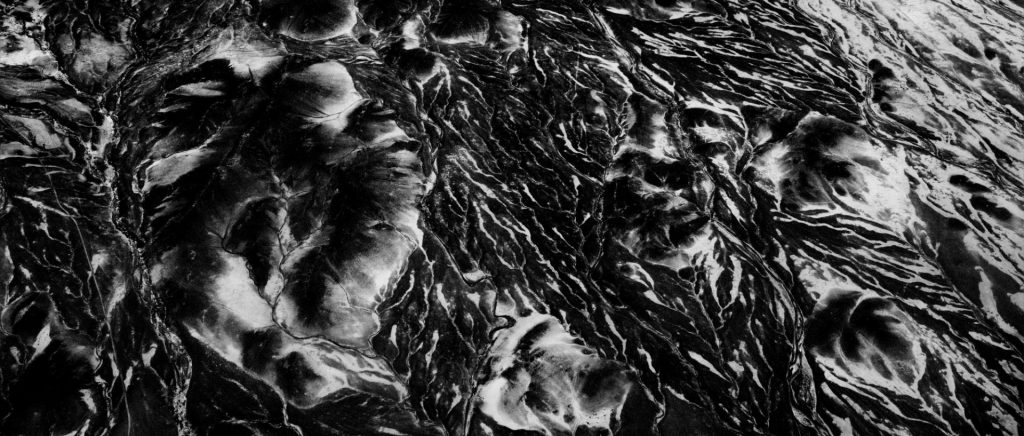
airport
Again, a stack of letters dated September 3, 2019 from the chief of a local police force means nothing until we read that they were messages sent to pine-nut collectors who would be working in the area. Two weeks later a US drone hit the site, killing 30 and injuring 40. A prosaic aside is now seen to be a harbinger of tragedy.
Is there more to discover about the group of three women and two children who stand in the sepulchral gloom of their primitive dwelling? All but one stares at the camera, they seem both dignified and defiant.
Flick over the pages to the index and it transpires that the woman facing away from the camera is a 35-year-old living in Kabul. Her husband is a heroin addict and she supports her family by begging. Her older daughters are already engaged, as is seven-year-old Sabrina, seen to the right. She was sold to a friend to repay a debt of her father’s. Her price: less than £100.
Suggested Reading

The man who made your furniture grin
It is a fine composition, but no amount of the curiosity Tugnoli hopes his readers will exercise could have reached that painful conclusion.
His hope – and his plea – is that peace will replace turmoil in the country he grew to love. He called the book It Can Never Be The Same to reflect that dream, but it is worth recalling that only last month seven people were killed in an attack by Isis on a Kabul restaurant, and 17 died in floods that swept through the already impoverished villages of the Herat province.
It is hard to see an end to that “infinite cycle of savagery”.
It Can Never Be The Same by Lorenzo Tugnoli is published by Gost, £45
Richard Holledge writes about the visual arts for the Wall Street Journal, Gulf News, FT and The New World