Just how do you choose 99 photographs to represent a collection of more than one million? An impossible task, says curator Loes van Harrevelt of the Netherlands Fotomuseum in Rotterdam. She is only half joking.
A committee of five experts gather to discuss the genres they should include – art, documentaries, portraits – draw up a long list of the images that meet those criteria, and decide which photographers should be considered.
Then lay them out on the floor to make the final cut.
The result: a “Gallery of Honour” that presents a range of images from a 19th-century daguerreotype of a rather serious girl taken by her father to hip-hop artist Snoop Dogg in an Ajax football team shirt, staring disdainfully at the camera.
But first; why only 99? Why not a tidy 100? That is left to visitors, who can choose a picture from the collection or upload a photo of their own on to a giant screen. There seemed to be lots of dogs.
The gallery is at the heart of the museum, which is home to one of the largest collections of photography in the world, including 175 archives of Dutch photographers, millions of negatives, slides and prints. In all, there are 6.5m images.
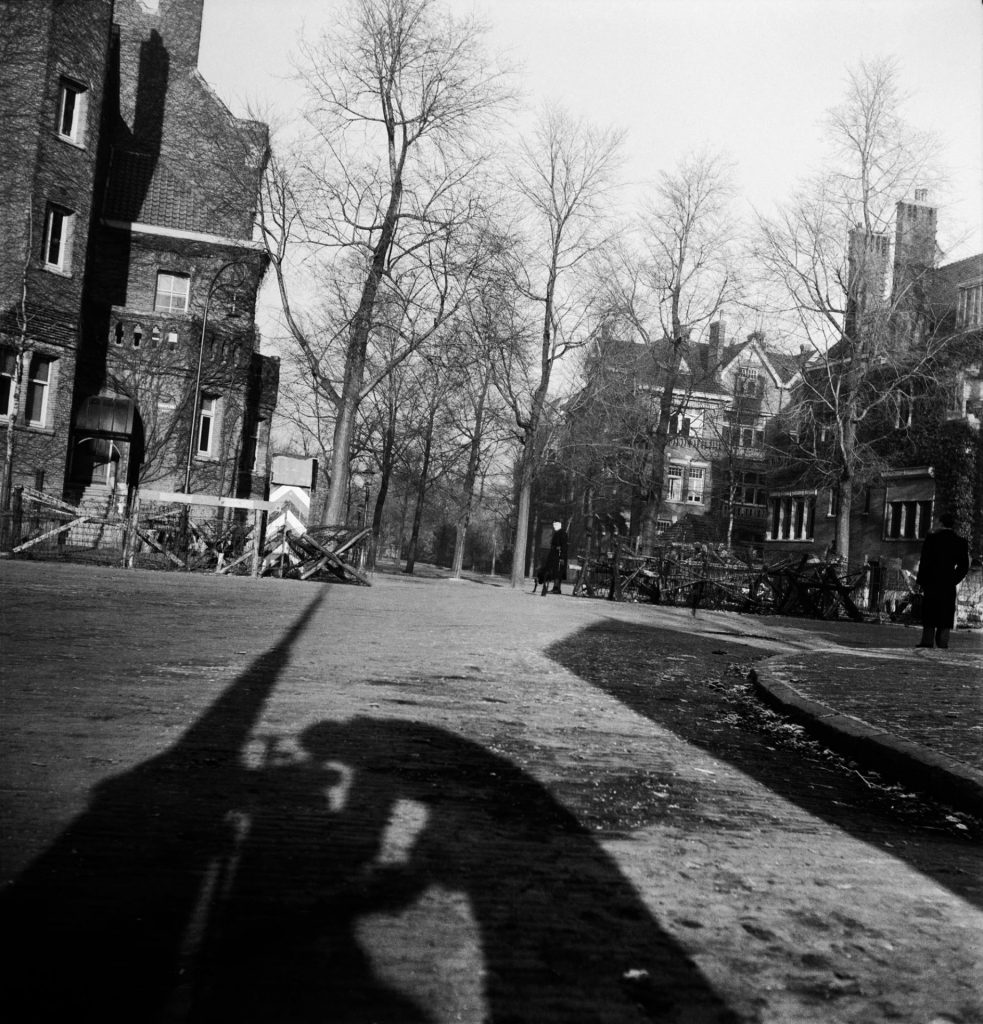
shadow of the ‘secret’ photographer with his bike in Amsterdam,1944
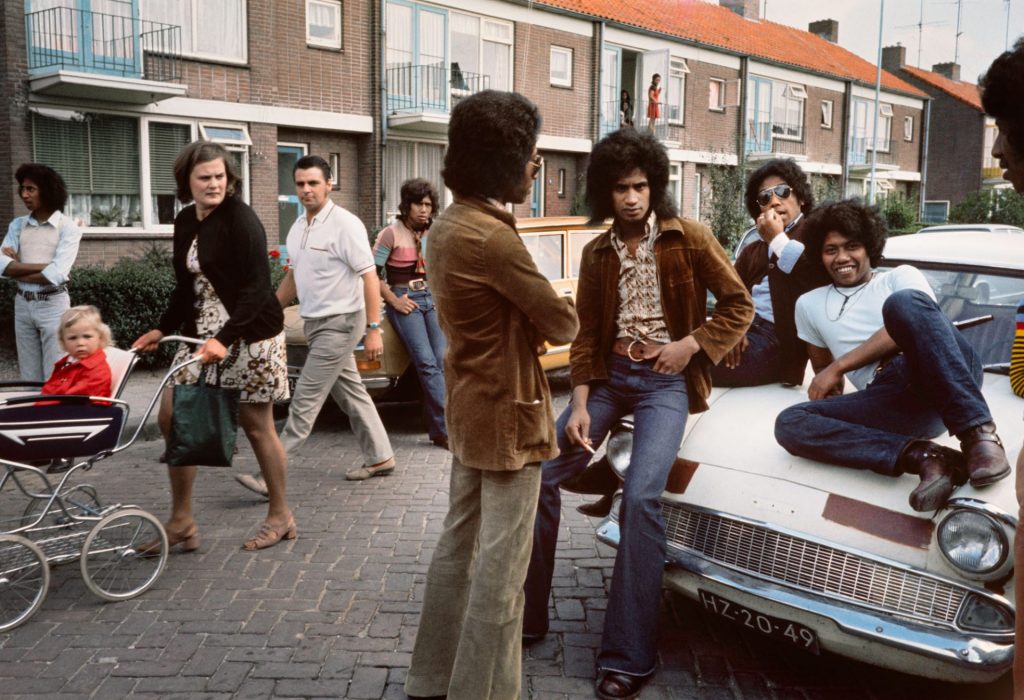
Photo of a group of Moluccan immigrants lounging on the bonnet of a car in 1970 reflects the Netherlands’ colonial heritage
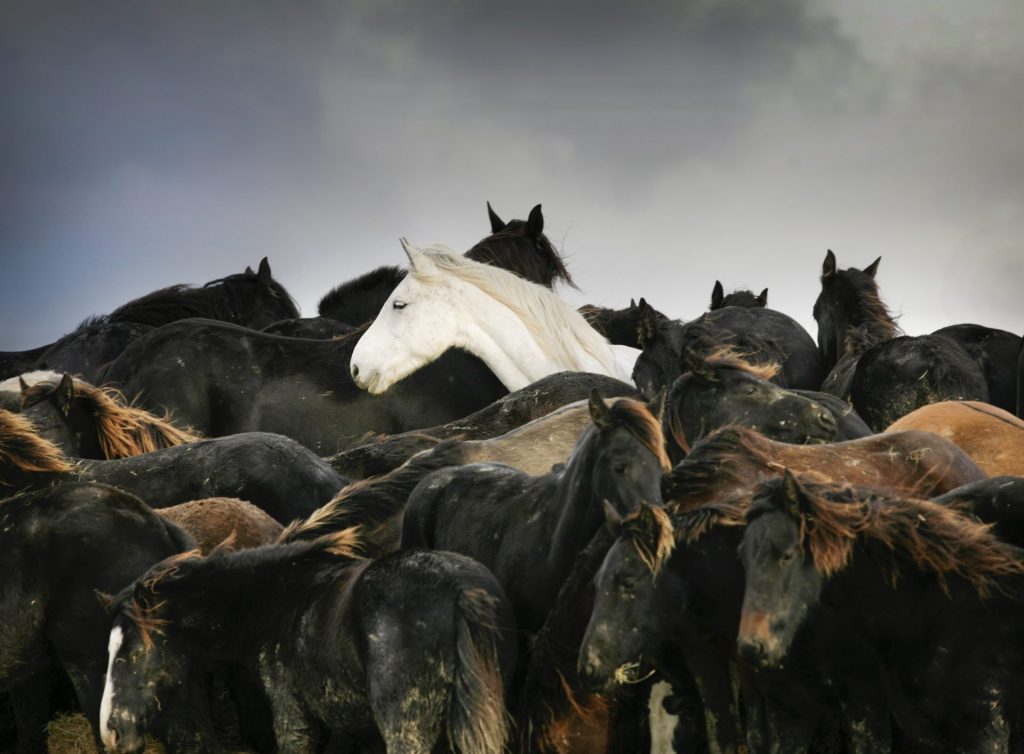
A white mare among dark horses
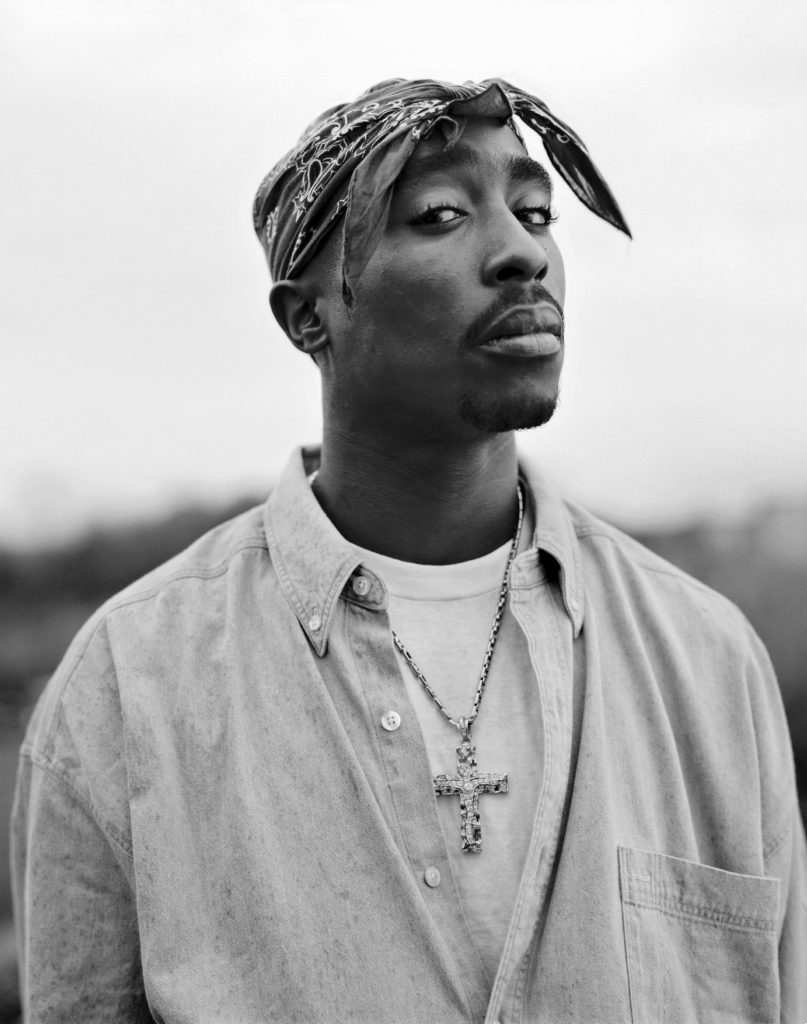
portrait of Tupac Shakur.
Images: Laurens Aaij; Charles Breijer; Ed Van Der Elsken; Dana Lixenberg
In February, the museum moved to a new home, a monumental warehouse built at the beginning of the last century for the coffee trade with Brazil. One of the few public buildings to escape the destruction of Rotterdam’s docks in the second world war, it is a nine-storey hulk of weathered brick and barred windows, enlivened with green shutters.
The core has been taken out to create a spectacular atrium with exposed brick walls and ragged concrete pillars supporting cast-iron stairs that climb up to two more galleries, both currently staging exhibitions, and one storey whose walls are covered with thousands of prints. On the roof, the 21st-century pièce de résistance: two additional floors that hover above the old building like an extra-terrestrial birdcage.
The curators decided not to line the walls of the Gallery of Honour with the works in a dutiful chronology, but to arrange them on a series of stands around which the visitor can wander through 184 years of photography.
That 19th-century daguerreotype is the earliest work on show, made in around 1842 by Eduard Asser, who portrayed his daughter, Charlotte, sitting as still as a stone while he, behind his large wooden camera, counted off the seconds until she could move again. One twitch and the project would have failed.
A girl in a blue dress is considered to be one of the first ever colour photos, taken by her father, Jan Seegers, in 1912, but perhaps the most revolutionary piece is a rather untidy happy snap of young men jumping on to a boat. It was taken with a hand-held Kodak camera, which was invented in 1888 and sold with the slogan “You press the button, we do the rest”. It meant no more clunky cameras, no more waiting for a plate to develop.
Off we wander, past street scenes with dancing and music, the busyness of the docks, a quizzical miner covered with coal, his eyes an uncanny white against his blackened skin, a trio of workers starkly outlined against the sky balancing balletically on a latticework of steel girders. Puzzle over installation artist Paul de Nooije smoothing down grass on an ironing board, thrill to the beauty of a white mare, head raised proudly above a melee of brown and black horses that had been stranded in a flood.
There are many scenes reflecting the country’s colonial heritage, from the stern black nurse formally posed with two white charges (1906) to the group of immigrant Moluccans in 1970 lounging confidently, almost arrogantly, on the bonnet of a car, by Ed van der Elsken.
Suggested Reading
The photographs worth far more than a thousand words
After the war, we discover celebrity culture. John Lennon and Yoko Ono in 1969 in their pyjamas, in bed at the Amsterdam Hilton, calling for world peace; rapper Tupac Shakur giving his audience a wicked side eye, by Dana Lixenberg; and singer Nick Cave, looking broodily away from the camera of that chronicler of the fashionable and famous, Anton Corbijn.
The selection committee could easily have selected a different 99 photographs. Or another 99. But they would never tell the story of the Netherlands if they did not include a set of images that draw you back to the dark days of Nazi rule.
They were taken by a group of heroic photographers known as The Underground Camera who risked their lives to reveal the oppression the country endured. Charles Breijer would set up his Rolleiflex in his bicycle bag and cycle carefully past the enemy, secretly taking pictures as he pedalled. In one example from 1944, his shadow is cast on to the street while he films sentries standing by the barricades of a command post.
There is a cheerful informality about a group of men on a rooftop, nothing to suggest that they are Jewish, and hiding in the home of resistance fighter Corrie ten Boom. They were taken by Hans Poley who at 18, refused to sign a declaration of loyalty to Nazi rule. A wanted man, he found refuge with the ten Boom household, where he took this picture using his trusty Box camera.
At the beginning of 1944, the hideout was betrayed and the family who owned the house, and 30 others, were arrested by the Gestapo. Some died in concentration camps. Poley too was sent to a concentration camp, but survived.
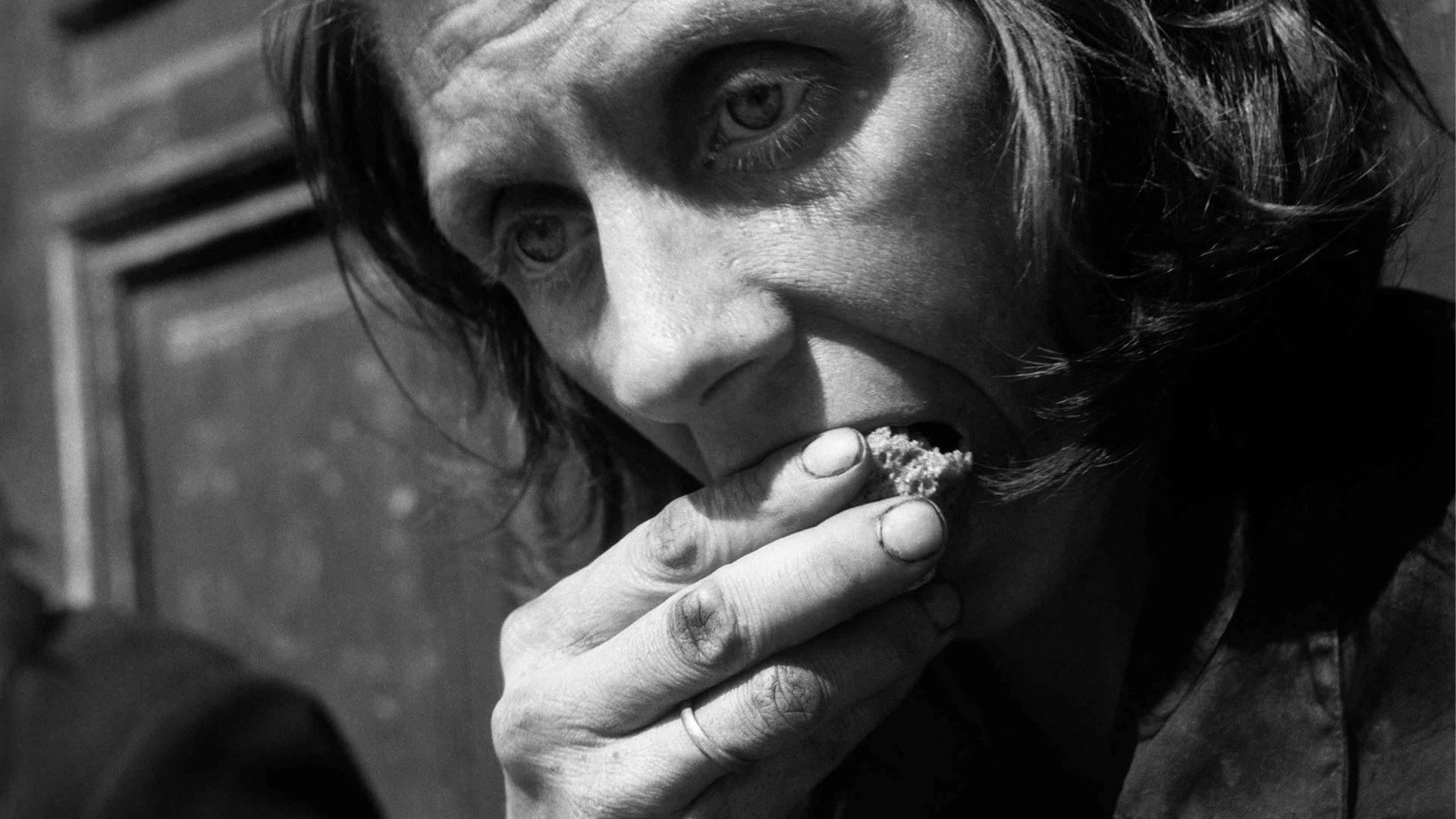
Cas Oorthuys, socialist and activist, recognised photography as a means of propaganda. His harrowing picture, Hunger Winter, taken in 1944 when famine had taken hold as fighting continued to tear the country apart, shows a starving woman known as Dirty Vicky. Her eyes, mad with hunger, the voracious way she chews on a scrap of bread, the sheer desperation, made her a symbol of a nation’s suffering.
And at about the same time, Emmy Andriesse came across a small boy walking along an Amsterdam canal clutching a pan, on his way to a soup kitchen. With his skinny little legs, shoes that are too big for him and his face, pinched by hunger and cold, he is a poignant expression of a people’s plight. Andriesse was a Jew: if discovered with a camera, she would have been arrested and executed.
It is hard to imagine anything more poignant than the passport photos of Anne Frank. She was 10 years old in April 1941, when every Jew of 15 years or older had to have an ID card with a photo, a fingerprint and a unique number. A large “J” was stamped on the document.
Perhaps she was with her mother, father and older sister, Margot, who had to have this ID when she sat in the photo booth for these 48 photos. For the most part, she is laughing and smiling, posing artlessly, head to the left, to the right, straight at the camera. At times, she looks grave.
Halfway through, she changes her patterned blouse in favour of a dress. Clearly, she is unaware of the peril that awaits her and her family.
Without her face, without the misery of the boy with the skinny legs, or the eyes of Dirty Vicky, the story of the Netherlands as portrayed in the Gallery would have no meaning. They eclipse what came before and overshadow what came next.
The Nederlands Fotomuseum is open every Tuesday-Sunday in Katendrecht, Rotterdam. Details: nederlandsfotomuseum.nl/en/