On February 18, half the world started fasting together in a rare convergence of Christian and Muslim traditions, Lent and Ramadan.
With Christians accounting for an estimated 2.38 billion and Muslims around 2 billion of the world’s 8 billion people, roughly half the planet is encouraged to practise abstinence of some sort at the same time this year. Levels of denial vary, as they should.
For Richard Moth, Pope Leo XIV’s newly installed head of the Catholic church in England and Wales, Lent means giving up cheese through the 40 days that Christians replicate Christ’s withdrawal into the desert to pray and fast.
For Muslims, it’s about giving up all food and drink (including water) from sunrise to sunset for the whole month in which God revealed the first verses of the Qur’an to the Prophet Muhammad.
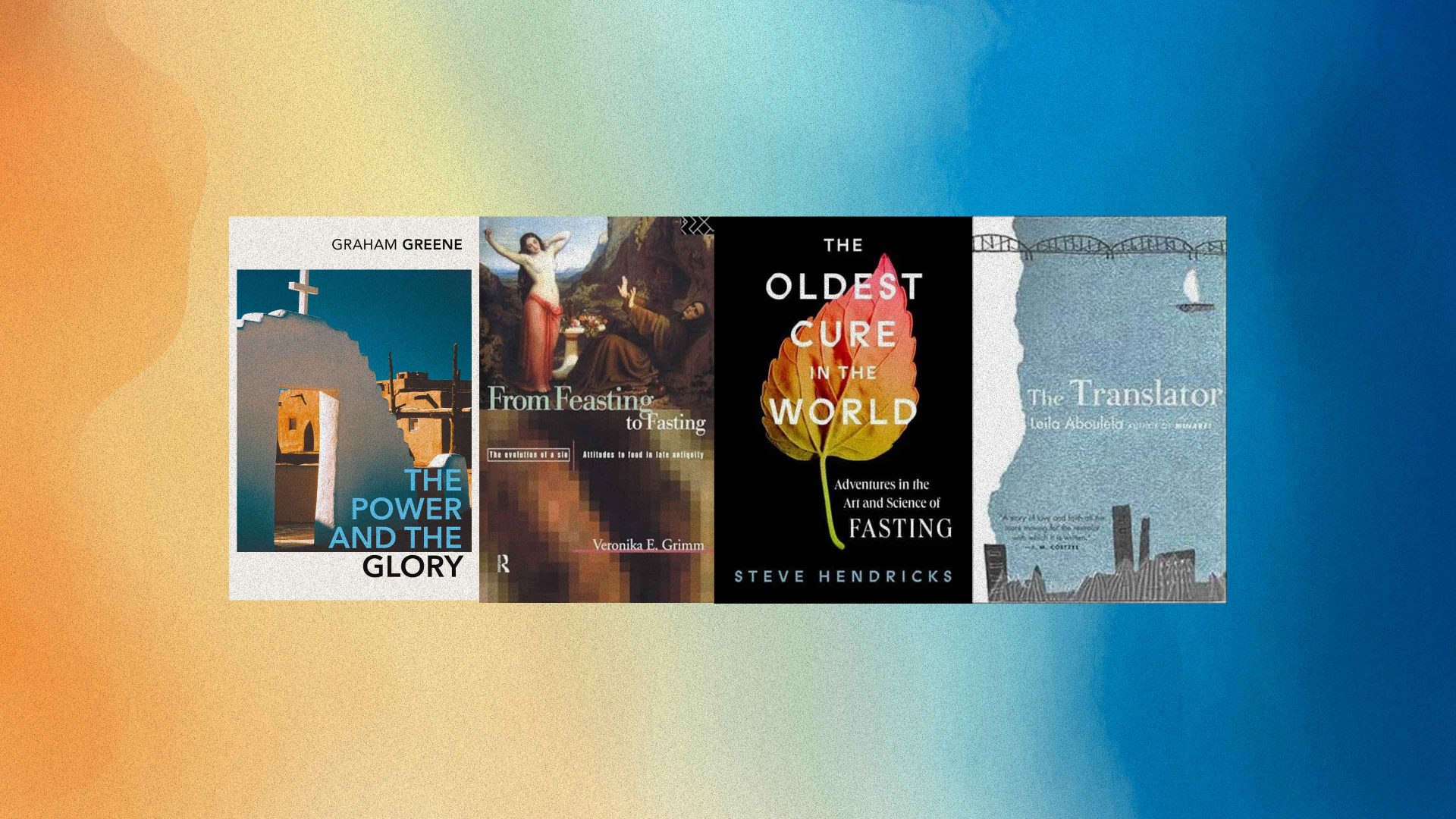
The essence is the same, as explored by Graham Greene and Leila Aboulela’s evocative novels on faith and fasting. But two insightful studies also note the evolution of fasting.
From a reset button for the soul, it has become an inescapable part of popular culture, mostly as a weight-loss tactic or health hack.
When did this happen? Perhaps with an English doctor in 19th-century Minneapolis, according to American writer Steve Hendricks’ The Oldest Cure in the World: Adventures in the Art and Science of Fasting. The poster boy of therapeutic fasting was Henry S Tanner, he writes.
Hailed in the press as “The Stomachless Man”, Tanner sparked worldwide interest in therapeutic fasting. His extraordinary experiments in surviving without food for 41 days “bested Christ”, says Hendricks. It also triggered attention of the sort we would describe today as going viral. Tanner’s “Terrible Task of Endurance”, as the newspapers called it, was covered around the world, including in the Times of India and the West African Reporter.
His miraculous survival was disdained by some. Hendricks describes the “self-satisfied chord of indignant superiority” adopted by a Times editorial from British-colonised India: “An excitement to Americans is something like what the horse is to the Arab, or the dog to the Esquimaux: they can scarcely do without it.”
Even so, writes Hendricks, “a seed had been planted… Henry Tanner had just sired modern therapeutic fasting”. He adds: “Across three millennia, small hints that fasting might be curative had emerged with some regularity and just as regularly faded away. But the idea never stayed dead.” Now, abstinence from food continues to be associated with bodily and/or spiritual wellbeing.
Former psychology professor Veronika E Grimm takes the fad into a different sphere and time zone, specifically Christians in late antiquity. Grimm’s interest in modern anorexia appears to have sparked her exploration From Fasting to Feasting: The Evolution of a Sin. Her account is reassuring in that the 21st century is not at all original in its resistance to food.
Eating became an issue in the fourth century, after Constantine and imperial Rome’s embrace of the Christian faith. This brought great gains – wealth, new converts – but it also led to a sense that the Church, Bride of Christ, was being overtaken.
Closing themselves off meant rejecting the world, including food. Soon enough, eating was said to cause lustful thoughts. In creating the equation between food and sin, fasting became a desperate attempt to regain purity.
Suggested Reading


The books that explain why everyone wants Greenland
Such an aspiration is never even considered in Graham Greene’s magnificent The Power and the Glory, a novel with the lonely, pathetic and moving character of an outlaw “whisky priest”. Set in 1930s Mexico, which Greene visited to write about “the fiercest persecution of religion anywhere since the reign of Elizabeth”, the unnamed priest is a memorable anti-hero.
A drunken coward who has broken his vow of celibacy and fathered a child, he is nevertheless fearless in holding on to his faith even as the provincial government hunts down all vestiges of religion, burning churches and banning relics and ritual. The priest travels on his mule (almost a Christ-like figure) to surreptitiously hear confessions and say mass among his poorest, most desperate countrymen.
He even shows Christian sympathy for his Judas, a mestizo or mixed-race man who wants to turn him in for the reward but insists on making a confession first: “I’ve told lies, I haven’t fasted in Lent for I don’t know how many years…”
Often cited as one of the best reads for Lent because it contemplates the twin pre-Easter themes of sin and redemption, the novel was once condemned by the Vatican.
The Translator, by Leila Aboulela, is a love story that has stood the test of time for a quarter of a century. The main protagonists are Sammar, a young Sudanese Muslim widow, and Rae, a Scottish academic from a Calvinist background. Both work in a university department in Aberdeen.
The story, which revolves around their relationship, is anchored by elements of Muslim ritual. Sammar sees Ramadan as a blessed release: “This good feeling was because of Ramadan … a whole month free like that”. When she goes to pray in the small university mosque, “the certainty of the words brought unexpected tears, something deeper than happiness, all the splinters inside her coming together”.
Eventually, Sammar sets Rae a high religious bar to scale if they are to be together. But she backs down even as he’s coming round to her point of view. It’s a perfect pitch for restraint and indulgence, as Lent and Ramadan overlap.
Rashmee Roshan Lall’s Substack This Week Those Books explains current affairs by recommending books by experts