
After two years of “darkness and silence”, in the words of its mayor, Bethlehem has put its sparkle back on. Yet despite the return of Christmas lights, there cannot be full-on seasonal cheer for a city located in the Israeli-occupied West Bank. Bethlehem’s celebrations are still dimmed by grief over devastation in Gaza, less than 50 miles away and the deaths of more than 70,000 Palestinians since October 2023.
Multiple shelves can be filled with books about Bethlehem, its significance in religion and ritual, and its cultural and culinary traditions. But the writings of two long-dead literary giants seem to speak most acutely to this moment.
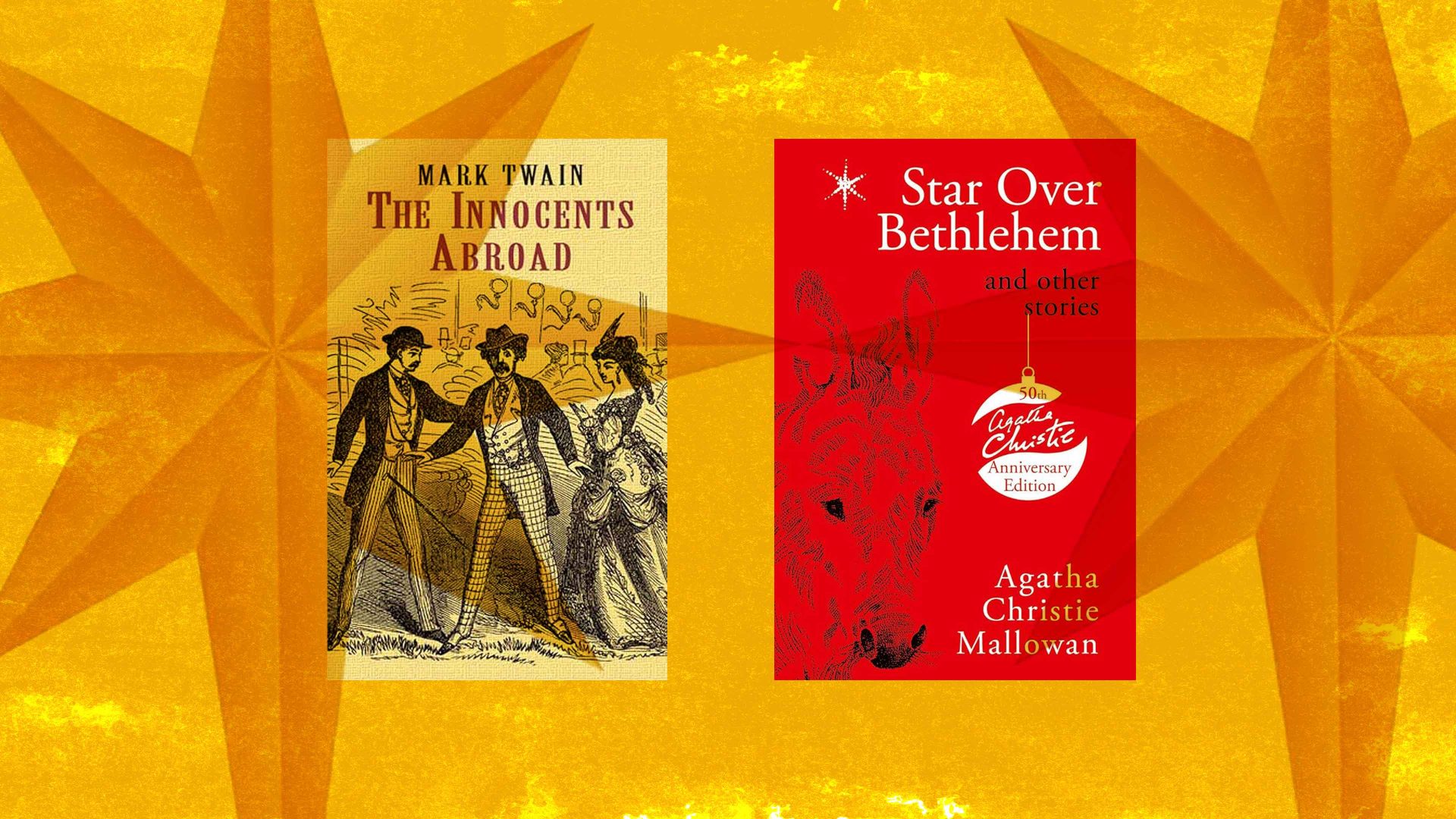
Chapter 55 of Mark Twain’s best-selling travelogue, The Innocents Abroad, published in 1869, seems particularly appropriate for Bethlehem 2025. Twain notes that religion, as hawked in the holy city, seems to be all about performance and profit. Whatever happened to precept, the Christian way?
And Agatha Christie, the queen of crime, published a little-known 1965 collection of stories and poems titled Star over Bethlehem. They enshrine the very idea of Christian morality and kindness to others.
Neither Christie nor Twain are known for their faith or devotional writings. Yet each seems to regard Bethlehem as something more than a brand name for believers to buy into.
The point about Twain’s commentary on Bethlehem is that his hilarious description of how it is packaged and sold stands true today. Like Twain, who came to Bethlehem’s Church of the Nativity in 1867, on a guided tour, modern visitors are still assailed by “troops of relic-peddlers”. They are reverently shown “a grotto cut in the living rock. This was the “manger” where Christ was born. It is polished with the kisses of many generations of worshipping pilgrims.
Twain notes the decor. “The grotto was tricked out in the usual tasteless style observable in all the holy places of Palestine.” And he points out the “envy and uncharitableness” apparent there. It’s just as true today as in the 19th century, that “the priests and the members of the Greek and Latin churches cannot come by the same corridor to kneel in the sacred birthplace of the Redeemer, but are compelled to approach and retire by different avenues, lest they quarrel and fight on this holiest ground on earth.”
Twain also addresses the tricky matter of whether any of the sacred spaces shown to visitors are really as described. He notes the “exceedingly strange” coincidence that “personages intimately connected with the Holy Family always lived in grottoes” and everything important seemed to happen in grottoes, “all under one roof, and all clean, spacious, comfortable”.
Suggested Reading
The last remnants of Palestinian culture
He writes: “When the Virgin fled from Herod’s wrath, she hid in a grotto in Bethlehem, and the same is there to this day. The slaughter of the innocents in Bethlem was done in a grotto; the Saviour was born in a grotto – both are shown to pilgrims yet.”
Twain is drily funny as he describes the “happy rascality” of profiteering from stones and masonry that are somehow supposed to be infused with “a stirring and important” religious history across the Holy Land. “We are surfeited with sights,” he writes, “it is a very relief to steal a walk of a hundred yards without a guide along to talk unceasingly about every stone you step upon and drag you back ages and ages to the day when it achieved celebrity.”
Years after his visit to the Holy Land, Twain would spend more than a decade researching a major work, his last, on Joan of Arc. It was a sign, perhaps, that he was disgusted by the hypocrisy and greed on show in Bethlehem rather than by religion itself.
Christie’s Star over Bethlehem, six short stories and five poems revolving around a religious theme, is very different from Twain’s account. Christie takes a more reverent tone, consistent with the fact that she always kept her mother’s copy of the Imitation of Christ by her bed and even gave Jane Marple the same habit.
The eponymous opening story shows Mary alone with the infant Jesus in the stable in Bethlehem when she receives a visit from Satan. Disguised as “the Morning Angel”, he offers Mary the chance of saving her son from the agonies that lie in his future. But Mary looks at the Baby Jesus, sees “the radiance surrounding him and the beauty of his Face” and refuses. An angry Satan flashes back up through the sky.
The second Christmas story, also set in Bethlehem, has a naughty donkey which happens to wind up in that stable while momentous things are happening. Rooting around for something to eat, the donkey is transformed by a touch from the baby Jesus.
Christie distances this slim volume from her nearly 70 spectacularly successful murder mysteries by using a different name, which incorporates that of her second husband, Max Mallowan.
She was right to do so. While sincere and well written, this is not quite what you’d expect from Agatha Christie and remains relatively unknown. But Christie’s simple belief that human beings should practice what they preach finds an acerbic echo in Twain and may be the essence of Bethlehem’s story.
Rashmee Roshan Lall’s Substack This Week Those Books explains current affairs through book recommendations