Nepal is going to the polls, five months after Gen Z-led anti-corruption protests brought down the government. Yet it’s a Himalayan task to work out what exactly comes next.
Will high-minded demands from the September uprising translate into meaningful change, including much-needed economic reform? Might there be a clutch of newbie parliamentarians, maybe even a 35-year-old former rapper as prime minister? Or will vestiges of the old guard – veteran politicians and an entrenched culture of corruption – hold on to key levers of power?
And is Nepal’s monarchy – 240 years old when it was abolished in 2008 – being primed for some sort of return? Balen Shah, the engineer-turned-rapper who became mayor of the capital Kathmandu before his run for PM, is said to be undecided about restoring King Gyanendra Bir Bikram Shah. So are many of the young protesters.
But others complain of a pattern of political instability in the years since the king was sent packing. On Valentine’s Day, large crowds hailed Gyanendra and the dethroned royal responded by suggesting Nepal should resolve its “whirlwind of distress” before any elections.
“Distress” is an emotive word but it is shot through much of the writing from and on Nepal since the turn of the millennium. In 2001, there was the massacre of nearly the entire royal family by Gyanendra’s nephew, the lovesick crown prince Dipendra, who then shot himself.
A long guerrilla war against feudalism ended in 2006. Soon after, the monarchy was abolished, turning the world’s only Hindu kingdom to a constitutionally secular republic. Then a devastating earthquake in 2015 killed 9,000.
Since the royal massacre, several books have emerged promising to reveal the truth behind the tragedy. Those written in the Nepali language mostly echo the widespread belief of a conspiracy against Dipendra, popular son of a popular king.
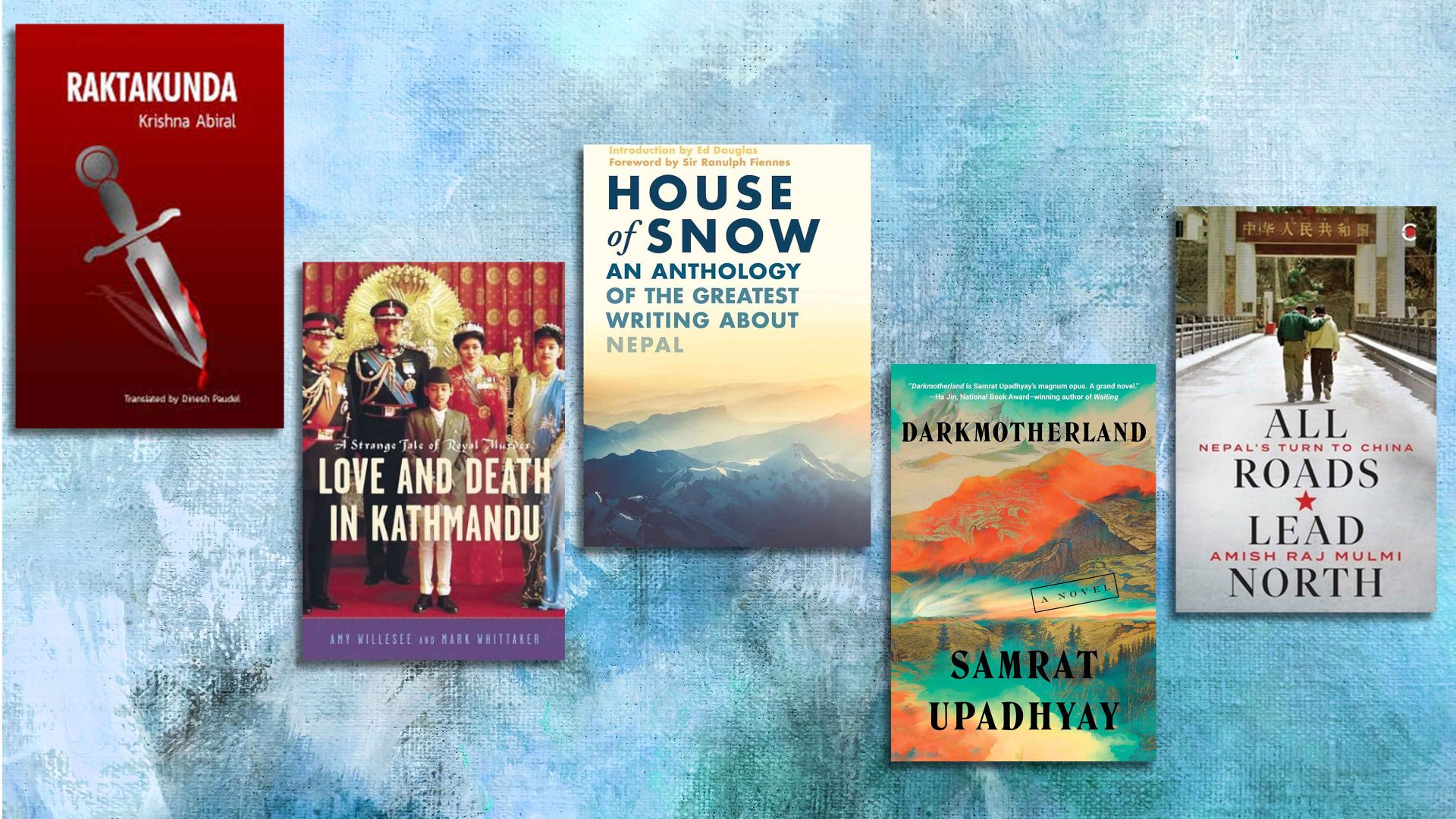
One bestseller, Raktakunda (Pool of Blood) is based on interviews with the murdered queen’s maids, who allege that the crown prince was framed for eight murders, including those of his parents and siblings.
Among the best investigations is Love and Death in Kathmandu: A Strange Tale of Royal Murder. Australian journalists Amy Willesee and Mark Whittaker spent months in Nepal to delve deep into the “madness and the magic”. Having interviewed members of the royal family, staff, politicians and ordinary Nepalis, they paint an evocative portrait of a “country where the 21st and 14th centuries come together”, situating the bloody events against the backdrop of a profoundly unequal kingdom.
The contrasts are explored again in The House of Snow: An Anthology of the Greatest Writing About Nepal, put together to benefit victims of the earthquake. It offers vignettes of a country that lives a paradox – over-exposed as a tourist destination while its essence is little known.
Birthplace of the Buddha and home to nine of the world’s highest peaks, including Everest, Nepal remained in isolation for most of its history before properly opening itself up to outsiders only in the 1950s. “And the world rushed in,” as explorer Ranulph Fiennes, one of the estimated 7,500 people worldwide to have successfully scaled Everest, put it in his foreword to House of Snow.
Suggested Reading


The books that explain why everyone wants Greenland
Opening up brought change. In the anthology, amateur climber Ed Douglas quotes a 1960s poem for its “essentially Nepali” blend – a sardonic sense of fun and the tragic: “This is a land of uproar and rumour / Where deaf men who must wear hearing aids / Are judges at musical contests”. It still resonates with Nepal’s protracted political and social agonies, he says.
These are on epic display in American-Nepalese academic Samrat Upadhyay’s 2025 novel Darkmotherland, whose starting point is the 2015 quake. Its heroine Kranti’s name means “revolution”, which her feisty public intellectual mother, “Madam Mao”, believes to be essential for Nepal. When the earthquake strikes, Kranti sees sheep charging past “as if they were late for an appointment” and a public square looks “like a photo from a bombed-out courtyard in the second world war”.
But the quake’s toll goes beyond physical damage. Political authoritarianism follows in the wake of literal collapse. The new leader, dressed in traditional male garb of daura suruwal and dhakatopi, promises to keep the nation safe and cracks down hard on dissent.
Meanwhile, Nepal’s neighbourhood is being transformed. In a subcontinental version of the rupture between Trump’s America and neighbouring Canada, India is derided as a brutal bully. China is now perceived as the “better neighbour”, writes Nepalese journalist Amish Raj Mulmi in his 2022 book on geopolitics, All Roads Lead North.
India’s post-quake blockade on Nepal deeply damaged the bilateral relationship and “leaders and ordinary people alike point to Beijing’s respect for Nepali sovereignty and its aid and grant projects”. It is a welcome change from India’s “narrow view” of history, which mimics the “nativist lens as popularised by British colonialists,” he says.
Clearly, Nepal wants to take control of its narrative. But what kind of next chapter will it write?
Rashmee Roshan Lall’s Substack This Week Those Books explains current affairs by recommending books by experts