It was 11:42pm on Wednesday at the Teachers’ Club in Ankawa, the Christian-majority quarter of Erbil, capital of Iraqi Kurdistan, when Federico Valverde completed his hat-trick for Real Madrid against Manchester City in the Champions League.
The Bernabeu roared. Then, at 11:45, just three minutes later, the sound from Madrid on the big screen was replaced by a different kind of roar, closer to home. The whoosh came first. Then the boom: the hard, percussive crack of a detonation above the rooftops. An Iranian drone swarm was descending.
Many people at that table had been here before. During the Mosul offensive, coalition-backed forces had fought block by block against Islamic State in a grinding, nine-month campaign that tore through Iraq’s second city. At the time, Erbil had served as the main staging post for foreign media.
Reporters cycled in from the front lines, just 50 miles away, to pile into the Teachers’ Club for its cheap, excellent lamb rice, cold beer and nargileh, the smoke thickening through the evening as the day’s reports were filed. Now, a decade on, many journalists were incredulous they were back and felt as though history were playing one of its crueller jokes.
An Assyrian journalist and I pushed out through the double doors into the cold night air. The security guard on his white plastic chair looked up at us with an expression of amusement. “You again,” he said. We had been standing in the same spot the night before, phones raised, trying to capture the sparkling blossom of a drone detonating. Both times we had missed it.
His eyes, an improbable shade of blue, tilted towards the sky and he told us: “It came right across here. I saw it. It was going to the US consulate.” A few hundred metres away sits the largest American consulate in the world. That’s why Ankawa is a target.
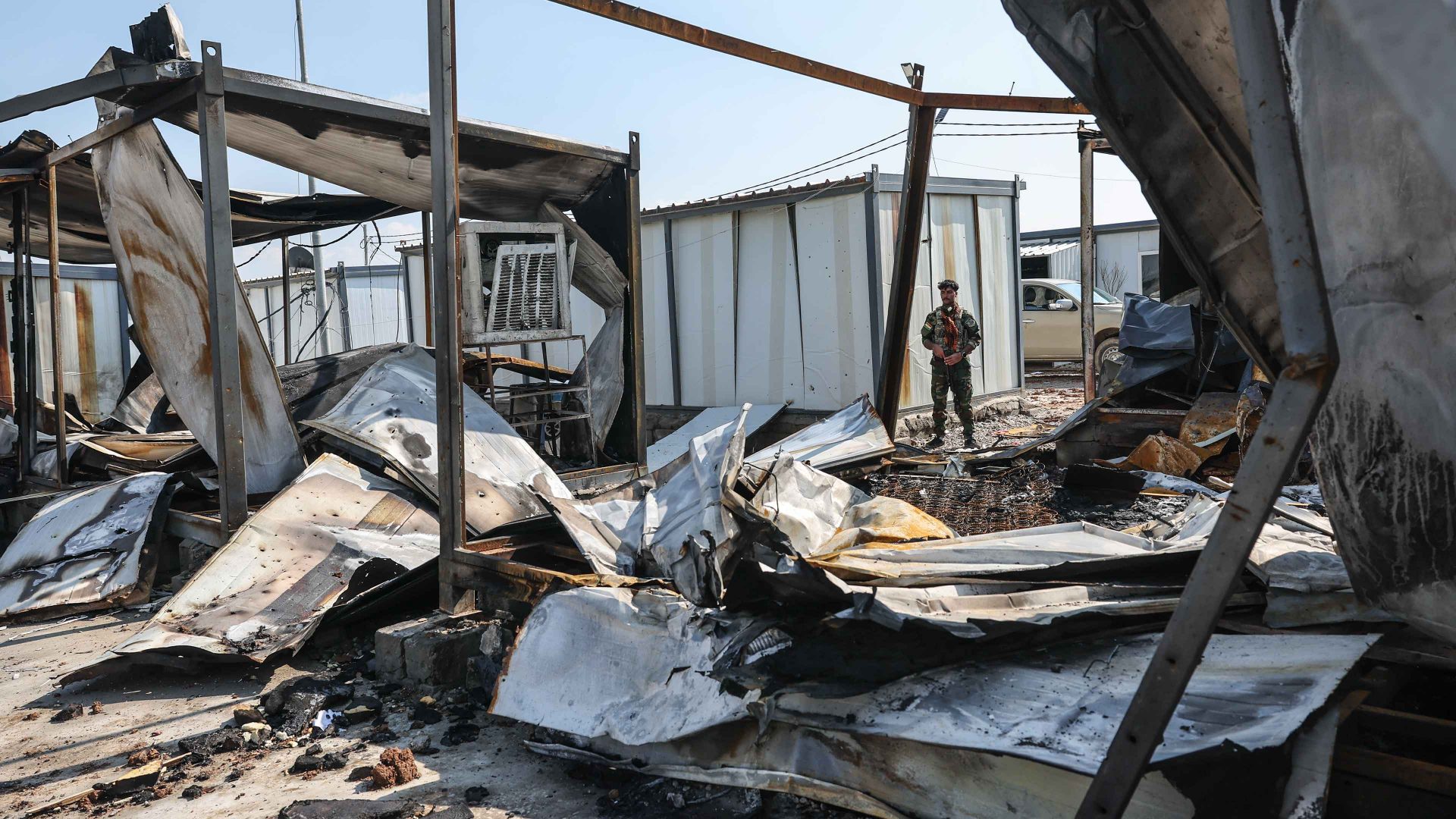
The booms we had heard were the sound of British and American troops coming under attack. British air defences destroyed two drones, but other munitions got through and struck the base. A third was shot down near another western compound.
In the group chat that now serves as the operational nervous system for the journalists and local fixers, the protocol had developed its own bleak shorthand. Someone posts “sound” when they hear a strike. Others respond with thumbs up, confirming the same. But that night, the thread moved differently. Texts read: “it was so loud”, “very heavy here too”, “also very loud here. any victims?”
Luckily, no – not that night. But in less than two days, 40 drones and missiles had been launched against the Kurdistan region. Since the conflict ignited in late February, there had been close to 270 attacks across northern Iraq.
Iraq is the only country struck by both sides in this widening shadow war. Iranian-backed militias have attacked American positions and the US has retaliated against groups aligned with Tehran. The night after the attacks on the base in Ankawa, a drone struck a joint Kurdish-French installation south-west of the city, killing a French military officer. Emmanuel Macron called it “unacceptable”.
Since February 28, drone and missile strikes across the Kurdistan region have killed six people and wounded 35, including Kurdish Peshmerga fighters, security personnel and civilians.
The next morning I took a taxi into the so-called Golden Zone – a fortified strip of highways and compounds clustered around the airport and Ankawa, where foreign consulates, oil companies and security contractors shelter behind blast walls and razor wire. The driver spoke little English; my Arabic was poor, and in any case the first language here is Kurdish.
We communicated through hand gestures and the odd borrowed word until, with evident pride, he strung together a sentence to inform me that he supports Chelsea. He was not interested in the war.
In the cafe a woman walked in, talking on her phone: “I have to survive this war,” she said, “because I have a huge Zara order arriving tomorrow.” Minutes later, two young men in baggy jeans greeted each other at the counter. “Heyyyy”, one said, voice soaked in theatrical sympathy, “how are you surviving the war?” They laughed.
Suggested Reading
Trump’s Iran war is a family business
Later that afternoon I stopped by a friend’s house. Before I had even sat down, her five-year-old daughter came running across the room. Her mother explained school had closed for a month because of the war.
“Are you scared?” I asked the little girl. She looked at me as though the question itself were foolish. “No,” she said firmly.
Most drones here are intercepted before they reach anything soft, unlike in Beirut or Tehran, where whole neighbourhoods have been obliterated and schoolgirls bombed into the morning news. But the city is quieter than it has been in years. Sangar Khaleel, NPR’s correspondent in Erbil – a man whose phone contact list runs to nearly 4,000 names – gestured at the empty tables around us.
“Even during the battle for Mosul it was more crowded here than now. We had a front line down the road, but this is bombs and people don’t know when it lands or where. We Iraqis, we don’t know how to deal with drones. Give us a weapon and we know how to deal with it.”
We walked past the Classy Hotel, a legendary drinking spot for wartime correspondents. Now, at roughly nine in the evening, the lobby was empty and most of the lights were off. The panoramic rooftop bar was dark.
The hotel sits under a mile from the airport compound where US and coalition forces operate. Since the war began, drones have streaked towards the runway each night, with air-defence interceptors detonating above the rooftops like violent fireworks.
At midnight on the final Thursday before Eid, I walked beneath Erbil’s ancient citadel after Iftar. Strings of coloured lights swayed above the cobbles. Smoke from open fires drifted through the crowd, carrying the sweetness of roasting corn.
But a shopkeeper told me: “Thirty-three countries came to remove Saddam. Now missiles are falling and the world is quiet. Nato is taking too long,” he said. “We need the Iranian regime gone.”
Rachel Hagan is a freelance journalist living in Turkey