
In 1866 the Linguistic Society of Paris, so fed up with bickering about the origin of language, banned the subject from its meetings. Needless to say, that didn’t end the speculation or arguments. But speculation is almost all we have, because there’s so little else to go on to understand how and why our ancestors began to communicate.
At least, that’s true for verbal communication. With writing it’s another matter: the oldest evidence of that appears on artefacts from Mesopotamia engraved with the precursors to cuneiform characters that date back to around 3500 BC. No one doubts that oral language came much earlier than written language – but new work by two German researchers suggests that writing of a sort might in fact be much older than Mesopotamian civilisation. They have studied around 200 objects collected in France, Germany and Belgium that are known to be around 40,000 years old and are associated with the so-called Aurignacian Stone Age culture of humans. Many of these are bones engraved with marks, but they include carvings such as exquisite figurines of mammoths, horses, bison and bears.
Objects like these leave no doubt that this was a sophisticated culture that made art, ornaments, and specialised tools. Even musical instruments have been found in cave sites in Germany: flutes carved from bone and ivory. But the two researchers have now claimed something more: that the marks on these artefacts, typically dots, lines or crosses, can be regarded as “a system of intentional and conventional signs” – something like a true written language.
What this means is subtle. On the one hand, there’s no sign of anything like an alphabet or character system. On the other, it’s not enough to say that the marks are just “memory aids” – numerical tallies, say, like the scratches that count the days on a prison wall. Such artificial memory systems have been previously well documented, perhaps as far back as 70,000 years ago and associated not with Homo sapiens but with Neanderthals. To qualify as a sort of proto-language, the symbols need to show certain statistical features: how often they are repeated, for example. If they serve a word-like or semantic function, they won’t just appear at random, nor repeated regularly like a geometric pattern, but something in between.
Suggested Reading


Time to dig up the future
The researchers used algorithms to calculate these statistical properties for the Aurignacian objects and confirmed that they fit with what would be expected in a writing-like system. To check if the mathematical methods are valid, they applied the same analyses to early cuneiform and to modern writing and compared the results. To their surprise, they found that the statistics of the Stone Age symbols more closely resembled cuneiform than cuneiform resembles modern writing.
The work can’t prove that the marks conveyed very specific meanings to those who made them, let alone suggest what those meanings would have been. But it does seem to show that the symbols were systematic and intentional. If it’s not the birth of writing that we’re seeing here, it is at least the gestation. (I can’t work out if the researchers were being ironic when they told reporters that so far they have just scratched the surface.)
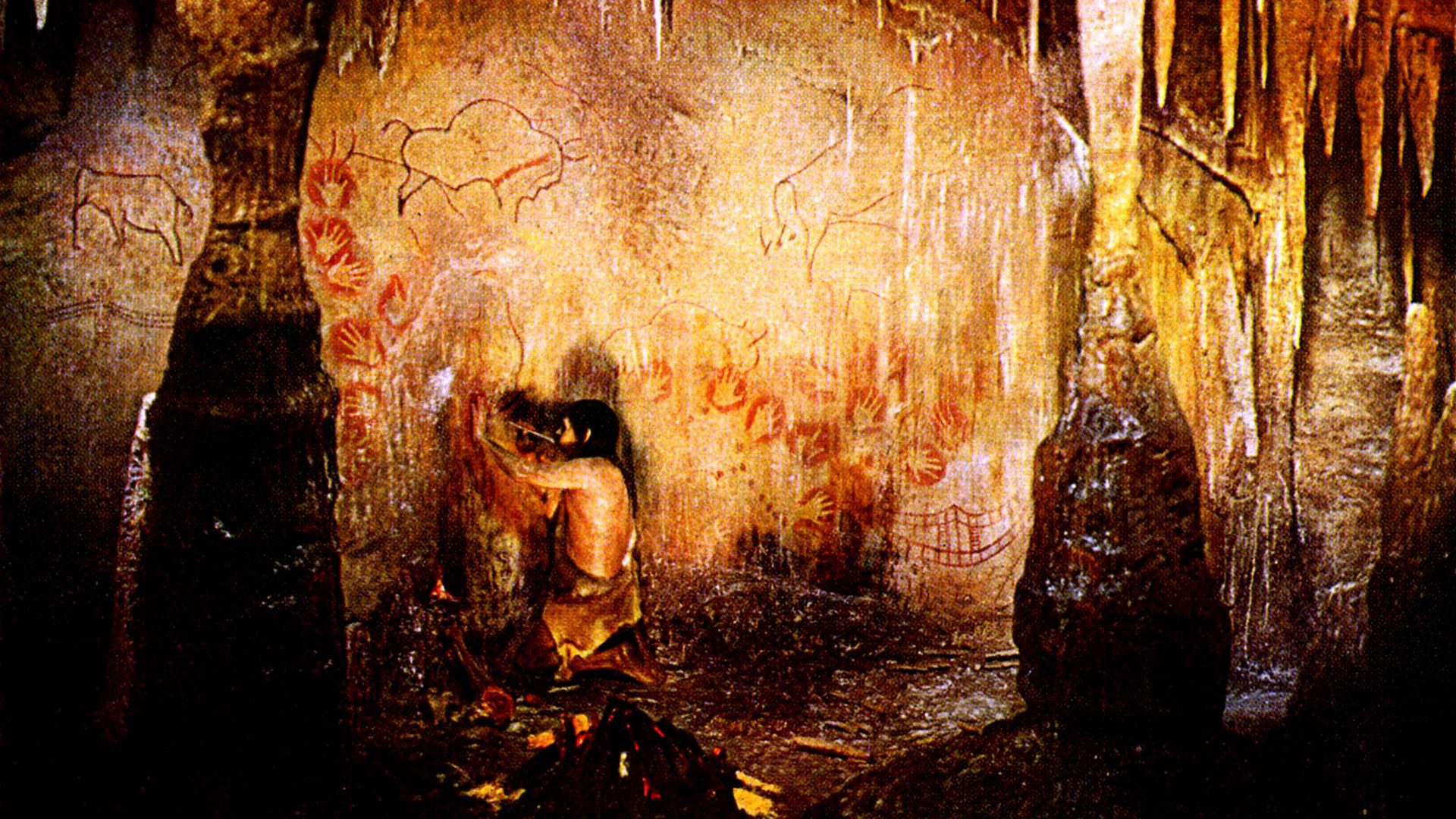
I’m never sure how surprised to be at findings like these. We’ve long known that the caricature of the brutish, grunting “caveman” is unfair. Cave art like that at Altamira in the Pyrenees and Lascaux in France – also partly a product of Aurignacian culture, some of it around 35,000 years old – speaks of a refined artistic sensibility in the ancestors of Europeans. Neanderthals, too, made cave art. The oldest attributed to them, hand stencils and images of animals in Spanish caves, dates back to 64,000 years, at least 20,000 years before modern humans even arrived in Europe.
But we’re not Eurocentric here, right? So it’s good to be reminded that culture was also flourishing elsewhere. A new report in Nature by mostly Indonesian researchers describes a hand stencil from an island in the south-east Sulawesi province of Indonesia that is even older – at least 67,800 years – than those of the “Spanish” Neanderthals, and represents the most ancient rock art ever discovered. The finding (if, as the researchers suspect, it was indeed made by modern humans and not some extinct species of Homo) supports the idea that this region – a prehistoric continent called Sahul – was populated by modern humans around the same time via the first planned, long-distance sea crossing known to be undertaken by our ancestors. These are truly portentous handprints in the sands of time.