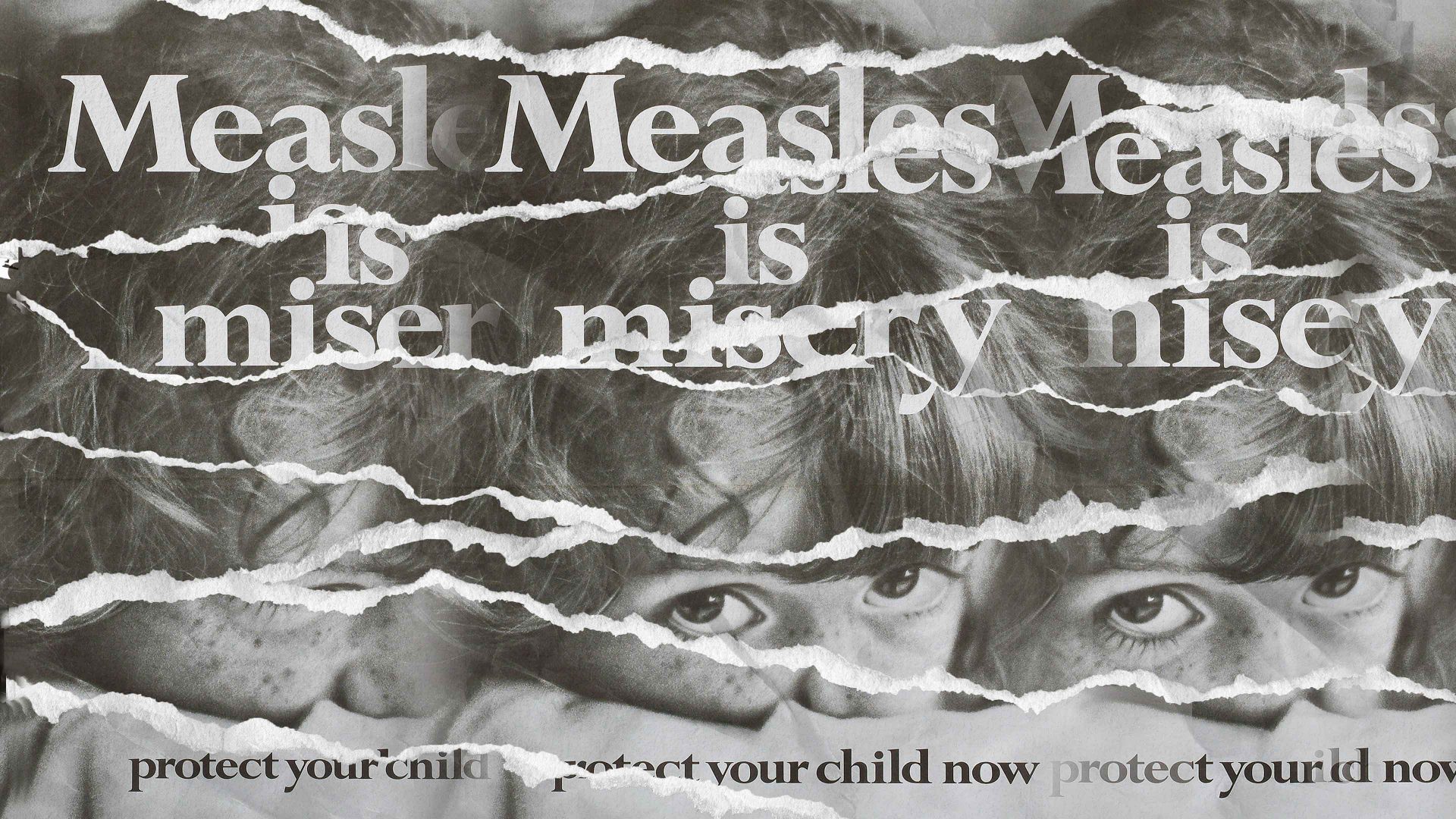
The death of a child from measles at the Alder Hey Children’s Hospital in Liverpool in July has revealed an unpalatable truth: that an infectious disease thought until recently to have been conquered has returned as a serious hazard to public health.
While the precise circumstances of the child’s death are not known, the reason for the growing crisis is clear enough: not enough parents and carers are giving their children the MMR (measles, mumps, rubella) jab.
Tragedy on Merseyside has been accompanied by tragedy in Donald Trump’s heartland. A measles outbreak centred on west Texas is the worst the US has encountered for three decades. More than 4,500 people have now caught the disease, with many hospitalised, and 16 have died – including two unvaccinated school-age children. These are the first measles deaths in the US since 2015. The outbreak has now spread to Mexico, causing at least 13 deaths.
In Liverpool, the rate of uptake for both doses of the MMR vaccine is just 74%, lower than the national average of around 83% and considerably below the target of 95% cited by the World Health Organization (WHO) as the necessary coverage for herd immunity in the population.
Across the state of Texas, at least 118,000 kindergarteners – mostly in rural areas – are exempt from one or more vaccines after their parents opted them out of in-school jabs. In the Lone Star state, you can get a waiver to exempt your child from vaccines for a for a variety of reasons, including religion. The Mennonite religious community in west Texas is thought to have been badly hit by the recent outbreak; it seems to have been an unvaccinated Mennonite child who spread the disease to Mexico on returning home after visiting relatives in Texas. Some families in Texas seem to be relying for protection on high doses of vitamin A, a remedy promoted by US health secretary Robert F Kennedy Jr. (The supplement can be toxic when taken in excess, as it has been by some of the Texan children treated for measles.)
The growth of vaccine hesitancy in the UK has dismayed healthcare experts who thought they had won the argument. The claim made in 1998 by Andrew Wakefield, a doctor at the Royal Free Hospital in London, that the MMR jab was linked to cases of autism, has been thoroughly debunked.
In 2010, the General Medical Council found Wakefield guilty of misconduct in his research by falsifying results, and struck him off their register. While some pressure groups continue to recycle the discredited claim, studies have convincingly shown that there are no known long-term adverse impacts of the vaccine and that it confers effective protection against these diseases.
Yet uptake of the MMR vaccine in the UK has fallen to its lowest level in a decade, and as a consequence, measles is having a resurgence.
In 2023, there were outbreaks in the West Midlands and Birmingham, with most cases seen in children under 10. The Liverpool death has thrown a spotlight on the uptick in measles cases in the Merseyside and Wirral areas over the summer.
The situation is reviving dark memories of 2008, when measles was declared endemic – circulating at a sustained low level in the population – in the UK for the first time in 14 years. In May of that year, a 17-year-old with underlying congenital immunodeficiency died of acute measles infection.
Outside of the UK, the WHO and Unicef warned earlier this year that measles cases across Europe are higher than they have been for a quarter of a century. “Measles is back”, said Hans Henri Kluge, WHO’s regional director for Europe.
In the US, nearly all of the cases reported for 2025 across 41 states are in people who are unvaccinated or whose vaccination status is unknown. It is the highest number of cases in a year since 2000, when the disease was declared eliminated in the US. Meanwhile, there have also been outbreaks in Madagascar and the Democratic Republic of the Congo.
The Liverpool and west Texas cases are a reminder that measles, which many parents think of as a mild and transient nuisance, can be serious and even fatal. It is caused by a virus (Morbillivirus), and usually produces cold-like symptoms and an itchy, inflamed rash, but can also lead to ear infections, pneumonia (the most common cause of measles-related deaths in children), and, in rare cases, encephalitis (inflammation of the brain) and respiratory problems.
Women who get it during pregnancy are particularly at risk, as it can cause premature birth, miscarriage and stillbirths. While the vast majority of cases come and go, it’s still pretty horrid – you don’t want to get it. But it’s terribly easy to do so if you’re not vaccinated, because the disease is highly contagious.
Suggested Reading
Trump’s war on scientific truth
A double dose of the MMR vaccine is 99% effective at giving lifetime protection from these three diseases. It is offered as a routine and free part of the NHS’s Healthy Child Programme. One of the products on offer is even free of pig-derived gelatin, for those whose religious beliefs or customs demand that.
Despite this easy and readily available solution, “uptake is nowhere near what we need to achieve,” says Vanessa Saliba, an epidemiologist at the UK Health Security Agency and a specialist on planning and implementation of immunisation programmes. It’s not a new problem: coverage of the MMR vaccine has been declining for over a decade. The Covid pandemic exacerbated this trend, but only slightly: uptake dipped from 2020 to 2022, probably due mostly to the difficulties of simply getting to surgeries for the jab.
The national trend hides a lot of variation though. “We know that there are inequalities in uptake by geography, by ethnicity, and by deprivation,” says Saliba. In general, she says, “the areas that are most diverse, urban, and have highest deprivation, have the lowest uptake.” The communities at highest risk of outbreaks are migrant populations, traveller communities, and ultra-orthodox Jewish communities.
This alone indicates that the problem is complex, and that the caricature of middle-class mums consuming and spreading vaccine misinformation on Mumsnet simply doesn’t apply. No single factor accounts for low vaccination rates in all those different groups.
Some won’t get vaccinated because they are itinerant; others might be mistrustful of authority; others might have conflicting belief systems. Some simply don’t have good access to information about what is available, or the resources to get their children to a GP.
But while the factors driving the relatively low vaccine uptake are complicated, vaccine hesitancy – a reluctance, ambivalence, or refusal to get the jab – clearly plays a role. Vaccine hesitancy has been recognised by the WHO for more than two decades, and the organisation identified it in 2019 as one of the top ten threats to global health. A WHO working group on the issue has acknowledged that this problem is context-specific, varies over time and place, and is vaccine-specific. It is not in itself a recent phenomenon, but many health experts agree that it has escalated in scope and scale in the 21st century.
Heidi Larson and Christopher Murray, two experts on the subject at the London School of Hygiene and Tropical Medicine, say that a decline in trust in expertise, political polarization, and the hyperconnectivity of the internet and social media have all played a part. One doesn’t need to believe that vaccines contain microchips or poisons to become hesitant; all it takes is a seed of doubt, especially when it comes to parents making choices for their children.
That was what Wakefield sowed with his 1998 paper in The Lancet (retracted only in 2010) on the spurious correlation between the MMR vaccine and autism. The paper caused a sharp decline in MMR compliance, from 92% in 1996 to 84% in 2002. A major review by the US Institute of Medicine, published in 2004, showed no evidence of any link to autism.
But, once Wakefield’s message was abetted by credulous media coverage and celebrity endorsement, the damage was done. Wakefield subsequently became an anti-vaccine activist, directing a 2016 anti-vax film Vaxxed: From Cover-Up to Catastrophe.
The most notorious advocate of Wakefield’s claim is Kennedy, a long-time vaccine sceptic who is convinced that autism has some “environmental” cause and has long pushed quack cures such as cod-liver oil for all manner of diseases. Kennedy recently told a US cabinet meeting headed by Donald Trump, “We’re finding interventions, certain interventions now that are clearly almost certainly causing autism and we’re going to be able to address those in September.” (Many experts argue that the rise in apparent autism prevalence in the US and elsewhere is in fact due to an increase in the number of diagnoses, not in actual occurrence.)
Kennedy and Trump are stymying efforts to get clear vaccine messaging to the American public. The US Centers for Disease Control and Prevention (CDC), which would normally intervene in situations like the current measles outbreak, has effectively been gagged by the administration. “All of us at CDC train for this moment, a massive outbreak,” one CDC researcher told health reporter Amy Maxmen writing for the agency KFF Health News. “All this training and then we weren’t allowed to do anything.” The CDC’s Director Susan Monarez has just been fired after refusing to “rubber-stamp unscientific, reckless directives” from Kennedy.
All this adds to a problem that has been developing for many years. Although antivax messaging initially spread through traditional print and broadcast media, it was one of the earliest examples of “fake news” and conspiratorial misinformation to be boosted by social media. “The role of social media in fuelling the spread of vaccine hesitancy and its increasingly documented health consequences cannot be overstated,” say Larson and Murray.
Unsurprisingly, they observe that vaccine hesitancy reached new levels during the Covid-19 pandemic, when distrust of the new Covid vaccines merged seamlessly with the existing narrative created by the MMR controversy. The pandemic hypercharged the information ecosystem through which vaccine distrust and misinformation spreads, connecting far-right and hate groups intent on fostering conspiracy theories with groups previously focused on “alternative” healthcare and well-being. In the US these networks are now part of the mainstream, aided by the conspiracy-fixated Trump administration. Inevitably some of the toxic fallout blows across the Atlantic.
Reasons for vaccine hesitancy globally are, however, diverse. In China it is marked among older people, especially in rural areas, who would rather place their faith in traditional Chinese medicine. But is also higher among younger, educated, urban Chinese women, many of whom cite concerns about pregnancy or existing health conditions, as well as concerns about efficacy and side-effects. African nations have one of the highest rates of vaccine hesitancy (for example, towards the mpox vaccine), although acceptance rates vary widely between countries, as do the reasons adduced for refusal. These include socioeconomic, religious, and cultural factors, concerns about safety, mistrust in medical institutions and governments, and scepticism about the motivations of foreign vaccine manufacturers. But as a recent editorial in The Lancet cautions, it can be hard here to distinguish refusal of and access to vaccines: “hesitancy can exist only when vaccines are available.”
There is no avoiding the fact that ethnicity is a strong factor in vaccine hesitancy in the UK. A 2021 report from NHS England says that it is highest for Black people, followed by the Bangladeshi and Pakistani communities. The document suggests this might be driven in part by “by a lack of trust in the medical profession due to historical discrimination, racist ideology and immoral experimentation on people of colour” – in other words, by entirely understandable worries.
Covid added to the problem here too. In April 2020 a French clinician suggested that Africa was an ideal testing ground for future anti-Covid vaccines because “there are no masks, no treatment, no intensive care” – an idea later echoed by others, but which the WHO rapidly condemned. It’s little surprise, then, that around 72% of Black people surveyed in the UK said they would be unlikely to take part in a study at that time of Covid vaccines, whereas 84% of white British people said they would.
There is surely no easy or one-size-fits all solution to this problem. It’s certainly not a matter of simply asserting more loudly that vaccines are safe and protect people’s health (however true that might be). People concerned about vaccines need to feel heard, not admonished.
“Healthcare providers need to offer support and encouragement and listen to what matters from the patient’s perspective”, say Larson and Murray. As experience with the Covid vaccines showed, communities particularly hesitant about vaccines need to hear the messaging from people they trust, not just from NHS websites or the government. “The messenger can be more important than the message,” says Larson. “The advice of trusted primary healthcare providers, families and friends is often much more influential than the cold facts of official sources.”
The return of measles is a reminder that public health is and always has been as much a matter of politics and sociology as it is of science. “The story of measles is one of remarkable progress,” say epidemiologists Amy Winter and Spencer Fox of the University of Georgia. “What was once a leading cause of childhood death has become a vaccine-preventable disease, with elimination achieved in many countries. Yet the recent resurgence in the Americas underscores how fragile elimination can be when vigilance wanes.”
Because it is one of the most contagious of vaccine-preventable diseases, they add, “measles is the first to re-emerge when vaccination systems falter”. But, they warn, “it is unlikely to be the last”.
 Most popular
‘Operation Epic Fury – as it happened’

Is Star Wars dead?
Morrissey returns.. and heaven knows he’s mythical now
Iran War: Trump has now sealed his own fate