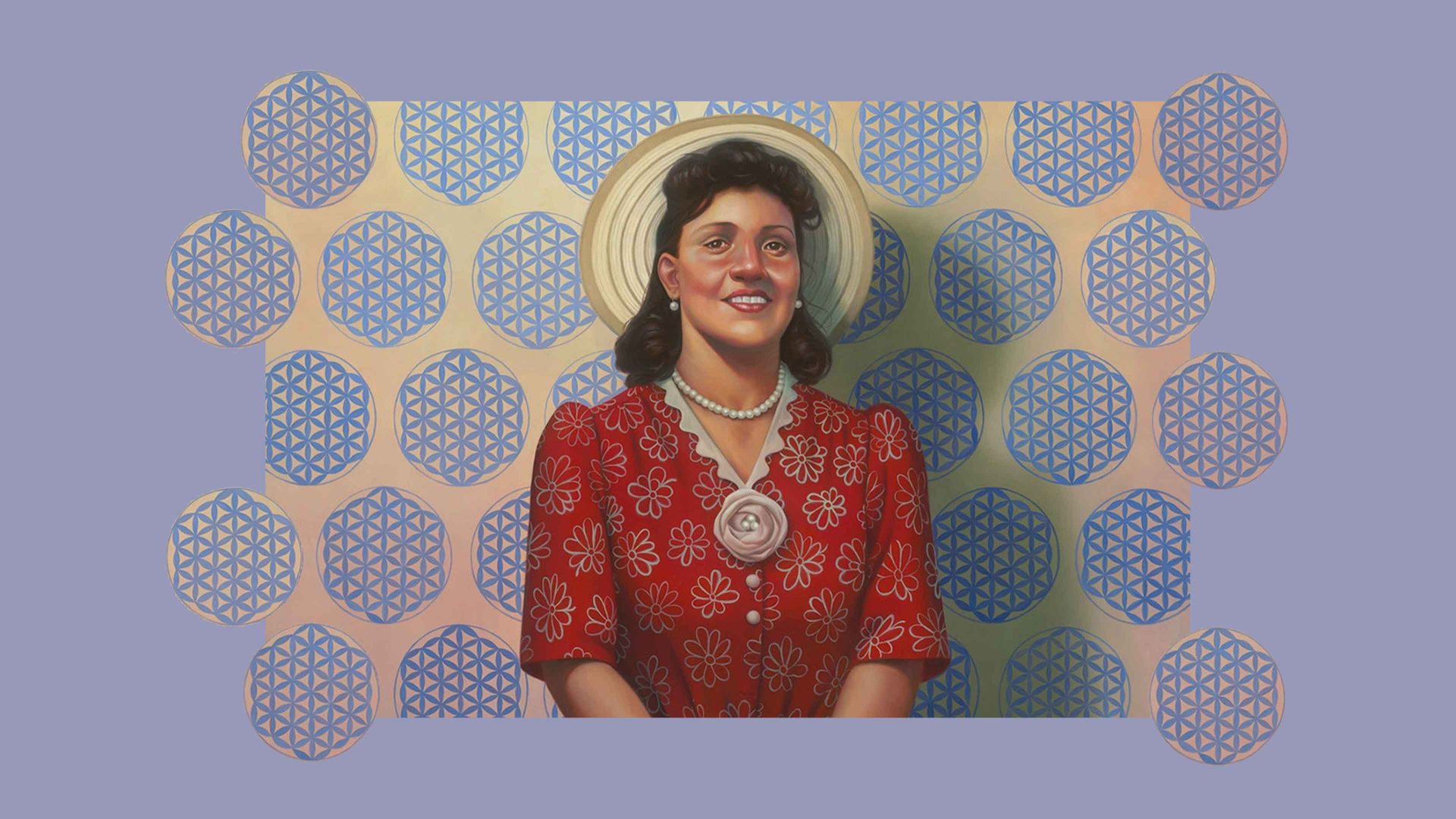
The pharmaceutical giant Novartis has reached a legal settlement with the family of Henrietta Lacks, the woman whose cells, taken from the tumour from which she died in 1951 in a Baltimore hospital, have been widely used for biomedical research and drug development. Lacks’s family has been seeking recompense for the use made of her cells for many years, although the Novartis suit was brought only in 2024. The value of the settlement hasn’t been disclosed.
The Lacks case raises a host of questions – legal, ethical, and scientific, but also about the social politics of race. As writer Rebecca Skloot explained in her 2010 bestseller The Immortal Life of Henrietta Lacks, Lacks was a Black American from a poor background who was admitted at the age of 31 to the Johns Hopkins Hospital for cervical cancer treatment.
A doctor named George Gey took, without Lacks’s knowledge or consent, some of the cancer cells from a biopsy and cultured them in a dish, finding them extraordinarily robust and apt to proliferate. Gey realised these characteristics made the cells very useful for research: for studying cancer itself, and for testing drugs, toxic substances, and vaccines.
They were used in the development of the polio vaccine in the 1950s, and have now become the standard cell line for biological research, designated HeLa. They have been grown by countless researchers and used by more than 100 pharmaceutical companies, and were even cultured in space in the 1960s.
The Lacks family received no recompense at the time, and when Skloot contacted the family for her book, she found them – particularly Lacks’s daughter Deborah – confused and distraught about what had become of Henrietta’s tissue samples. The tale has become charged with racial politics. In 1954 Lacks was described bizarrely in an article in Collier’s magazine as a Baltimore housewife “thrust into a kind of eternal life of which such a woman would never dream”, with no mention that she was Black and poor.
Later scientific discussion of how her cells – allegedly carrying a genetic variant found only in Black Americans – proliferated “aggressively” and were apt to “contaminate” and even to “doom” other cell lines used language that unwittingly (it seems) echoed White supremacist fear-fantasies.
At the same time, it is tempting to turn Lacks’s story into a parable about the exploitation of underprivileged African Americans that plays into the suspicions of the Black community about the biomedical establishment. That distrust is amply justified by the infamous infection of Black sharecroppers with syphilis in the 1930s for a ghastly study at Tuskegee University in Alabama.
Suggested Reading


Were humans writing 40,000 years ago?
But this narrative doesn’t really capture the facts either. In the 1950s it was common for tissue samples to be taken without consent for research purposes, a practice that was not regarded as unethical by either scientists or the public at the time.
Gey gave samples freely to colleagues, never seeking to make money from them, and the hospital insists it has never profited from the HeLa line. This practice is rightly seen now as improper – there are well-defined and strict procedures for obtaining patient consent – but such measures were not introduced until the 1970s and 80s.
Arguably, then, there was no wrongdoing by the standards of the day. All the same, HeLa cells have been so valuable to science and the pharmaceutical industry that it’s only proper the Lacks family should be compensated. The life sciences company Thermo Fisher Scientific previously settled for an undisclosed sum in 2023.
The Lacks case reveals how we still struggle to think about cell culture technology. It’s not just in Collier’s and in Skloot’s title that Lacks is spoken of as “immortal”. An obituary for Gey in 1971 claimed that she, “first as Henrietta and then as HeLa, has a combined age of 51.” Lacks’s promotion to almost saintly status makes HeLa cells take on the mantle of a kind of sacred relic, like the alleged remains of saints and of Christ.
And what is so special about Lacks’s tumour cells that they have this tremendous vitality? There’s usually a limit to the number of times cells can replicate, because of the progressive shortening of the DNA segments called telomeres that cap each chromosome – a central aspect of the ageing process.
But cancer cells are adept at repairing their fraying telomeres, and HeLa cells especially so. All the same, HeLa cell lines have now acquired so many mutations and chromosomal reshuffles that in some respects they hardly look human any longer. Whatever genomes they now possess, these barely resemble those of Henrietta Lacks.