
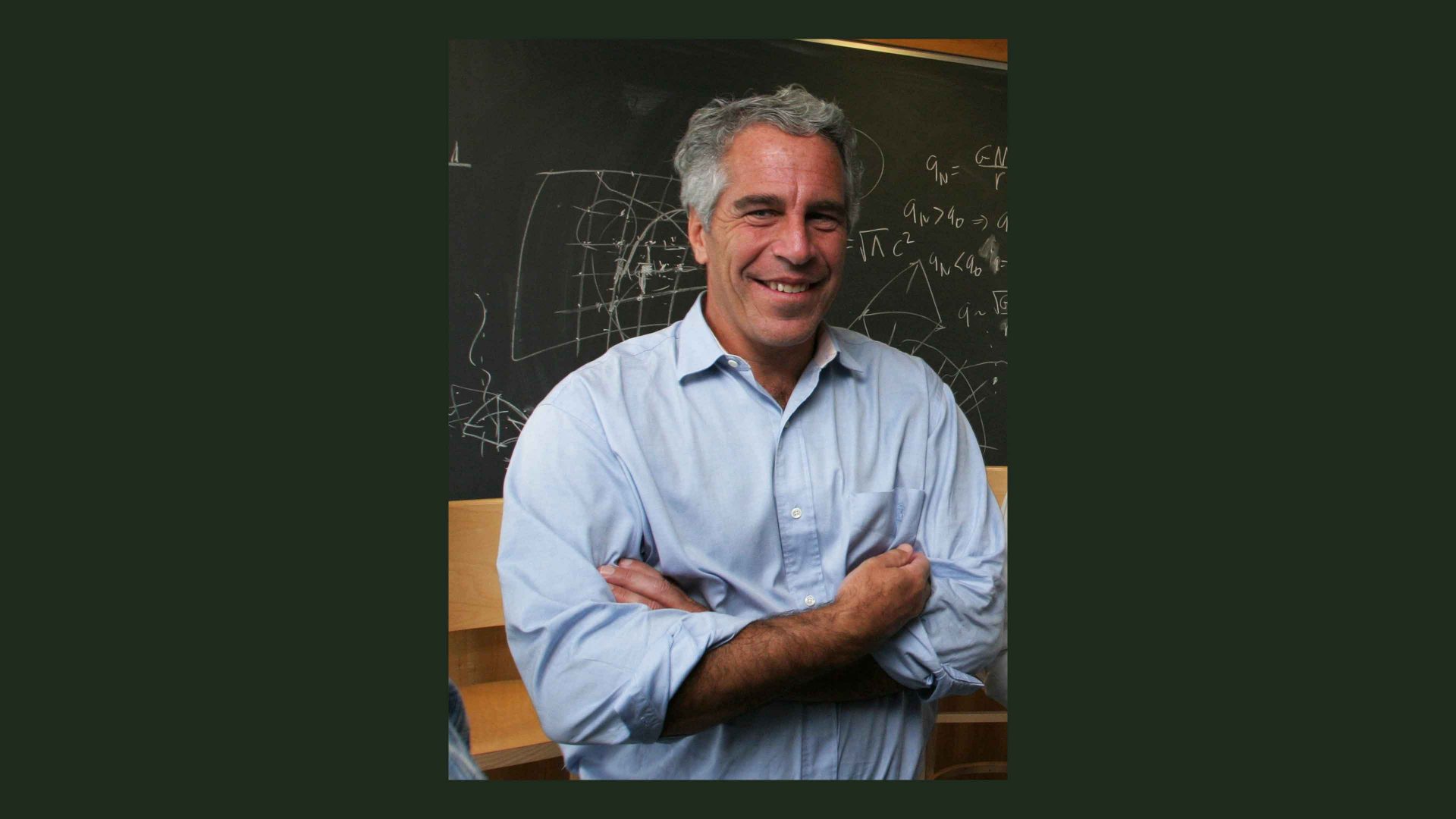
As with Mandelson, so in the science world: the Epstein files are not telling us anything that most ordinary punters didn’t already know, but are revealing the full, rotten, appalling extent of it. We have known for years that Epstein liked to surround himself with a certain type of male scientific “intellectual”: arrogant, entitled, “anti-woke” and often misogynist, typically late middle-aged and Ivy League and on the lookout for young women to impress and sleep with.
We even knew (mostly) who they were. The Epstein files have simply shed some more light on this network, on how many within it continued to fawn over Epstein after his 2008 conviction for soliciting underage sex and to accept his money and his offers of wild parties.
I’m not talking about Elon Musk – he was evidently caught up in it all, but let’s not confuse him with real scientists. I’m talking about people like evolutionary biologist Robert Trivers (sample email from 2012: “that was a wonderful lunch, a REAL pleasure… quite apart from the bevy of beauties”), linguist Noam Chomsky, physicist Lawrence Krauss, and mathematician Martin Nowak.
This isn’t just about scientists – Epstein’s academic net spread wider, for example snagging economist Larry Summers, former president of Harvard, whose speculations in 2005 about whether women are just bad at maths was evidently just the mild public face of his predatory misogyny. But scientists were Epstein’s thing, and others who enjoyed his largesse (even if there is no evidence linking them to sexual misdemeanours) include Stephen Hawking and Richard Dawkins.
Some of this was primarily about money. Joichi Ito, director of the Media Lab at the Massachusetts Institute of Technology, resigned in 2019 after apparently concealing the source of funding to the lab from Epstein.
But often it was about status, if not simply about sex. Many of Epstein’s pet scientists were supplied by literary agent John Brockman, famed in the 1990s for turning scientists into literary superstars who commanded huge book advances and wrote authoritative-sounding op-eds. This was the Big Ideas crew, almost entirely white males of a certain age. Brockman styled them as heralding a Third Culture (“rendering visible the deeper meanings of our lives”) centred on his online salon the Edge Foundation, of which Epstein was the major funder.
There was (apart from the non-representativeness) nothing inherently wrong with this. Some of those in Brockman’s orbit were and remain phenomenally insightful intellectuals, and by no means all had Epstein connections. Others severed those links after Epstein’s first conviction. Brockman’s efforts to get science seen, to put it centre stage in our cultural conversation, was commendable. And Brockman himself can be seen in the files pushing back on Epstein’s suggestion that women just don’t have the intellect to contribute to this world of ideas.
Suggested Reading

The slow death of American science
Yet we can’t ignore the thematic overlaps, not to mention the shared personnel, between Edge World and Epstein Island. One of the leading scientists who failed to cut ties to Epstein after 2008 has rationalised his mistake as “nerd tunnel vision”.
But of course! Nerd tunnel vision is a defining feature of much of the Edge discourse: moral obtuseness; a determination to win the argument rather than to listen and ponder; a tendency to fabulate improbable futures from narrow “rational” logic; ignorance of and contempt for other ways of seeing the world. And in some cases, evidently a burning desire for fame and status, fuelled in part by the opportunities that might bring for sexual conquests (consensual or not).
The Epstein files have exposed a moral rot in the circus of scientific public intellectuals, especially in the US. It doesn’t of course taint everyone in that arena, but it is depressingly easy for those of us who cover science to predict the famous names that have surfaced in these emails, or the kinds of things they will say – like Krauss persistently begging Epstein for legal advice on the charges of sexual harassment he faced from Arizona State University. (Krauss denies the charges but took retirement after being recommended for dismissal.)
Celebrity culture always has a corrosive side, and intellectuals with feet of clay are nothing new. But in science it can have a coarsening effect on scientific discourse itself. Flashy simplicity trumps thoughtful complexity: these “thought leaders” often make claims that leave real experts with their heads in their hands. Considered views on history and ethics become distractions.
And there’s a politicised element: Edge culture intersects with the technofascist futurism of Silicon Valley libertarians, and laments about #MeToo, wokeism, and pushy feminists are a constant refrain in the email exchanges. Frankly it stinks, and it doesn’t end with Epstein.