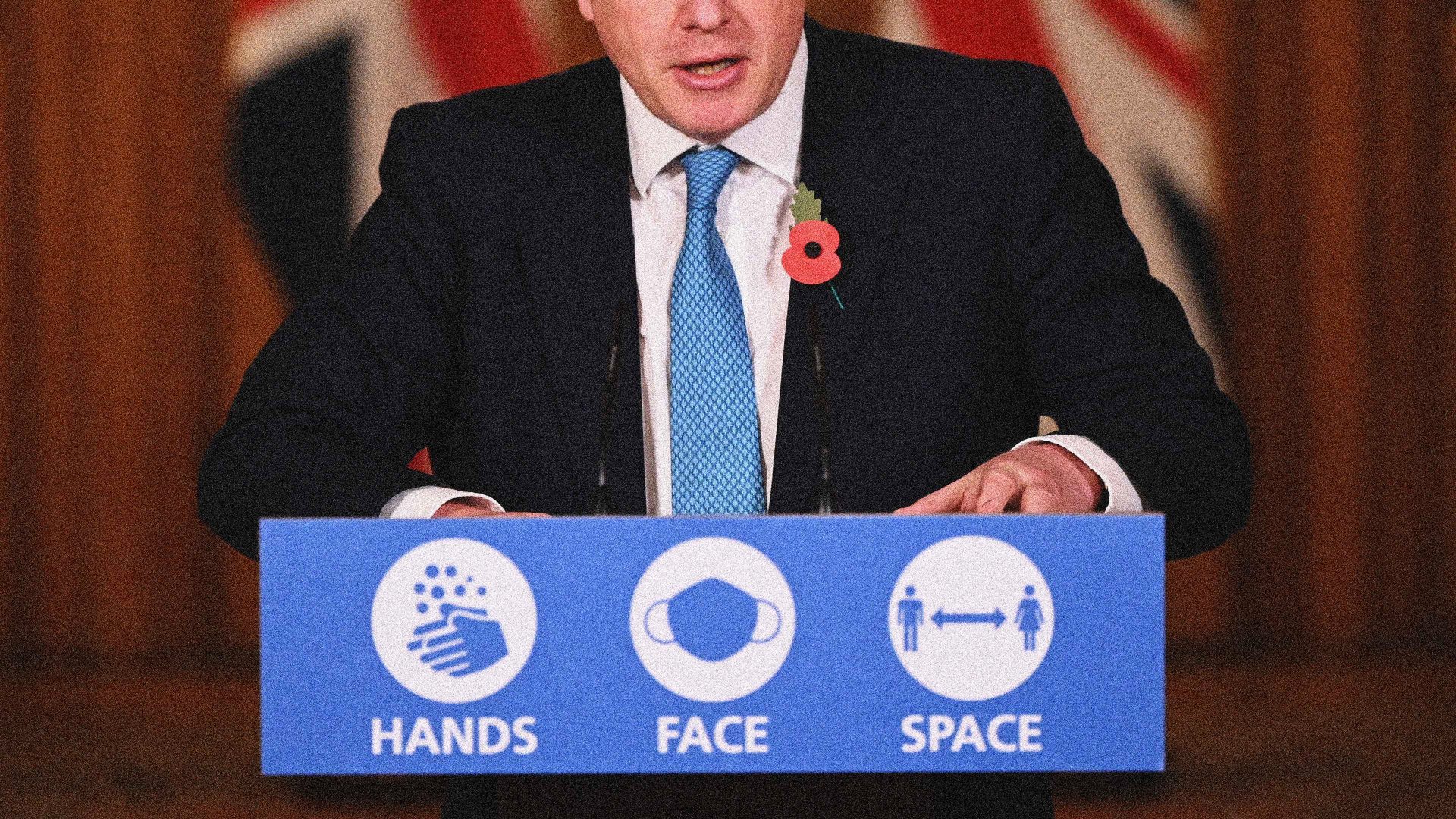
The report for the second module of the Covid inquiry, on “core decision-making and political governance” tells us what we already knew, in stark and sobering terms. For all four governments in the UK, it was a case of too little, too late. The lockdowns saved lives but were necessitated only because of initial inaction. “Despite clear signs that the virus was spreading globally, all four nations failed to take sufficiently timely and effective action,” the report, chaired by Baroness Hallett, says.
Had the lockdown started not on March 23, 2020 but a week earlier, the report estimates that around 23,000 lives might have been saved in the first wave. Indeed, if social-distancing and self-isolation restrictions had been introduced sooner, mandatory lockdowns might not have been needed at all.
This is all very damning of Boris Johnson’s governance. Johnson has predictably lashed out at the report, but the case is very clear: he failed to attend key meetings of the emergency planning group Cobra in February, never took the dangers seriously in the early days, dithered over tough decisions, hated lockdowns, and of course partied repeatedly behind closed doors.
“Mr Johnson should have appreciated sooner that this was an emergency that required prime ministerial leadership to inject urgency into the response,” says the report. “Mr Johnson’s own failure to appreciate the urgency of the situation was due to his optimism that it would amount to nothing.”
The failure wasn’t all Johnson’s. The health secretary Matt Hancock “gained a reputation among senior officials and advisers… for overpromising and underdelivering,” and Johnson’s key adviser Dominic Cummings “poisoned the atmosphere” of Downing Street.
The chancellor Rishi Sunak introduced his “Eat out to help out” scheme in the summer of 2020 without taking any scientific advice, which probably helped to fuel the disastrous second wave.
One clear message from the report, then, is that disasters like this can be expected if the country elects an incompetent, frivolous and deceptive government. It would be naive to suppose voters will bear that in mind in 2029, but no one can say they weren’t warned.
Suggested Reading
Was analysing Hitler’s DNA worth it?
While it’s right that the report’s condemnation falls squarely on the government, however, we should give some thought to its remarks about the scientific input to policy. There were grave mistakes there too. The initial preference expressed by the chief medical officer Chris Whitty and the government chief scientific adviser Patrick Vallance to delay lockdown because of the risk of “behavioural fatigue” in public compliance “had no grounding in behavioural science and proved damaging, given the imperative to act more decisively and sooner”.
Their initial plan – to rely on herd immunity building up in the population by the inevitable spread of the virus – was unreasonably fatalistic. By March the advisers suggested that testing was no longer useful when the truth was that it was simply no longer feasible because we lacked the capacity.
By the autumn, the scientists had learned lessons but Johnson had not, and their positions diverged – there was no more “following the science”. “Mr Johnson continued to reject SAGE’s advice to implement a ‘circuit breaker’ lockdown,” says the report. (SAGE was the scientific advisory committee.)
More generally, the report says that while SAGE supplied “high-quality” advice, it was hampered by the breadth and duration of the pandemic, the insufficient expertise in the group, and lack of direction from government. “This lack of clearly stated objectives contributed to the conservatism of SAGE’s advice in early 2020, with participants not believing lockdowns would be a palatable policy response.”
If the objective of the report is to ensure lessons are learned, it doesn’t say clearly or forcefully enough what they are for science advice. Broadening SAGE is a good idea, but it also needs greater independence and autonomy. As civil servants, Whitty and Vallance rightly considered it their role to support the government, but such roles should surely also have an explicit commitment to the public good, so that for example advisers can point out when government policies and actions diverge from their recommendations.
Their refusal to call out Cummings’s notorious County Durham escapade, despite its implications for public trust and compliance, was a particularly egregious example. But here’s perhaps the key lesson in this regard: the scientific advisory system should not be planned on the assumption of honest, competent and good-faith governance, but should be fireproofed against its absence. Look, after all, at who is currently leading the opinion polls.