
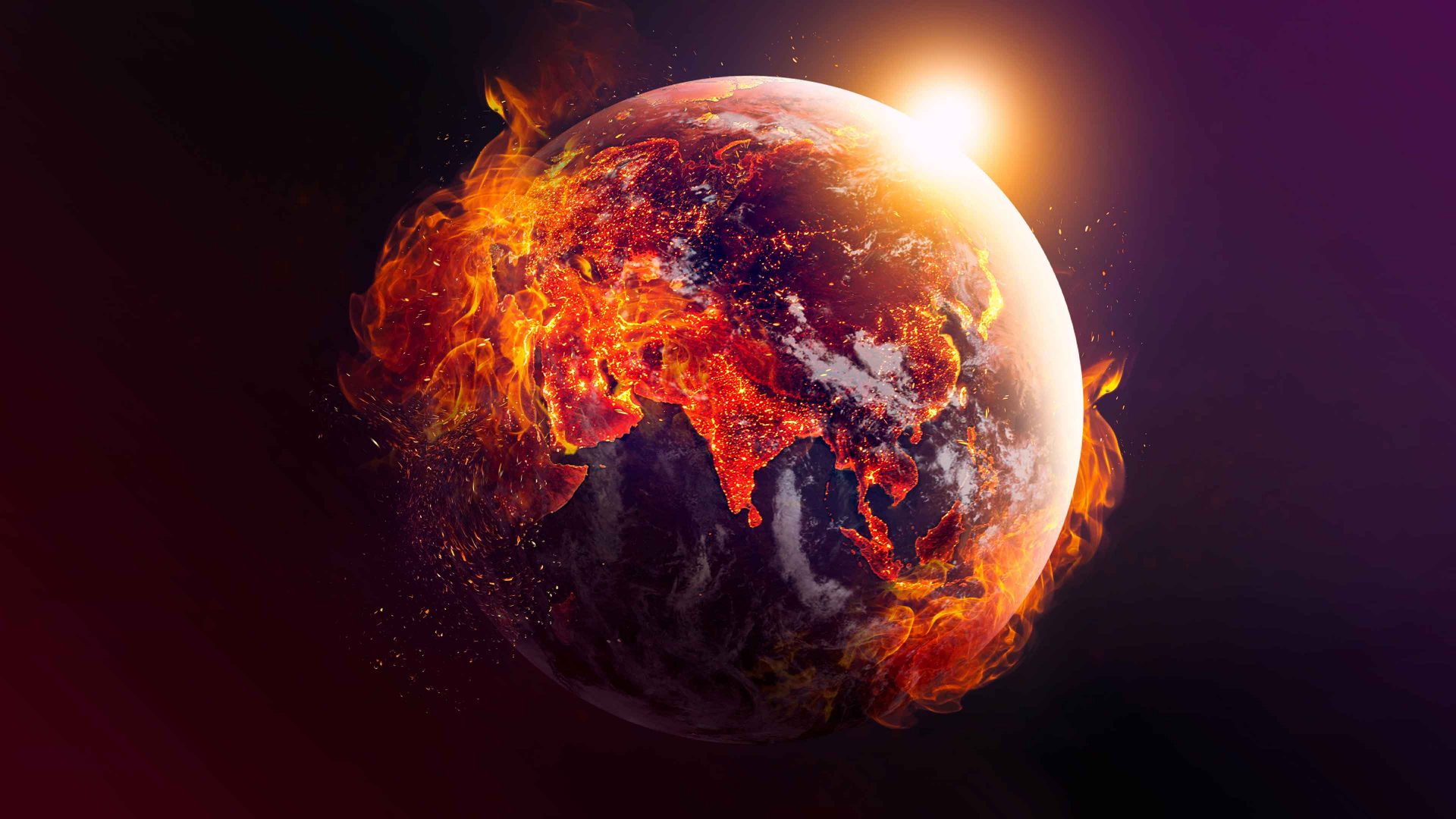
For American science (at least), the question for 2026 is: “How bleak can it get?” The Trump administration spent 2025 consolidating pseudoscience within American scientific institutions, particularly in the regulation of medicines and healthcare and in the monitoring of climate change.
The Centers for Disease Control, which heads action on infectious disease, is effectively destroyed, and the National Institutes of Health impaired from the head down, all in the service of health secretary Robert F Kennedy Jr’s war on vaccines and advocacy of quack cures.
The latest gambit to recommend against a standard hepatitis B vaccine of newborns is just the start of a dismantling of the entire childhood vaccine schedule – a move made possible by Kennedy’s appointment of vaccine sceptics to the Advisory Committee on Immunization Practices.
Meanwhile, climate-change information has vanished from governmental websites, Nasa’s climate monitoring programmes are abandoned, and global warming is officially declared a hoax. There has yet to be any organised resistance from US scientific institutions and learned societies, some of which have embraced Gleichschaltung.
Looming over all this is a serious decline in both funding and trust. A poll by Nature showed three in four US scientists thinking of moving abroad, and the brain drain will surely continue in 2026.
Nasa itself is being transformed from a paradigm of great space science into a vehicle for the nationalistic circus of putting people in space. The Artemis II mission to send four astronauts on a lunar flyby is said to be aiming for a 2026 launch, perhaps as soon as April.
Given the decimation of leadership and the Trump administration’s impatience for a flashy triumph, I would not want to be one of the astronauts taking their chances in a venture now racing to beat China to a crewed moon landing. China’s Chang’e lunar programme will continue, meanwhile, with a robotic lunar lander scheduled for August that will touch down at the moon’s south pole, where ice deposits are boosting hopes of a viable crewed lunar base in the future.
Suggested Reading

2025 could have been the year of peak AI
It’s unlikely that 2026 will be a make-or-break time for AI – many aspects of it are here to stay – but there could be turbulence for the industry, particularly if the investment bubble bursts, as many anticipate. Optimistically, a market correction – more properly, an awakening from the hype and fantasy – could recalibrate our perceptions, exposing the bluster of AI CEOs on “superintelligence” and restoring a measured appreciation of how, in specialised applications, AI could be a valuable tool.
Public impatience with, if not indeed disgust at, the flood of AI slop (see the McDonald’s Christmas ad) could reach a tipping point. But perhaps I’m too hopeful here: there is no sign, for example, that the credulity of governments about AI is lessening.
Hard choices lie ahead for regulating the genetic screening of embryos in IVF, as several US companies now offer “polygenic scores”, deduced from embryo genome sequences, for non-medical traits such as intelligence and height. While such services are illegal in the UK and many other countries, it’s unclear how to stop prospective parents getting the genetic analysis done abroad and then using the results to insist that a particular embryo be implanted.
Polygenic scores are scientifically controversial – experts say they have little if any predictive value for individuals. Some say the screening companies are exploiting the desperation and credulity of clients, but it’s going to be an increasingly lucrative business.
If a ban becomes unenforceable, however, regulators like the UK’s Human Fertilisation and Embryology Authority might be forced to grasp the nettle and figure out more sophisticated rules to protect the rights of prospective parents and children. In any event, we need to call the practice by its proper name: eugenics.
Gene editing of human embryos remains rightly out of bounds, though some US startups are eyeing that market too. Right now the risks are simply too unknown. But non-heritable therapeutic gene editing is (rightly) here already, for example to treat sickle-cell disease. I predict we’ll see further advances in the precision and reliability with which it can be done, thanks to new techniques such as so-called base editing, currently being trialled for treating aggressive leukaemia by tweaking the immune system.
One prediction for 2026 is easy: the Earth will continue to show signs of alarming warming. A cynic might add that international inaction in the face of that threat is equally predictable. Perhaps it’s true, but advances in the technologies and deployment of solar panels – especially in China – give some cause for hope. The US may be a basket case, but that needn’t hold back the rest of the world.