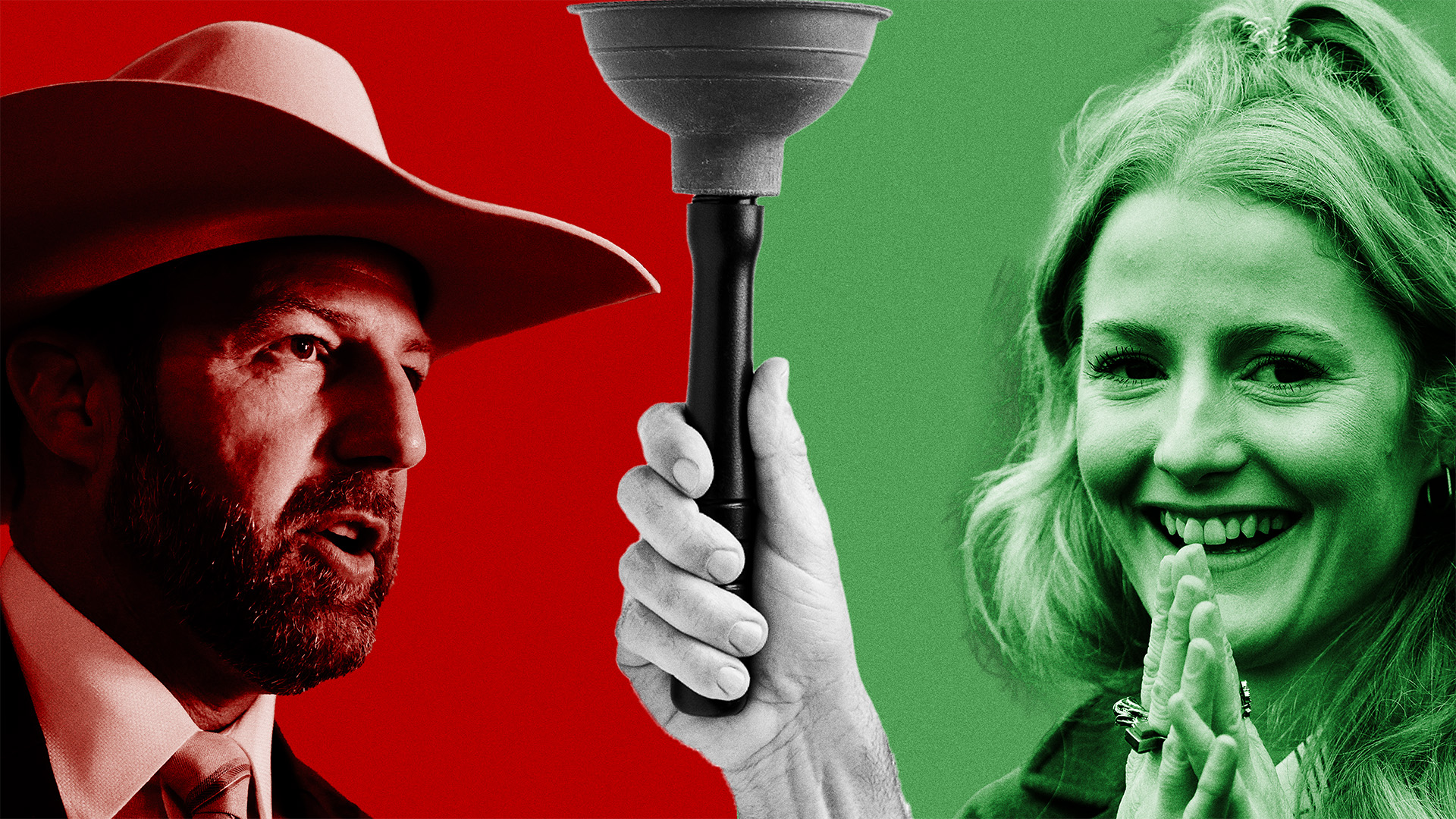
You wait ages for a plumber, then two come along at once.
Having fired the hapless Kristi Noem as secretary of homeland security, president Trump has nominated one Markwayne Mullin to replace her. The Oklahoma senator was picked in part for his combative defence of the president on TV.
Mullin even spoke up for ICE as “red-blooded American patriots doing a tough job to keep our nation safe”. He made that comment on the very day ICE had kept a citizen of the nation “safe” by shooting her dead in her car.
Mullin’s punchy, plain-speaking man of the people schtick is rooted in his background. He is both a retired mixed martial arts fighter and a former plumber. He took over his ailing dad’s plumbing company when he was nineteen, and turned it around. He first stood for Congress in 2012.
But the question confronting Washington now is: does this qualify him to lead a department with a budget of $64 billion and a staff of over 260,000 – without reprising Noem’s mix of preening incompetence and cruelty?
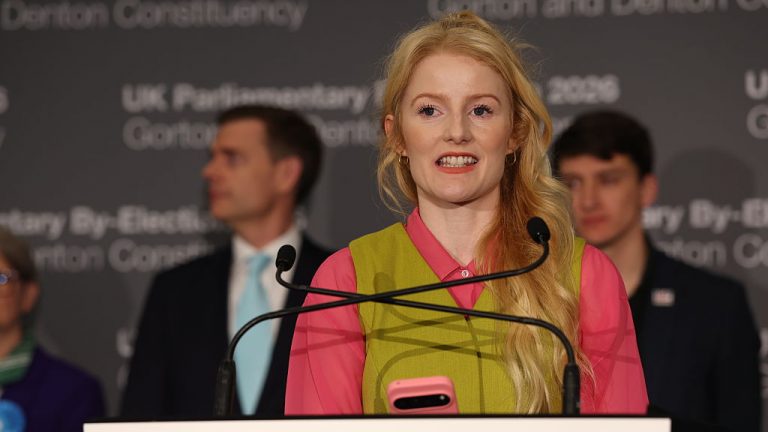
As Mullin prepares to undergo the confirmation process, in the UK another plain-speaking plumber has been adjusting to sudden elevation into a high-profile political job, as the Green MP for Gorton and Denton.
In her speech on the night of her by-election victory, Hannah Spencer decried the way hard work was no longer rewarded with “a house, a nice life, holidays”. Instead, she declared, “we are being bled dry”, working “to line the pockets of billionaires”.
The speech, and the electoral shock it sought to explain, have shaken up long-held political assumptions. There is now much talk of a populist insurgency from the left as well as the right.
But while these credentials – the plain-speaking Ordinary Person who has done a Real Job – are great for tub-thumping speeches on stage or screen, do they prepare you for the awkward trade-offs and hard problems of exercising power?
Mullin has been dismissed in some quarters as a “knuckleheaded plumber”, with much reference to his lack of even a bachelor’s degree – reportedly unique in the Senate. In the wake of her victory, Spencer’s party has been attacked for peddling extremism and “fairytale politics”.
There is certainly a version of populism that promises simplistic solutions. But the term can also suggest a much harder-to-achieve project: channelling popular anger into pressure for constructive change.
Sneering at Mullin by making his plumbing career a symbol of ignorance is a bad mistake. He is reportedly an adept broker of deals on Capitol Hill, which might prove more relevant. The risk is rather that, having been appointed by Trump as a “MAGA warrior”, he maintains Noem’s insistence on making immigration control a noisy, nasty performance which fails to solve difficult problems.
Illegal migration leaves ordinary Americans feeling less safe, and angry that the rules are being broken unfairly. But you can’t fix that by letting marauding federal government officers break other rules unfairly, to the point of killing innocent civilians.
Mullin should listen instead to the Republican governor of his home state. Kevin Stitt recently admitted that removing all working undocumented migrants would be “devastating” for Oklahoma’s economy. Rural Trump-supporting farmers and construction company bosses, he said, still backed the president on border security and removing foreign criminals, but whispered that they had workers lacking legal status who were “like family”. If Mullin can run immigration control on that basis, it might prove less noisily populist, but more popular.
Likewise, the risk for the Greens lies in not doing the hard work. They are successfully channelling real anger. They now have to develop that into an analysis of power that can transform how the economy functions, and cure the causes of the pain Spencer articulated so successfully. Railing against billionaires is easy; using politics to disempower them so that everyone else benefits, not so much.
This means overcoming an idea that goes back to the original Populist movement, which swept states like Oklahoma in the 1890s: a hostility to the very concept of the “politician”.
In his original pitch for Congress, Mullin presented himself as “A Businessman. Not a Politician!” But this cuts against the basic idea that politicians can represent their communities. Spencer’s version of the same pitch is subtly, but tellingly, different. As she said in her speech: “I didn’t grow up wanting to be a politician. I’m a plumber.”
This rightly rejects the idea that when you become a politician, you’re somehow selling out – and with it, the idea that representative democracy is inherently useless, even malign. Responding to public rage by endlessly stoking it, without fixing anything is populism at its worst. Instead, we need to recover the idea that politicians can and should represent ordinary people against entrenched power. That way, we might restore the public’s fading trust in democracy.
And you can absolutely do that by leaving plumbing behind, and becoming a politician. Our politics would be better if more people did exactly that.
Phil Tinline’s book Ghosts of Iron Mountain: The Hoax That Duped America and its Sinister Legacy is out in paperback in May.
 Most popular

‘Operation Epic Fury – as it happened’

Is Star Wars dead?

Morrissey returns.. and heaven knows he’s mythical now


Iran War: Trump has now sealed his own fate