The Munich Security Conference dramatised with crystal clarity the dilemma facing Europeans. The USA, which gave more than $15bn a year in military aid to Ukraine in the first three years of the war, donated almost none in 2025. We are supporting Ukraine in its battle for survival against Russia virtually alone.
And if the Ukrainian shield were to crumble, Europe’s defences against Russian aggression might follow.
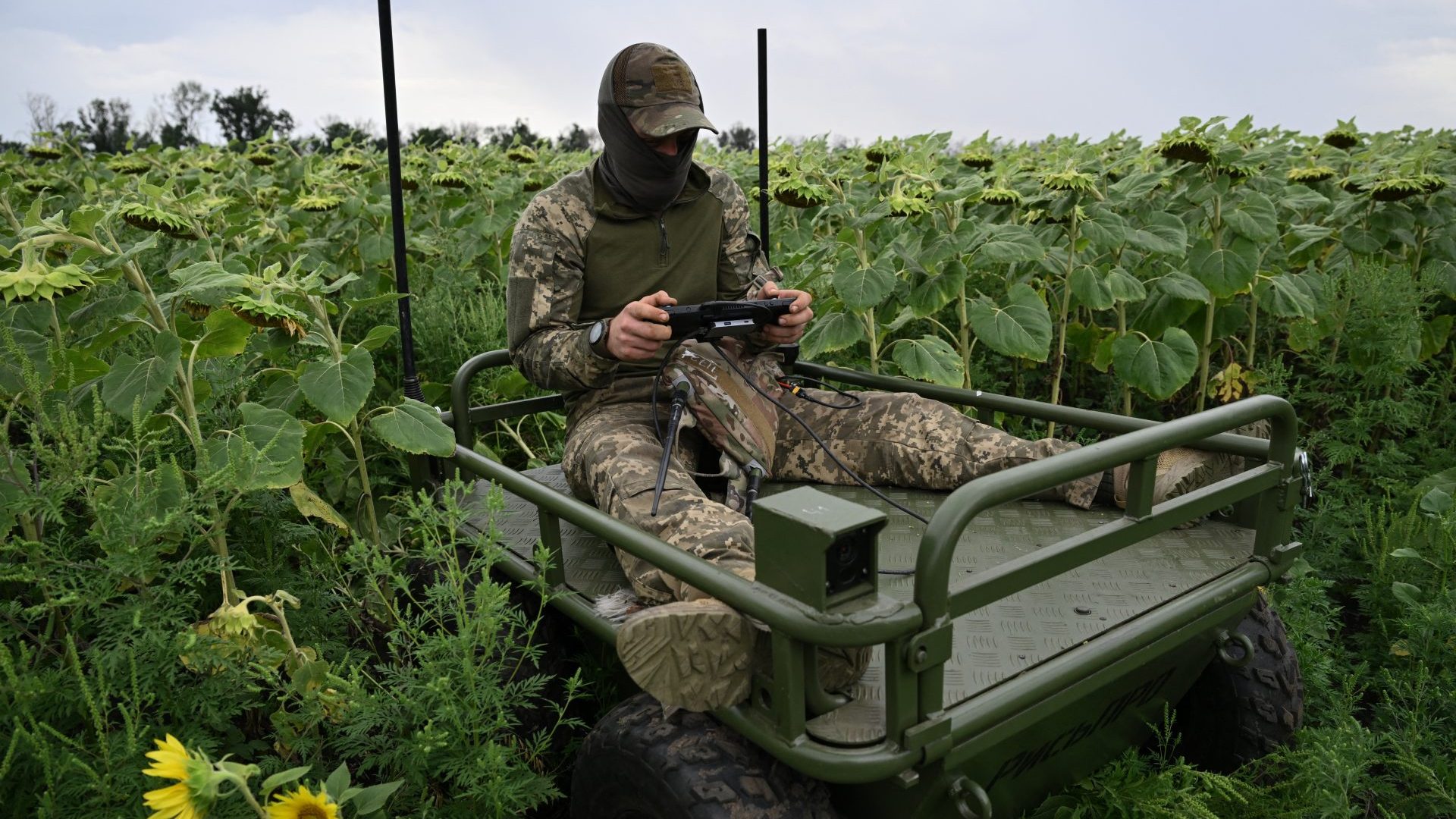
Last month, 10 Ukrainian drone operators, playing the adversary in a Nato exercise, managed to inflict so much “damage” on British and Estonian units that two battalions were declared “combat ineffective”. The Ukrainian digital communications system, honed in real time on the battlefields of the Donbas, was smarter than its multimillion-pound Nato counterpart.
If the British units stationed in Estonia were required to fight a real Russian adversary, they would meet similarly agile opponents, with half a decade’s worth of combat experience – and kit adapted to the battlefield, not the arms fair showroom.
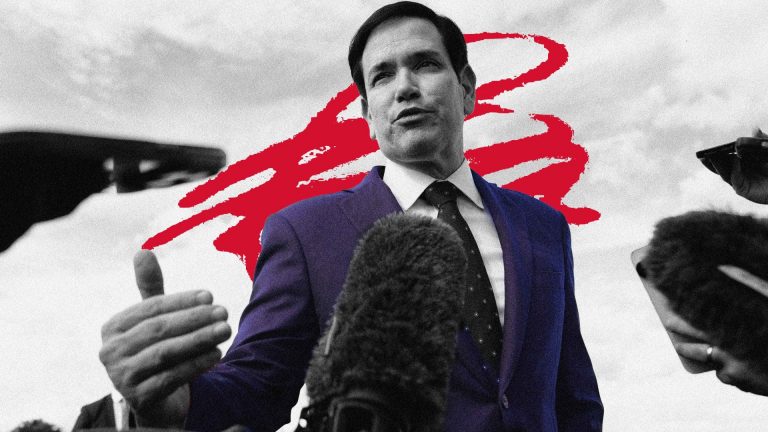
If we were facing this with a reliable American ally it would be challenge enough. But we are not. At Munich, the US Secretary of State, Marco Rubio, spelled out the new terms of American engagement with Europe.
Donald Trump has declared that spending 3.5% of GDP on defence, and 1.5% on hardening our critical national infrastructures, is the “new global standard” for the western alliance.
In Munich, Rubio spelled out how he expected European countries to pay for it: by ditching their welfare states and ending what he called “the climate cult”.
Rubio’s speech was remarkable for its logical clarity: globalisation was a mistake; deindustrialisation sapped our strength; mass immigration undermined the white, Christian civilisational values on which the west was founded; decarbonisation is self-harm. Civilisational greatness will only return when Europeans close our borders, secure our industrial supply chains and stop fretting about our imperialist past.
Shocking as that message might sound to the average European liberal or progressive, it was actually a dilution of the full Trump doctrine. In the US National Security Strategy (NSS), issued in December, Trump set out his ambition to dominate the entire Americas, to contain Chinese military expansion and to force the rest of the west into economic vassal status.
We will be allowed to use American dollars as our reserve currency and lend to the American state, but not to run the trade surplus with America that is the logical economic result of such arrangements. Step out of line and we will be hit with arbitrary tariffs.
In the NSS, furthermore, Trump outlined his ambition to divide Europe, pulling more states into the status Hungary currently enjoys: corrupt, anti-liberal authoritarianism. For the authors of the NSS, liberal democracy itself was identified as a weakness.
Compared with that, what Rubio had to offer was more like a tough, neo-conservative bargain. Rearm and we might forget about destroying your democracies from within. And because the Trump administration is fragmentary and unstable, I do not doubt that these differences of emphasis signal substantial variations of intent.
But the implications were clear to every European leader who took the stage in Munich. Europe must rearm, shoulder the burden of support for Ukraine, and free itself from reliance on US hard power at the strategic level.
It must seek, as the European Commission puts it, “open strategic autonomy”: the ability to produce, innovate, shape market conditions and defend itself, without any critical dependencies on an outside power.
Unfortunately, strategic autonomy remains – both for the European Union and the wider group of countries known as “European Nato” – an aspiration rather than a reality. It would take, say the experts, 10 years for European states to replace the so-called “strategic enablers” that the US provides in the military domain, even if we all started spending 3.5% on defence today.
These include satellites, space launch facilities, a substantial armoury of independently produced nuclear warheads, fused intelligence gathering and processing, a marine corps capable of forcing entry to a strategic enemy’s territory and a combined air force capable of taking out the air defences of Moscow, Belarus and the Kola Peninsula.
Suggested Reading
The coercive control of Marco Rubio’s Munich doctrine
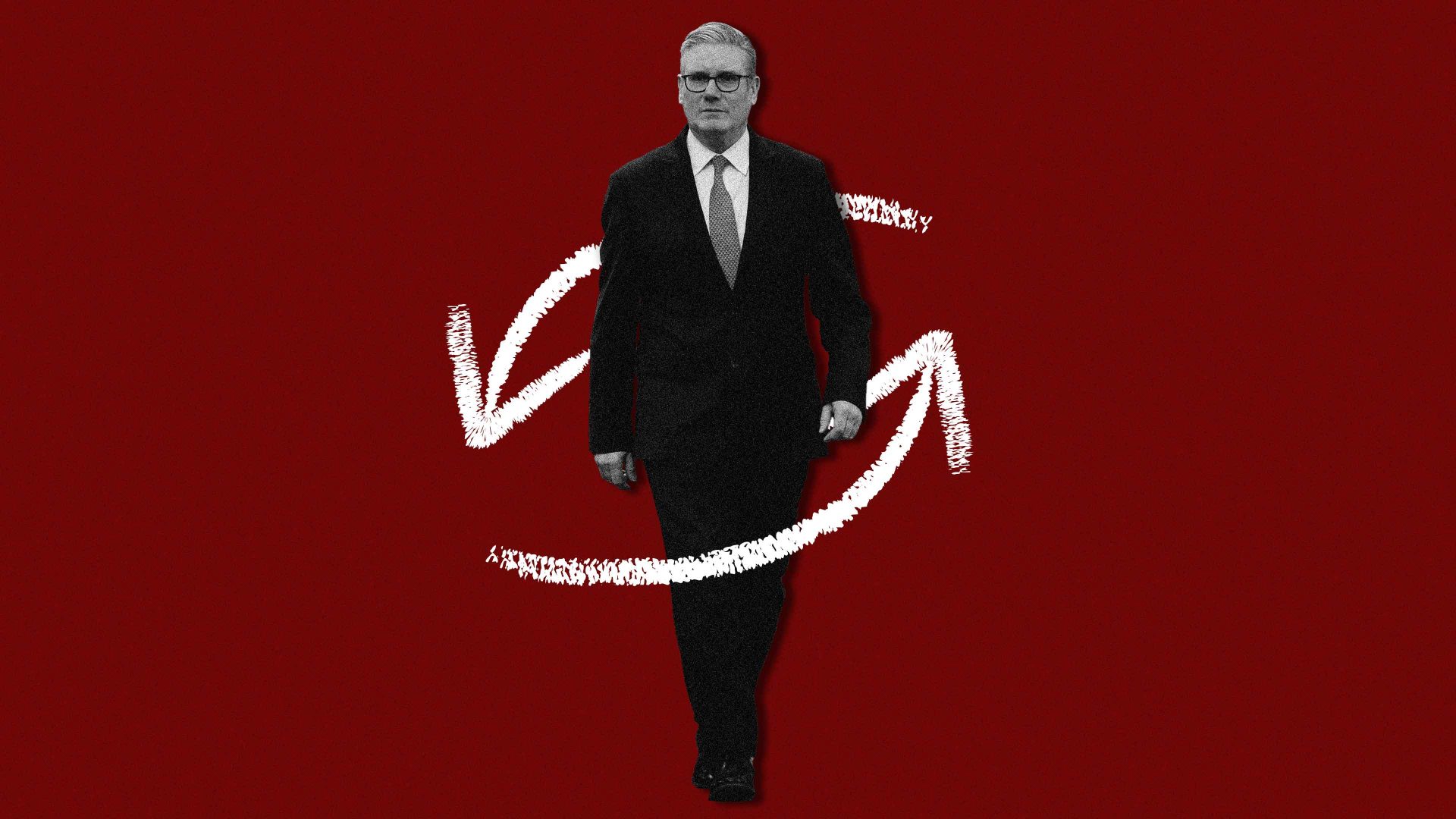
Sir Keir Starmer’s speech at the Munich Security Conference showed for the first time that the UK government understands this: that Britain has to be part of the strategic autonomy project, but must play a vital bridging role between an unstable and mercurial US and a Europe that has yet to overcome the internal obstacles to effective rearmament.
Bemoaning the fragmentation of European defence procurement – 20 types of tank and 10 types of combat aircraft – he said: “It’s wildly inefficient, and it harms our collective security.”
Starmer heaped praise on Britain’s defence industry, which accounts for more than a quarter of the defence industrial capacity of the whole continent.
But within days of his return, the British Treasury was briefing its usual lament: that there is no money, and that we cannot borrow any because of the fiscal rules Rachel Reeves imposed on herself on entering no 11 Downing Street.
This has to change. Not just because we are £28bn short of being able to fulfil the commitments outlined in the Strategic Defence Review, but because unless the UK moves rapidly to spend 3.5% of GDP on defence, we will lose our ability to shape the security outcomes in Europe.
When it was fully engaged, the US acted like an electro-magnet on European defence procurement: the string of countries adopting the F-35A as the fighter jet of choice is testament to that. But with the magnet switched off, the “iron filings” have all begun to point in different directions.
Britain on its own cannot replace the US as the directive force on European rearmament. But with an alliance of big-spending, industrially focused states it could do so. However, the price is to rearm – and Starmer, whatever he said in Munich – has not yet spelled out how Britain will reach 3% GDP defence spending, let alone the path to 3.5%.
Suggested Reading

This is what happens when Putin loses
Worse, there is no guarantee that 3.5% on its own will be enough to project the kind of economic deterrence needed to keep Putin from launching a war of aggression against a Nato ally.
So something has to give in British politics. Unless we commit to borrowing – both on our own and through the kind of multilateral defence bank Mark Carney is now proposing – the choice will be the one Rubio outlined: cut welfare and/or ditch the spending needed to achieve net zero.
It would not need a massive cut to welfare spending to fund rearmament: you could do it by ending the triple-lock guarantee to pensioners. The boomers forego an annual guaranteed real-terms pay rise so that Gen Z does not have to go to war: that’s not a bad trade-off, put like that.
But there’s a much easier and more socially just solution: that the taxpayers of the future pay down the debts we incur to keep ourselves safe today. Those are the choices facing the UK government – and by July, at the Nato summit in Ankara, our allies will need to know what we’re going to do.