On the day of the Heaton Park attack last October, when a lone Islamist killed two worshippers at a Manchester synagogue, there were 40 separate antisemitic incidents across the UK in response. Some people openly celebrated.
It died down until December, when two Australian supporters of the Islamic State massacred 15 Jews celebrating Hanukkah at Bondi Beach. That shooting caused another flurry of celebration here, making 2025 the UK’s second worst year on record for antisemitic hate.
This year opened with attacks on Roma in Northern Ireland, graffiti on Edinburgh’s Central Mosque, and a march led by Tommy Robinson against rehousing asylum seekers in Braintree.
In Basildon a mosque was daubed with graffiti proclaiming “Christ the King” and “This is England”. In February a man entered Manchester Central Mosque with a hammer and an axe. Now it’s March – and we have a war engulfing the Middle East, further inflaming what politicians euphemistically describe as “community tensions”.
In response, the government has launched a toughly worded action plan called Protecting What Matters. It pledges to celebrate difference, set “clear expectations for integration”, and publish an annual “State of Extremism” report. The German government already does this.
The Charity Commission will be told to shut down groups that abuse charitable status to promote sectarianism and will have powers to designate foreign proxy groups as “state threats”. Meanwhile, there will be taxpayers’ money to renovate places of worship.
The plan, initiated by communities secretary Steve Reed, states with absolute clarity what has gone wrong: economic insecurity and decline; the rise of algorithmic hate on social media; the rise of ethnically segregated communities; the collapse of trust in the state; and despair at its inability to police Britain’s borders.
Global wars – Israel-Hamas-Iran and India-Pakistan being the most salient – are being played out in the minds of British communities. And the thing that’s meant to hold society together, a shared British identity, barely exists beyond the educated professional and middle classes.
“This government’s vision,” says the action plan, “is for everyone to have pride in Britain, and pride in place, and for people to feel a sense of belonging to their nation as they do for their family, community, and home town.”
The problem is, they don’t. Social cohesion, once expressed through a shared, if somewhat remote, British identity, has not evaporated: it has just been refocused around ethnic, religious and even local identities that are stronger than the myths we inherited from the second world war.
The government is right to say that citizenship involves “a responsibility to contribute to the social bonds that hold the country together”. Indeed, as we may find out if the worst happens with Iran or Russia, citizenship confers duties, not just responsibilities.
The issue is that there are now probably millions of people who, if push came to shove, would neither fight for this country nor care if it disintegrated. I am not talking only about young Muslim activists terrorising Jewish professors on campus, but also the far right military veterans who believe “the war is here”, on the streets of a Britain that they say has already been “destroyed” by diversity.
That is a legacy not just of the Gaza war and recent economic stagnation. It is the legacy of the neoliberal era, in which a decision was made to atomise the only vector of social cohesion Britain has ever known: working-class identity.
So I am afraid Reed’s action plan, welcome though it is, is not enough. Though the mainstream of the UK population does want a society where different religions and ethnicities live side by side, there are now organised bodies of people who do not.
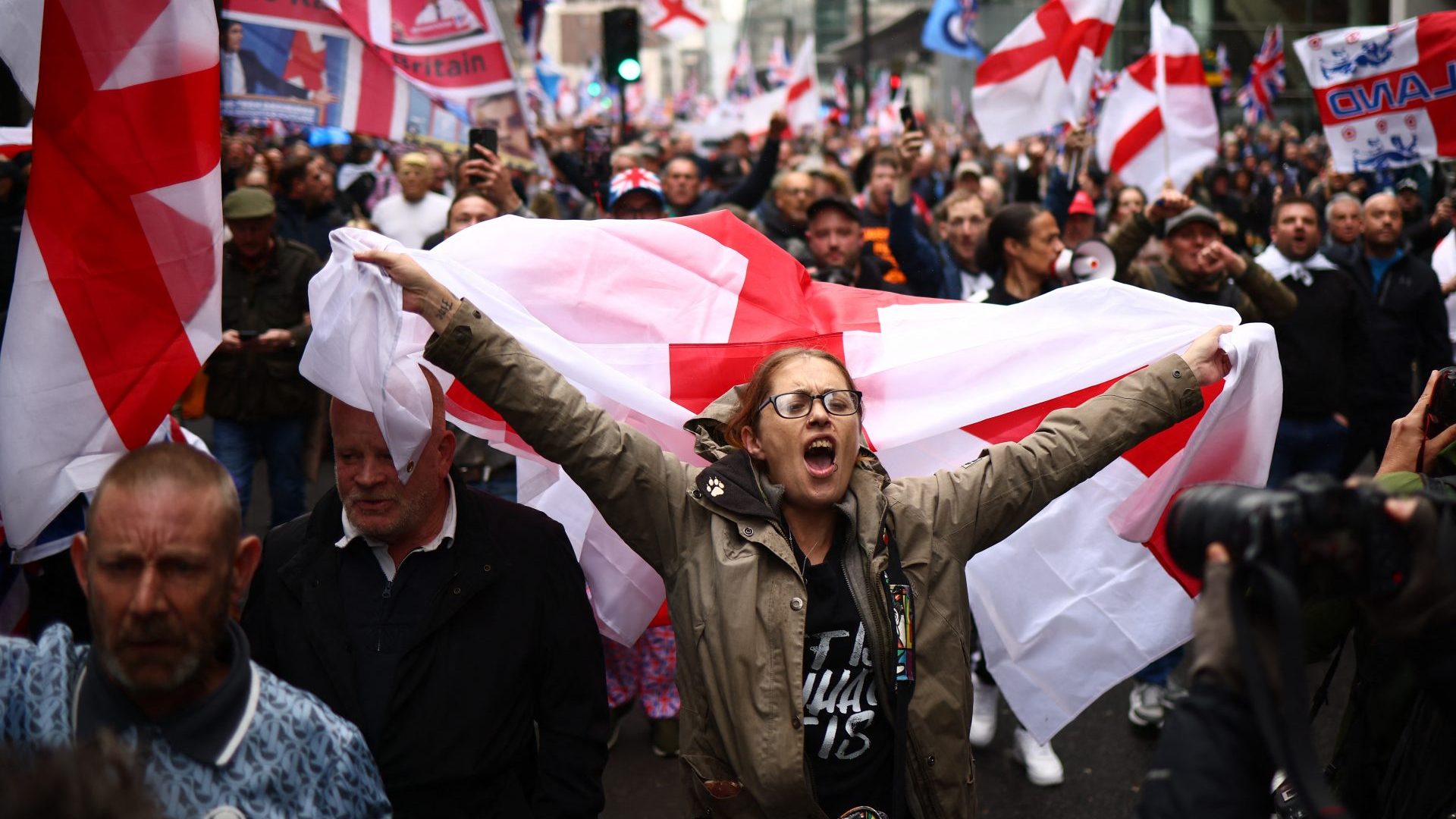
More than 100,000 people marched through London behind Tommy Robinson last autumn. Across Britain, meanwhile, Muslim “independent” candidates – making no pretence at mobilising anything other than religious identity – will probably take scores of seats in the May local elections.
We must stop looking past this twin radicalisation. It is offensive, unacceptable, mutually reinforcing. We – the democratic majority consisting of all faiths and identities – have to stop tolerating it, and fight it. Just as I am prepared to call Tommy Robinson supporters fascists, I have to be prepared to call supporters of Akhmed Yakoob, a Birmingham lawyer-turned-rabble rouser, what they are: religious sectarians.
Suggested Reading

The quislings of the right have abandoned patriotism
Parts of the left claim using the word “sectarian” for radical Islamist politics is, itself, racist. As someone who grew up with Protestant-vs-Catholic sectarianism in an English mining town, I just ask them to get real.
In 1937 the German jurist Karl Loewenstein, having fled Munich for Yale University, penned the seminal guide to dealing with situations like this. In Militant Democracy and Fundamental Rights, he urged policymakers to stop treating fascism like an unstoppable demiurge and understand it as a technique, which can be combated with better techniques.
Democracies, he wrote, have no obligation to facilitate their own demise. Fascists can only succeed in conditions of excessive democratic tolerance, through electoral manipulation, disinformation, intimidation and foreign funding.
Shut down their funding, ban their uniforms, arrest the intimidators, close the disinformation channels, he wrote, and they will go away. If there are parties that do not recognise the constitution, or the rule of law, cancel their right to exist.
I am afraid that the sheer scale and rapidity of radicalisation towards the extremes means British democracy – and British democrats – will have to “get militant” along the lines Loewenstein recommended.
There are hints that the government understands this: the State of Extremism report it plans to issue is based on the German legal model Loewenstein helped to create after the war. Tougher implementation of the Online Safety Act and driving antisemitic doctors out of the NHS would be a start.
But in the end, it is down to the decent majority of British people to stand up and stigmatise those who are trying to foster a race war in our country. That’s why I supported Shabana Mahmood’s decision to ban the pro-Iranian al-Quds march. And I would support a decision to ban any further attempts by drunken white racists to follow Tommy Robinson through the streets.
But we must go further. I spoke recently to someone who trains university authorities in dealing with antisemitism. He asked a very prestigious London university why it did not expel the masked students who have been hounding Jews and “Zionists” on campus. “We don’t know who they are,” came the reply.
With the evenings getting lighter, and with every bad actor in the world fostering disinformation and division here, we need to mobilise the majority – to reject both white racism and all forms of religious sectarianism.
Can a militant democracy be a liberal democracy? Yes, so long as we adopt a tougher understanding of what liberal means. Rights and tolerances designed for a spontaneously cohesive society may no longer be appropriate in a society where large bodies of people have checked out of respecting their fellow citizens.
I would say to that prestigious London university, with its world-class labs and esteemed professors: find the identities of the masked-up students terrorising Jews and kick them off your campus – or lose your licence to operate.