
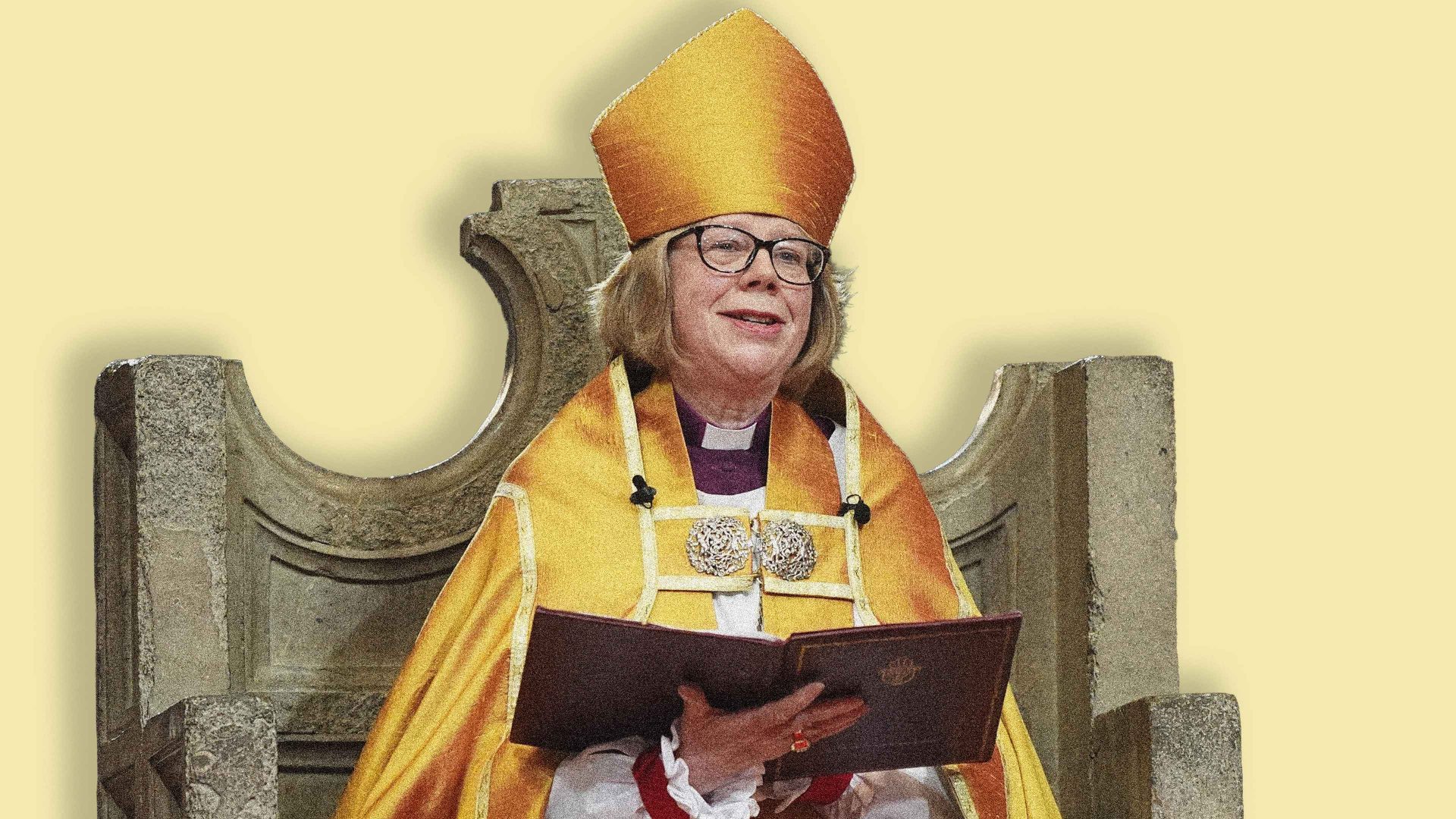
The latest recruit to the roster of world leaders defies all the usual stereotypes. Tasked with finding someone to play the head of a movement that claims upwards of 100 million members, central casting would surely never have put forward a 63-year-old woman, whose most striking feature is her heavy-rimmed glasses. Sarah Mullally has become the new archbishop of Canterbury, the head of the Anglican church in its various guises.
Unfortunately, almost as she was being installed in the role, seated in a splendid gold throne likely to elicit envious looks from certain other world leaders, her organisation found itself in the midst of a controversy all too familiar to some of those leaders.
The remarkable uplift in church attendance by young people, which had been the subject of much gentle boasting, was shown to have been based on dubious data. YouGov, which had produced the figures for The Bible Society, accepted responsibility. The report, which had proclaimed that young people in particular were flocking into church, was withdrawn.
Life as a world leader is rarely easy, but the former nurse, who only became a priest in 2002, appeared to be happy about the challenges she faces, smiling broadly during her enthronement.
Opposition to women becoming priests remains strong in some geographic branches of the Anglican faith, and even in the UK there are significant pockets of resistance. Promoting a woman to the role for the first time inevitably alienated those who are opposed to women’s involvement in the church.
Then there is the long-running saga of how the church has dealt with allegations of child abuse. It was his alleged failure to deal with this that brought an abrupt end to the career as archbishop of Justin Welby, leaving the vacancy that Mullally now fills. It is almost inevitable that more allegations of abuse will arise.
She made a very deliberate attempt to make last week’s ceremony as globally and culturally inclusive as possible, with a symphony of different languages employed. But the Church of England remains the established church, a position which many find increasingly at odds with the largely secular nature of the UK.
Suggested Reading

Assisted dying dirty tricks could kill the Lords
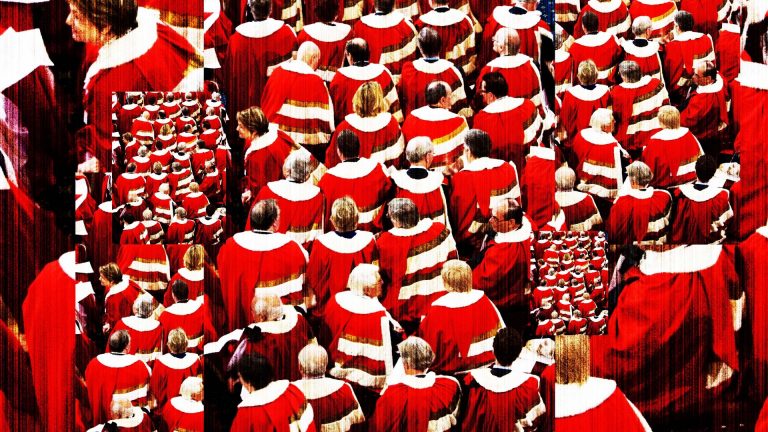
That role in the establishment is particularly obvious through the presence in the House of Lords of 26 Lords Spiritual, with full rights of participation, including voting on legislation, and drawn from only one religion. As the hereditary peers are finally ushered out of Westminster, and the idea that a place in the legislature should not in any way be linked to genes has finally been accepted, it does seem anachronistic that the bishops’ benches should persist.
The authoritative British Social Attitudes regular research shows a steady decline in CofE attendance – and yet there have been growing numbers going to Catholic mass, partly due to the eastern European families who remain in the UK. Yet when the new archbishop of Westminster was installed a couple of months ago, it was a relatively low-key affair and this archbishop, Richard Moth, has received little attention.
Admittedly, his role lacks the global status of Canterbury’s archbishop, being subservient to the Pope. But as far as providing a degree of leadership in the UK is concerned, for many people Moth is just as important as Mullally.
In recent years, a perceived lack of a real sense of direction in the country has created new space for the church to fill the gap. It might help to atone for the way in which churches shut their doors during the Covid pandemic. Just when people were feeling lonely and vulnerable and in need of reassurance, the church was seen to be shirking its responsibilities. There were exceptions. Many tried to offer online services, but the episode did little to bolster the church’s standing.
Any sociologist or politician will tell you that people like being part of a thriving community. Clearly, government has largely failed to answer that need. While a shortage of cash is sometimes cited as the reason, and it may exacerbate the difficulties, money is not the sole issue. Churches used to be at the heart of communities, providing part of the fabric of society for believers and non-believers alike. Some continue to work at that. But there is a huge opportunity for them to do more.
Now, in the early days of their new roles, there is an opportunity for Moth and Mullally to work together to help lift the UK out of the gloom into which it is sinking. Perhaps congregations should start praying for such an outcome.