
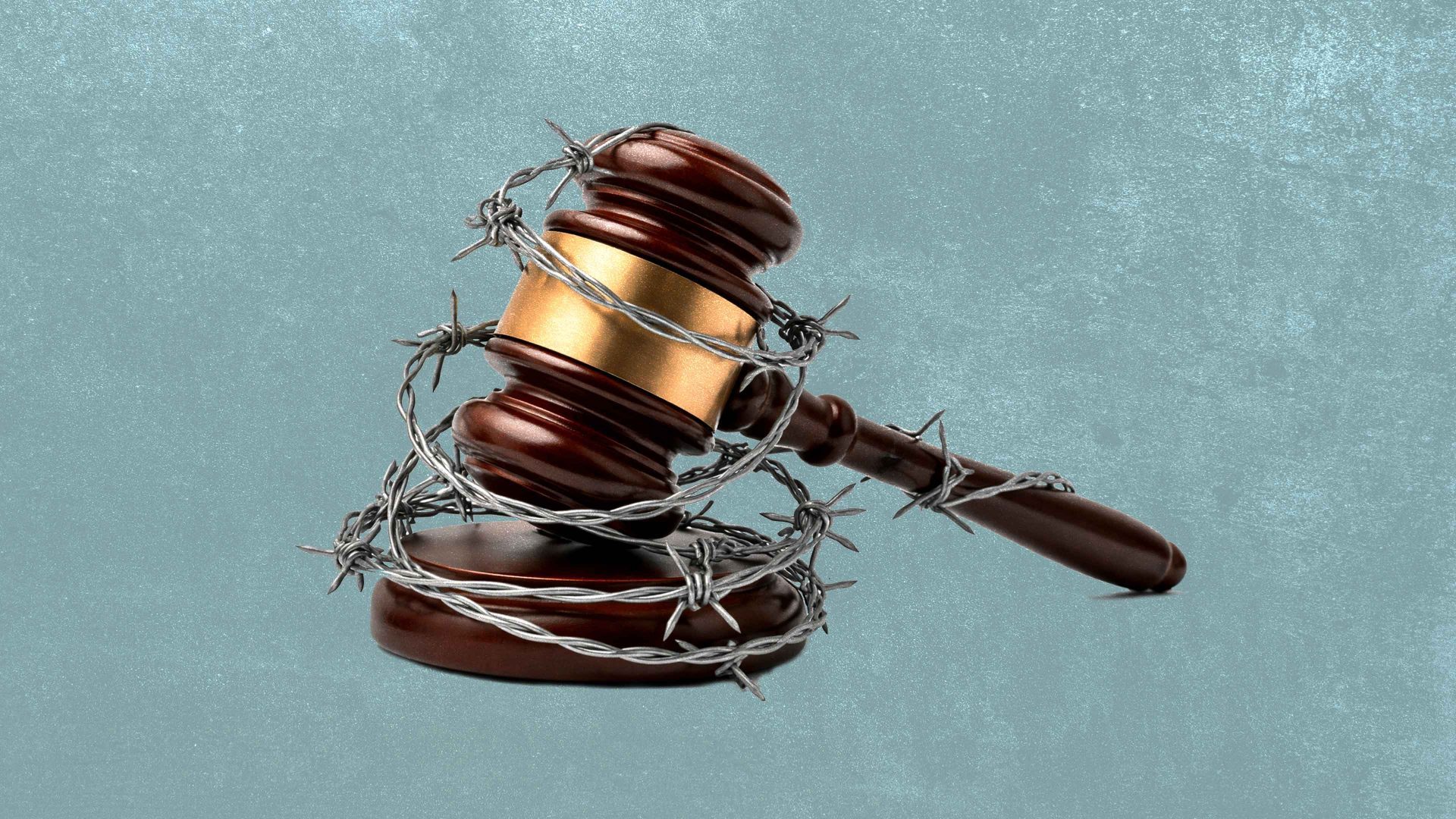
In his first speech as prime minister, Sir Keir Starmer promised that his government would “tread more lightly on your lives”. At last, it seemed, someone understood how onerous ordinary life had become. Now things really could start to get better.
But far from lightening the burden, this government has continued to churn out legislation on a prodigious scale. The Crime and Policing bill, for instance, when you add in the explanatory statements, comes in at around 600 pages.
The root of the problem seems to be a determination to spell out all the potential harms that must be outlawed. In this particular bill, these range from obviously dangerous knife-carrying to various levels of antisocial behaviour. The details of certain sexual activities provided must surely have shocked even the most broad-minded of parliamentary draftsmen.
Many of the numerous amendments to the assisted dying bill are based on the similar premise: potential abuse, however extreme or unlikely, must be identified so that it can be prevented or punished. The assumption is that only fear of the law prevents people from doing dreadful things.
As the Epstein saga rumbles on and the media savours every unsavoury detail, it is easy to succumb to this depressing view. But let me offer a more encouraging view. Last Tuesday, leaving a meeting in central London, I slipped on the pavement and collapsed in an unsightly heap. Offers of help came immediately: a hand up, a glass of water, an ambulance? Would I like a friend to be summoned? A chair, perhaps? My handbag gaped open on the floor, but no one attempted to help themselves to my purse or mobile phone.
Deciding (incorrectly as it turned out) that I had no need of A&E, I opted for a passing cab. The stranger who helped me into it could not have been gentler or kinder. No cab driver could have been more patient than this one. Heading to Westminster, intent on getting to another meeting, the security guards and police who met me were equally wonderful.
Maybe I was lucky. But perhaps not. There are people whose lives have been so blighted from the start that they only know nastiness. Their path into the criminal justice system could almost be mapped from birth, and it is shameful that the country has such a poor track record of allowing this to happen.
And it is depressingly true that one bad apple can very quickly sour an entire orchard – as the fallout from Epstein illustrates.
But, if it had ever been possible to itemise all the misdemeanours that people might commit, that is certainly not the case today. Technology moves so fast that, no sooner is a particular crime identified, for instance “cyber-flashing”, than the apparent fashion among certain groups for bombarding people with unwanted photographs of genitals has moved on to something different, but equally distasteful.
Suggested Reading


Snobbery and deference have broken Britain – and created Andrew
Is it really necessary for the offence to be spelt out when it is generally obvious that certain behaviours are definitely not acceptable? Effectively taking control of a property owned by another individual without being invited to do so is clearly wrong. It doesn’t matter whether it is called “cuckooing”, modern slavery or daylight robbery. The law needs to be flexible enough to cope with the human ingenuity that continues to devise new ways to inflict harm.
Those in favour of ever-more detailed legislation argue that, without very specific offences, clever lawyers will find a way of ensuring their clients cannot be found guilty. Others might contend that the more specific the offence, the more room there is for clever lawyers to steer a way through and guide their clients to safety.
Given the sheer impossibility of legislating for each and every possible twist and turn, as demonstrated in the fiasco over assisted dying, the only hope is for a more holistic approach, based on a set of widely accepted principles. As a nation we remain hugely divided on issues such as appropriate levels of taxation, the best way to deal with immigration and how the country’s defence should be handled and funded, let alone policy towards the EU (although most people agree Britain should never have left).
Much current legislation, however, is attempting to deal with smaller, and very different, issues. If it started with the premise that the vast majority of people are not latent criminals but pretty decent – like those I encountered last week – many trees would be saved and the need for constant legislative change would vanish.
Perhaps then the government could begin to tread a little more lightly on normal, law-abiding citizens.