It was the autumn of 1998. A South American leader had just been arrested, Peter Mandelson was about to describe the “serious error of judgment” which would lead to his resignation, and parliament was grappling with the right of hereditary peers to sit and vote in the House of Lords.
Not much change there then, but, along with Who Wants to be a Millionaire?, it was also the moment that In Our Time arrived blinking on to the airwaves: the incongruously named radio programme with a global reputation, an audience which spans generations, and downloads which number in their billions.
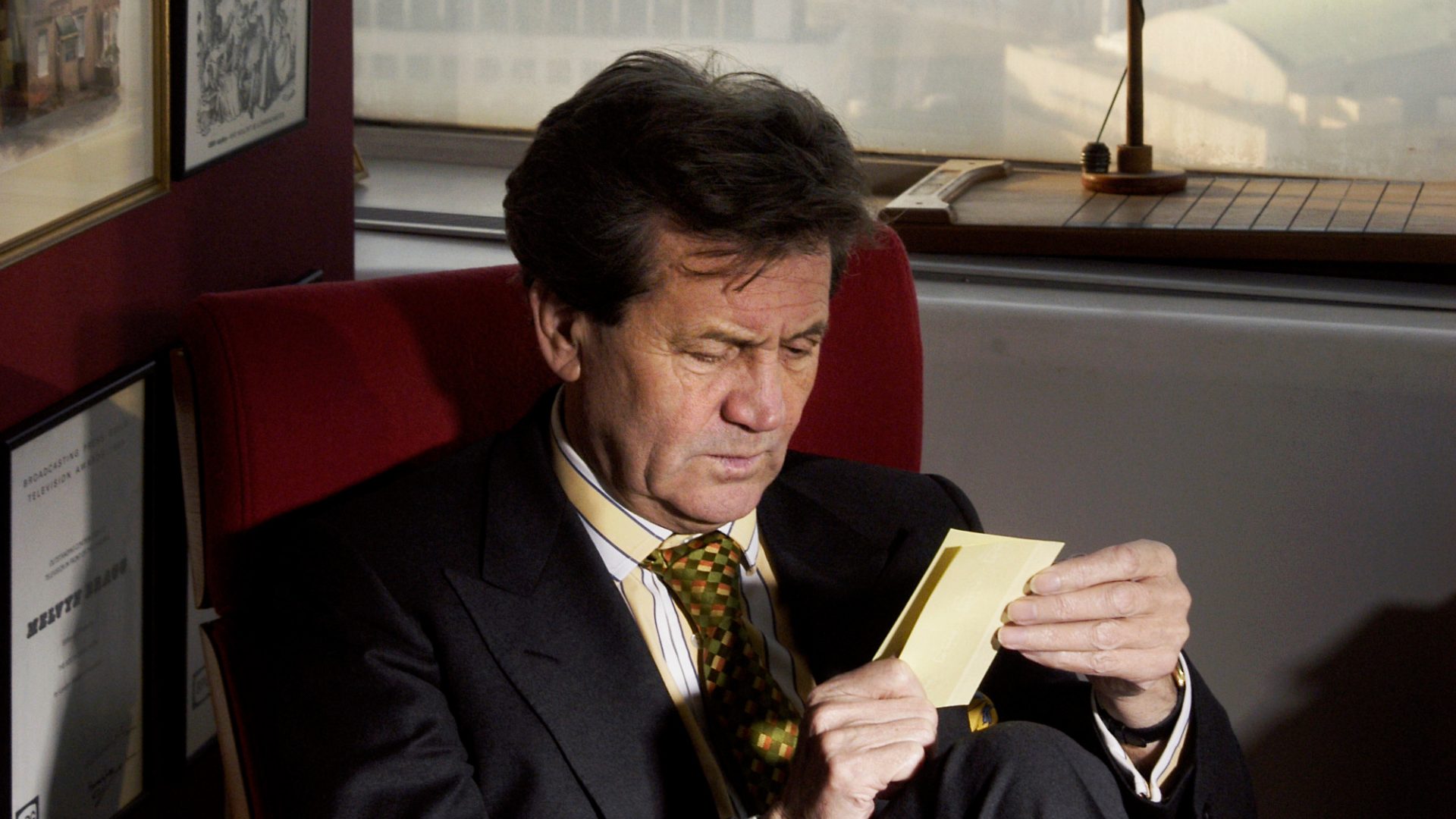
This is an extraordinary achievement for steam radio. In an age of proliferating podcasts and dwindling attention spans, the programme fulfils the perennial Radio 4 dream of appealing to “younger listeners”, many of whom use it as an open-access university, while also delighting the rest of us, who simply enjoy the weekly thrill of hearing three experts politely disagree over something we might never have heard of. Now its original presenter, Melvyn Bragg, has stepped down after 27 years at the helm. The mantle has now passed to Misha Glenny.
But how did In Our Time come to be? I can answer that with the authority of someone who, alongside Melvyn and my editor, Ian Gardhouse, was its creator. I had been producing Radio 4’s Start the Week, then hosted by Melvyn, who needed a new berth following his elevation to the House of Lords.
Notionally, Start the Week was divided into four segments, as though guests were quarters of an orange. At the precise moment each guest reached the end of their allotted time, the conversation would become increasingly absorbing as they dug deeper into their favourite subjects. Most would begin to relax, grasping their topic – be it altruism or astrophysics – by the scruff of its neck, just as my hand was hovering over the talkback button to urge that they “move on”.
It was apparent that academics of all ilks who appeared on the programme had far more to offer than a 10-minute cameo on a Monday morning. Many scientists, geographers and mathematicians brimmed with star potential.
Yet, at the time there was a nervousness in Broadcasting House – a nascent suspicion of experts, perhaps – a conviction that academics were capricious creatures. At any moment, by strutting their abstruse knowledge and preaching to the audience, some professor might produce an indecipherable formula or an arcane philosophy on air and bring the whole network crashing down.
But it seemed to Melvyn and I that this was precisely what made academics perfect for a single-topic programme: depth, enthusiasm, and, frequently, a lifetime studying one fascinatingly obscure topic.
Recently, I dug out my original proposal for In Our Time. Despite its modest ambitions – live transmission, two academics, 30 minutes – the structural arc it suggested is almost precisely what the programme still uses in its 1,000th and whatever edition. But how to put that 1998 proposal into practice?
First, pick a subject, any subject, then cast two, in due course three, academics: how hard could that be? Oddly, not that hard at all. Programme ideas were generated over coffee and cake with Melvyn at the Langham Hotel, in meetings that resembled a cross between Old Maid and the Hogwarts sorting ceremony. “I’ll trade you evolutionary psychology for the Wars of the Roses. Nihilism for quantum gravity.”
As Melvyn has put it so often, In Our Time aimed to be “never knowingly relevant”. Nevertheless, quantum gravity? Who on earth would want to know about that?
Well, as it turned out, more and more people did. They tuned in to hear experts in their field spar, confront, coalesce, or confer with their colleagues. The more random the topic, the better. Its new presenter, Misha Glenny has observed that maybe the secret is that, unknowingly, the programme is relevant. Ultimately, nearly every edition addresses what it is to be human.
Suggested Reading

The Monkey business behind Robin Ince’s BBC departure
Which brings us to this year, and a moment of genuine transition: Melvyn’s final departure from the chair, and Misha’s first outing as presenter. A daunting inheritance for anyone, even someone as experienced, articulate, and journalistically battle-tested as Glenny.
His inaugural programme tackled John Stuart Mill and On Liberty – a canonical topic but a curiously safe one; not merely a defence of freedom from state interference, it is also Mill’s attempt to articulate how individuals might flourish in a society that misunderstands them.
So how did Glenny manage? Helped by three excellent contributors and his own warm radio presence, it was apparent from his first question that the audience could feel they were in safe hands.
The tone was measured, warm, and intelligently curious. His questioning had an admirable steadiness. He also listened hard, displaying an essential willingness to acknowledge when something required clarification, which will serve him well.
On the whole, he successfully resisted the temptation to link On Liberty’s 1859 preoccupations with the global crises of the 21st century, despite slipping in a query as to whether speech which incited violence should be banned. Almost relevant.
There were a couple of moments when the programme drifted slightly sideways into excessive detail, and, still settling into his authority, Glenny was a touch too polite to yank his guests back on to the rails. But, as a new presenter stepping into the shoes of a man who shaped In Our Time and the tone of Radio 4 intellectual life for nearly three decades, this was a bravura performance.
In week two it was the Mariana Trench. No, not an obscure Victorian who invented the steam-driven moral compass, but a topic that makes even quantum gravity look straightforward; it’s all pressure, darkness, and creatures with more teeth than sense.
The deepest parts of the ocean resist visualisation entirely; the relevant science sits scattered across geology, biology, and engineering – and even the experts admit that much of what happens down there is still guesswork. In its longstanding spirit of cheerful intellectual exploration, the programme ventured bravely into the abyss and surfaced with insights and coherence.
In a neat twist of symmetry, this plunge into the ocean’s darkest recesses felt oddly fitting: the origins of In Our Time now lie so far back in the mists of Broadcasting House history that they might as well be sediment on the trench floor. And if this is how Glenny handles the unfathomable, listeners can rest easy that he is already finding his stride in the presenter’s chair.
After all, anyone capable of making radio sense of the Mariana Trench should have no difficulty steering us through week three’s topic – the Roman Arena, where the pressures were of a rather different sort and the creatures, though better illuminated, were scarcely less alarming.
Olivia Seligman spent over 30 years at the BBC, where she devised multiple programmes, including Radio 4’s In Our Time and Bookclub