“Yermak came with me, and he will leave with me,” Zelensky said a while ago about his chief of staff Andriy Yermak. For more than five years, Yermak has been in charge of the presidential office but his influence reached far beyond it. He was often called Zelensky’s “vice-president” – although Ukraine does not formally have one.
Last Friday, Yermak resigned from his post – after being told to go by the president. A day before he was meant to lead Ukraine’s delegation to the US for another round of peace negotiations, the detectives from Ukraine’s National Anti-corruption Bureau (NABU) and Special Anticorruption Prosecutor’s Office (SAPO) had searched his flat, as part of their investigation of the corruption case around Energoatom – the state nuclear power monopoly. His voice is said to be on incriminating recordings now in the hands of the authorities.
After quitting, Yermak insisted that he was an “honest and decent person” feeling “disgusted” by the filth directed at him. “I’m going to the frontline, and I am prepared for any reprisals,” read a text message he sent to the New York Post. The opposition demanded that even if he does join the army, the investigation should continue.
The idea of corruption at the heart of Zelensky’s government has spooked Ukraine’s defenders in Europe. “We are waiting for explanations”, said Polish defence minister Wladyslaw Kosiniak-Kamysz, adding that Poland will continue backing the country.
This is not the “end of story” for Ukraine’s partners, but a test of Ukraine’s political immunity to corruption and one-man governance, the World Politics Institute’s head of board Viktor Shlinchak told The New World. “The leaked recordings scandal proved we didn’t manage to shut corruption’s mouth just because there’s a war on. So now it’s simple: either we shut it properly, or we pay a heavy political price,” he added.
For years, Yermak has been widely accused of accumulating an unprecedented influence in internal politics and diplomatic negotiations. By pushing him out, Zelensky showed he can re-centre power within constitutional norms, not relying anymore on a “controversial figure who had become a political and diplomatic liability”, says Viktoria Vdovychenko, leader of the Future of Ukraine programme at the Cambridge Centre for Geopolitics.
Suggested Reading
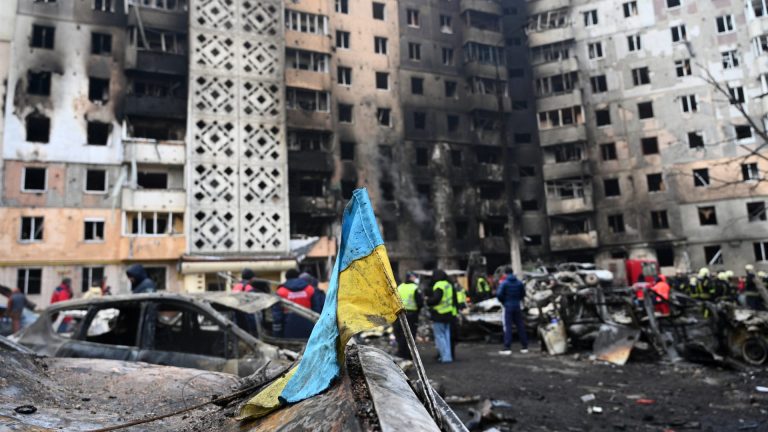
Trump’s Ukraine peace deal: 28 points of disagreement
His resignation marks a “genuine turning point”, which showcases democratic resilience and improves Kyiv’s standing with partners precisely when credibility matters most, she told The New World.
From 2020, Yermak was the main negotiator with Moscow and, later, with Washington, pushing the Ministry of Foreign Affairs to the sidelines. Now the old “vertical” negotiation channel collapsed, but it gives a chance to switch to a proper horizontal one.
“Instead of a single ‘key contact’, we move to institutional and functional figures – people the West actually trusts and respects,” Shlinchak says, adding that right now is the best moment to talk to the Americans who listen “far more willingly to generals than to diplomats”.
There are at least three widely respected generals: The head of Ukraine’s military intelligence General Kyrylo Budanov, the head of Ukraine’s security service Vasyl Malyuk, and the former commander-in-chief Valeriy Zaluzhnyy, now Ukraine’s ambassador to the UK. None of them was included in Ukraine’s delegation to Washington. Instead, it is led by Rustem Umerov. Being a secretary of the National Security and Defence Council and a former defence minister, he is well accepted in the US but credibility is contested domestically, and he was questioned by the NABU in the same case that involves Yermak. If Zelensky wants to restart the political system, he might not be the best decision.
Zelensky now has to make a series of decisions, and make them quickly: hire the new chief of staff with a clean reputation, restore trust, choose strong negotiators with the US, and of course, not to forget about the frontline.
Nina Kuryata is a Ukraine editor at the Observer
 Most popular
‘Operation Epic Fury – as it happened’
Is Star Wars dead?
Morrissey returns.. and heaven knows he’s mythical now

Iran War: Trump has now sealed his own fate