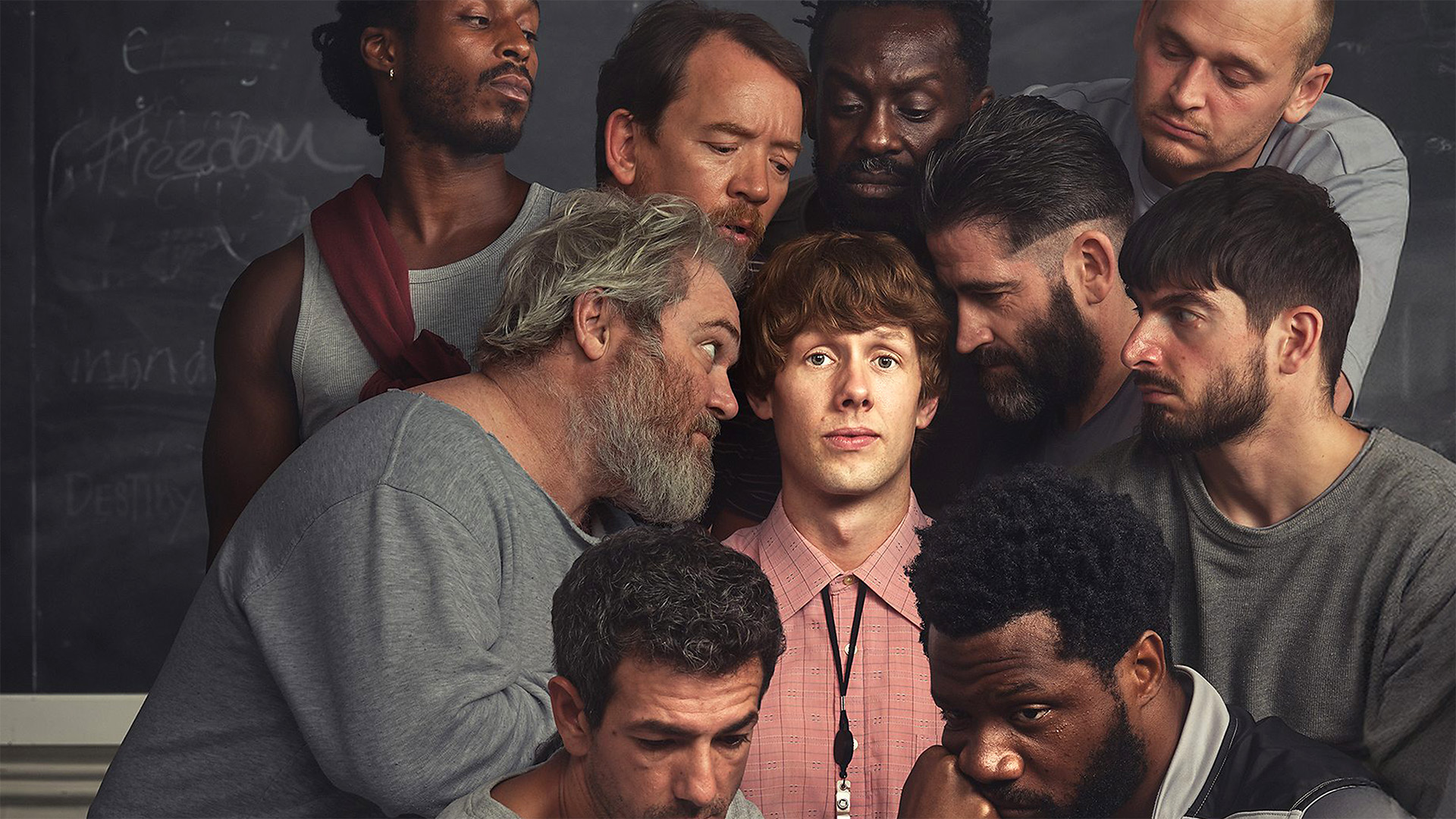
A young man is teaching a philosophy class in prison. He’s telling the class about a fable; the one where the scorpion promises not to sting the frog if he gives him a lift across the river, but does so anyway and explains as they drown, “I couldn’t help myself, it’s in my nature.”
The prisoners, almost to a man, have one response: “The frog’s an idiot.” He was too kind. More fool him.
But later, they talk about whether a scorpion really can defy its character. “I’m an addict,” says one. “Do you think I’m gonna get out and not start robbing? How’s that going to even work?” Another says: “When I walk out of here, I don’t want to come back, so I’ve got to believe that I can change.”
It is a scene from Waiting for the Out, the acclaimed BBC drama based on The Life Inside: A Memoir of Prison, Family and Learning to Be Free, a 2022 memoir by Andy West. The series, like the book, is getting great reviews, including a five-star one in The Guardian.
West continues to teach philosophy in prisons. Mostly he teaches groups of men. They don’t write assignments, but rather conduct open-ended discussions triggered by a prompt, a description of a situation that he brings to the class or a thought experiment like the scorpion and the frog.
The scene is based on one of his sessions, he says. The reaction chimes with the kind of suspicion and cynicism needed to survive prison life – you have to treat everyone as a potential scorpion. It’s a bit like the state of nature described by Thomas Hobbes, where everyone is potentially your enemy.
Occasionally someone discussing the fable argues that the frog did the right thing in trusting the scorpion. This makes for an interesting debate. They argue that trust and kindness are good qualities, and perhaps necessary to break cycles of reoffending, even if they carry risk. The cynics disagree, but they listen.
Andy invited three of the men he’s taught in prison to a premiere screening of the series, and all four sat together in the front row. He loved that they’d liked what they’d seen, that they’d laughed at key points one beat ahead of the rest of the people there. He was moved that they attended.
“‘I felt we’d honoured them, that the series was true to what had happened in those classrooms and to them and the others that made those discussions so enriching,” he says.
The series isn’t entirely set in prison, also focusing on the character based on Andy’s personal life, played by Josh Finan. It is remarkable that he ended up teaching in prisons at all, given that his family life might well have pushed him far away from that.
His first experience of a prison was aged six, when he visited his brother inside. His father and his uncle both did time.
Andy’s early life and adolescence were chaotic, and he only managed to pass two GCSEs. He felt deep shame about his relatives being in prison, a shame that has haunted him since and which is a major theme in his book.
Given that start, what drove him to go back into the very environment that he dreaded ending up in himself? As for so many people, it was an inspirational teacher who helped him turn things around.
“I left school aged 16 with Cs in English and maths,” he says. “I remember my mum saying ‘well done’, and how, compared to other members of my family, that wasn’t disappointing.
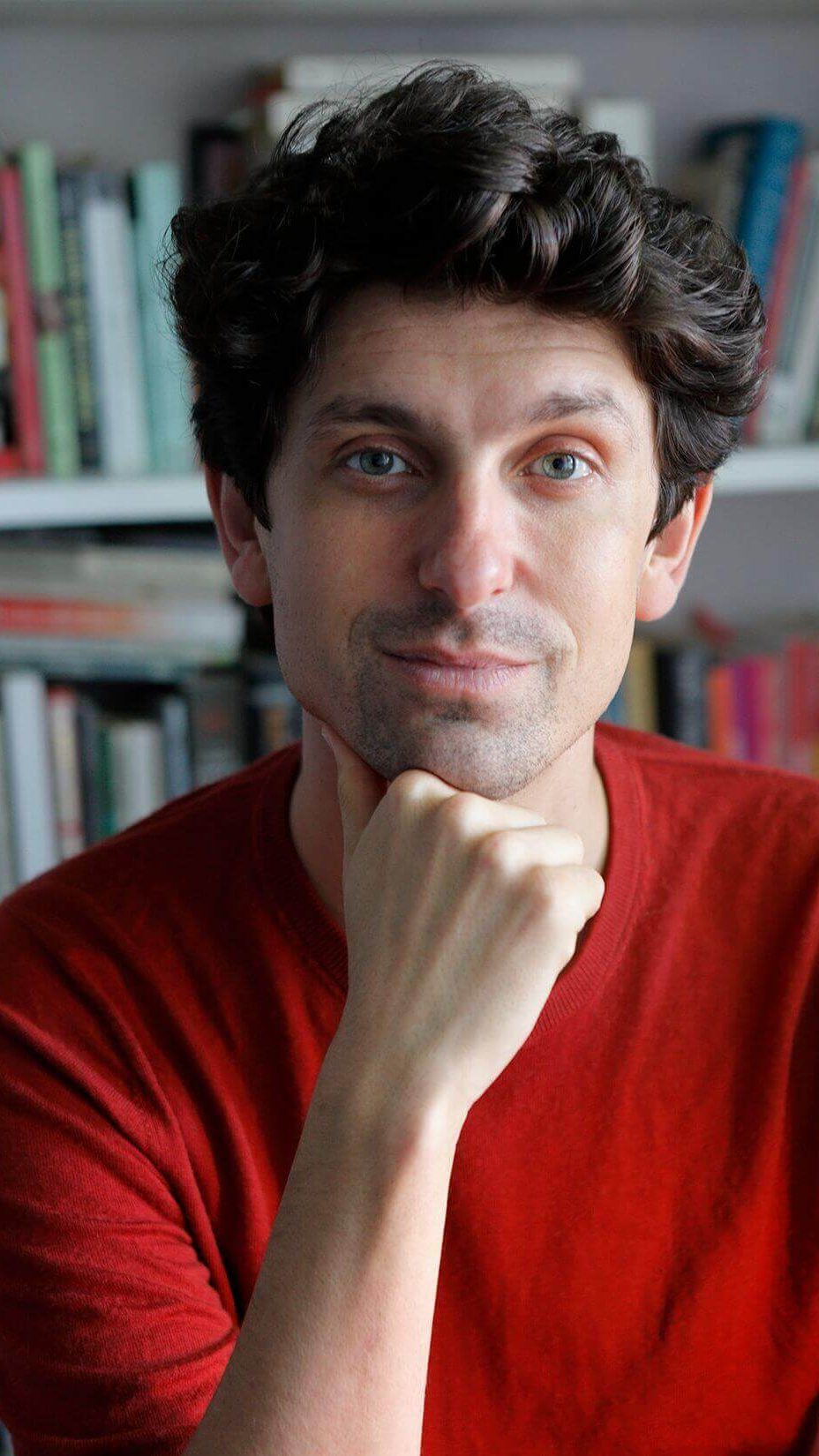
“I didn’t know what I wanted to do, though. I knew what I didn’t want. I didn’t want to be like my dad. I wanted to avoid getting mixed up with drugs, I wanted to avoid ending up in prison. Then I went to a sixth form college open day, and there was a philosophy teacher there…”
This was an epiphany. “Philosophy really appealed to me,” he says. “The part of me that made me a difficult student, that was oppositional, doubted authority, wanted to argue, was met when I began to study the subject.”
He was very lucky with this philosophy teacher, Robert, who helped him get a dyslexia assessment and gave up many a lunch hour to take him through course content. His trust and encouragement gave Andy confidence to retake his GCSEs so that he could go on to do the A levels required to study philosophy at university. The two are still friends.
As to going back to prisons, Andy explains that studying philosophy took him into a world that was the antithesis of the one he’d grown up in. He now goes to middle-class dinner parties with philosophers, but that’s nothing like his working-class background in Liverpool (in the series, Andy’s family come from east London, though his dad is northern).
As a teenager, he’d wanted to distance himself from that side of his life, to escape it. But after graduating he was drawn back towards it. He sees his current job as a prison teacher as a way of coping with a kind of homesickness for his origins.
An uneasiness about two different parts of himself is resolved in that context. “In a way, what I was seeking in the job, on a psychoanalytic level, was some kind reintegration, a way of combining these disparate parts of myself.”
Suggested Reading
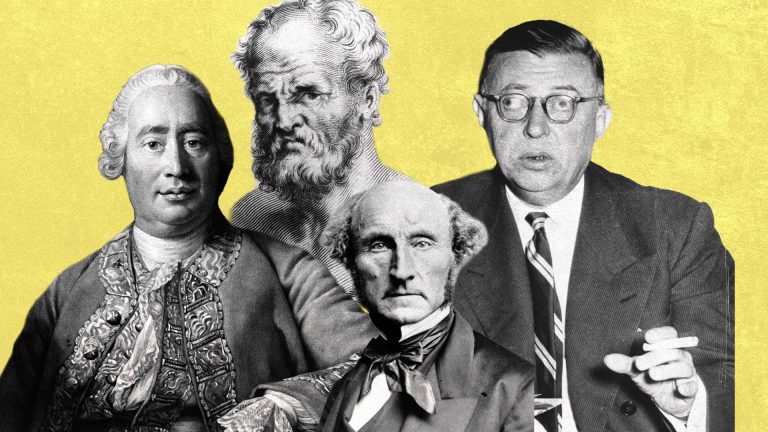
Why I don’t have a favourite philosopher
Unlike some people who enter prisons almost as sightseers, Andy is deeply familiar with many aspects of prison life, and with the effects of prison on those who are incarcerated and on their families too. But he still isn’t exactly on the inside:
“I’m not a tourist, but I’m not a native either. A lot of people feel that way about one thing or another. There’s some aspect of the world they feel a deep connection to, and yet also quite apart from it.
“I’m not a total insider in the world of prison, but I’m not a true outsider either. When I look at writers and philosophers who have inspired me it’s often because they occupy that kind of in-between space. It’s a very awkward space, but it’s also a creative and dynamic one.
“It offers you a way of looking at something in more than one way. That’s a quality which is crucial to philosophy, and perhaps also to empathy.”
Andy has a gentle, reflective way of talking that conveys seriousness and authenticity. I wondered how it felt to see an altered version of himself on the small screen.
Dan, the character played by Josh Finan, is based on him, but isn’t a mirror-image. The writers Dennis Kelly, Levi David Addai and Ric Renton have changed key aspects of his family life and introduced new storylines to their adaptation to make the series work as television drama. Wasn’t that disconcerting? His response was interesting:
“Some scenes are verbatim as they occurred in my classroom. And as I watched on set during filming, I recalled actual scenes and events from my childhood, the details. Sometimes, though, scenes were made up, some were entirely fictional. I’m drawn to the idea of the lie that tells the truth here.
“The experience of watching all this is strange though. It’s like looking in a mirror that partly distorts, and you keep repositioning your face to see if you can see yourself more clearly or not.”
The key concern for Andy about the process of making his story work for television was that the philosophical discussions wouldn’t be lost or trivialised in any way. He’s delighted with how he’d turned down a number of approaches from true crime TV shows.
He’s very happy with Waiting for the Out – so happy, in fact, that he plans to use it as part of his future prison teaching.
“The idea is that I’ll run a six-session course I can take into various prisons,’ he says. “The students will watch an episode of the show for each session and that will be the basis of a discussion that I’ll lead.”
He’s currently looking for funding for this idea. It’s a great one that deserves to be implemented. He’s also toying with the idea of writing another book about prisons; one that does justice to the moral ambiguities surrounding them and is more philosophical than psychological.
“The Life Inside was my psychological reckoning with the world of prison and justice and philosophy,” he says. “It was a very intimate book, and it had to be. I had to go through that to get to where I am now.
“But I do have another book I’d like to write, one about the big moral questions that prison raises. I think prisons are terrible, dehumanising places. I also meet people in them who have done terrible, dehumanising things.
“There are genuine moral conflicts about how we should feel about those two things. We’re often given very simple answers by either extremes of the political spectrum, that either we should lock them up and throw away the key, or we should abolish prisons altogether in some kind of utopian vision. I want to get beyond that.”
Waiting for the Out, a six-part BBC 1 series, is available on iPlayer.