

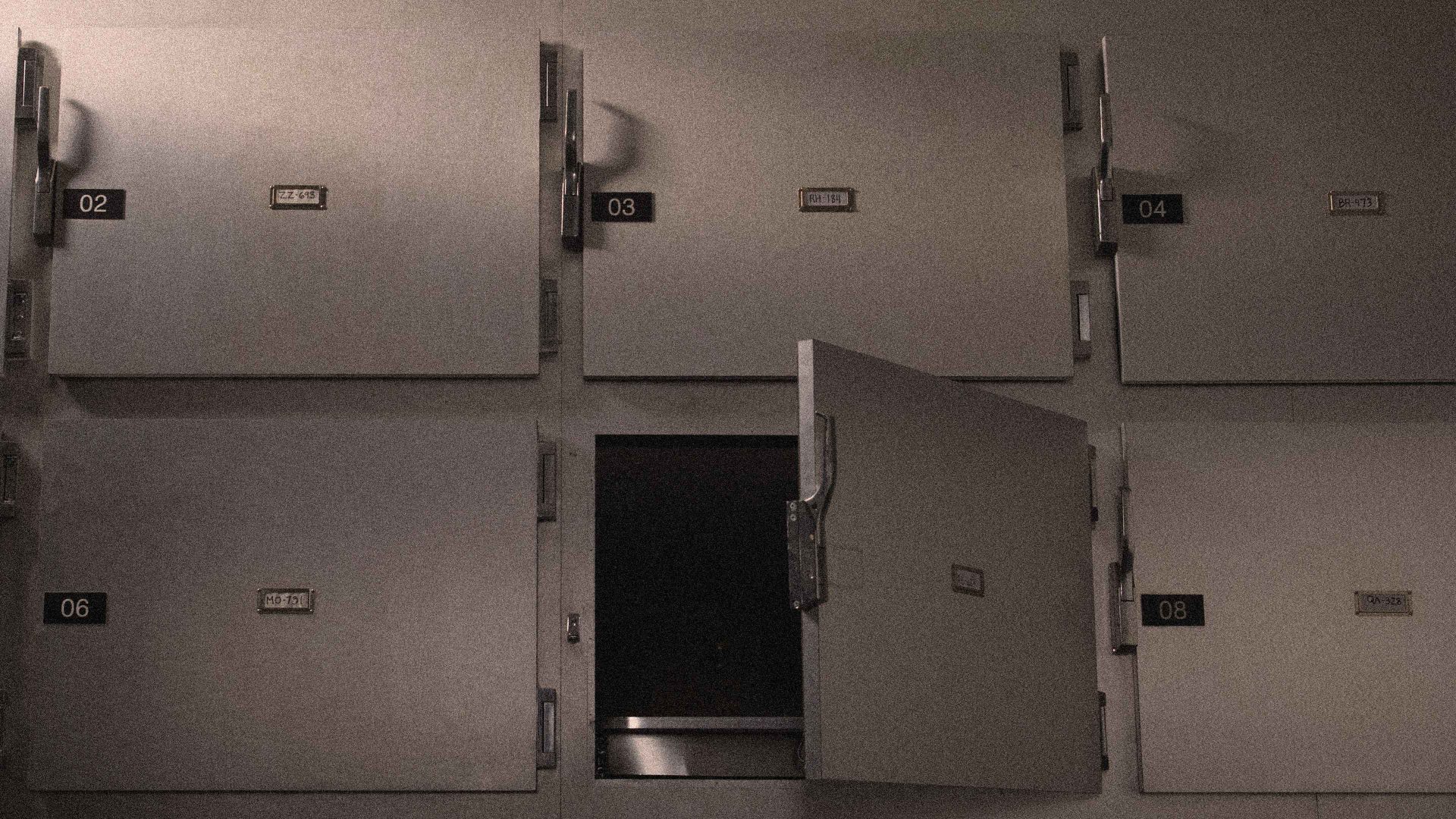
Empedocles, who lived and died in Sicily in the fifth century BCE, believed everything in existence was composed of four elements: fire, air, water, and earth. All four can be destructive forces, too. All have been used to deal with that fundamental human problem, what should we do with the bodies of the dead?
This wasn’t Empedocles’s concern. He was interested in explaining the fundamental constituents of reality. It’s interesting to note, though, that according to legend, he self-cremated by leaping into the mouth of Mount Etna.
Burial in the earth and cremation by fire have long been the ways we have dealt with dead bodies in the UK. But times are changing. Scotland has just legalised “water cremation”. Officially labelled “hydrolysis”, this is a fire-less process that uses a combination of heat, water, and potassium hydroxide in a pressurised chamber to break down soft tissues.
The remaining bones are then pulverised and returned to relatives. The process is touted as greener than traditional cremation since it uses less energy and removes the risk of introducing mercury vapour from fillings into the atmosphere. The sterile liquid run off from the hydrolysis tank is disposed of via sewage systems. Given our water companies’ recent history, this may raise concerns, but in principle water cremation is ecologically superior to cremation by fire, and unlike burial doesn’t require us to set aside land that could be used for other purposes.
Religious believers, agnostics and atheists are, for the most part, united in thinking that reverence for the bodies of the dead is appropriate. This can be for the sake of friends and family, respect for the person who has just died, or even from the not unreasonable fear that those who would treat corpses inappropriately will more easily harm the living.
Diogenes the Cynic, however, was an outlier on this issue. When his followers asked what should happen to his body after death, he replied: “Throw it into a ditch outside the city walls.” When they expressed concern that it would be eaten by dogs, he told them to leave a stick nearby to beat them off.
They asked him how he could possibly use the stick when he was dead, and he agreed that he couldn’t. Which was the point. If you’re incapable of feeling anything, why care what happens to your body after death? One answer is that what we do to dead bodies affects the living.
Suggested Reading

The photographs worth far more than a thousand words
For those who take the same view as Diogenes, necrophilia is a victimless crime, since the supposed victim no longer exists and is incapable of feeling anything. True, some philosophers, including Aristotle, maintain that the dead can be harmed postmortem. But even if you find that unconvincing, a moment’s thought should reveal that – like many ways of showing disrespect to lifeless bodies – necrophilia damages surviving friends and relatives, and even strangers who learn about it and who feel a special kind of revulsion and outrage.
We typically try to respect the wishes of the dead about how their bodies will be treated, yet are deeply inconsistent about this as a culture. There is a long tradition of displaying Egyptian mummies in glass cases in museums, for instance, despite knowing these long-dead people didn’t want their remains to be removed from their tombs and treated in this way.
Hidden from view, our museums still hold vast numbers of body parts from a wide range of sources. A recent report by the Guardian suggests that London’s Natural History Museum has remains from as many as 27,500 people in storage. Most of these are bone fragments, teeth, or skulls, not entire skeletons. Some were taken from colonised indigenous people, many of whom had beliefs about the importance of their bodily remains. What to do with these now creates moral and legal headaches.
Where consent is given in advance, though, questions about how you treat corpses can be less vexing. The philosopher Jeremy Bentham is a case in point. He left instructions for his body to be dissected in public and for his skeleton and preserved head to be combined into an “auto-icon”, a kind of statue made from his own remains. Bentham wanted to demonstrate how the dead can be useful for the living.
His wishes were largely followed: you can see the result in University College London, though his friends opted for a waxwork head topped with his real hair rather than the gruesome dried one.
Bentham’s approach couldn’t work on a large scale. But water cremation, if properly regulated, might prove very useful to the living.
