Photographs have always had an uneasy relationship with truth. By the late 1860s, spirit photography was well established. William Mumler, one of its foremost exponents, photographed Abraham Lincoln’s widow with the ghostly figure of her assassinated husband resting his hands on her shoulders.
One of the most gullible consumers of such photographic “evidence” of ghosts was Arthur Conan Doyle. He was also taken in by photographs of the Cottingley fairies, which turned out to have been made by two young cousins pinning cut-out drawings of the little people to plants and taking selfies with them.
“When you have eliminated the impossible, whatever remains, however improbable, must be the truth,” asserted Sherlock Holmes. Conan Doyle failed to imagine what was possible. Holmes told Watson: “You see, but you do not observe.” Conan Doyle, however, was taken in by first appearances. But with photography what you see isn’t necessarily what you get.
It was always absurd to believe that the camera never lies. Photographs can be unintentionally misleading, too. But digital photography has lowered the threshold for entry into the deception game and made us all aware of how easy it is to create convincing visual falsehoods. In an age of deepfakes and nudifying apps, who now takes verisimilitude for reality?
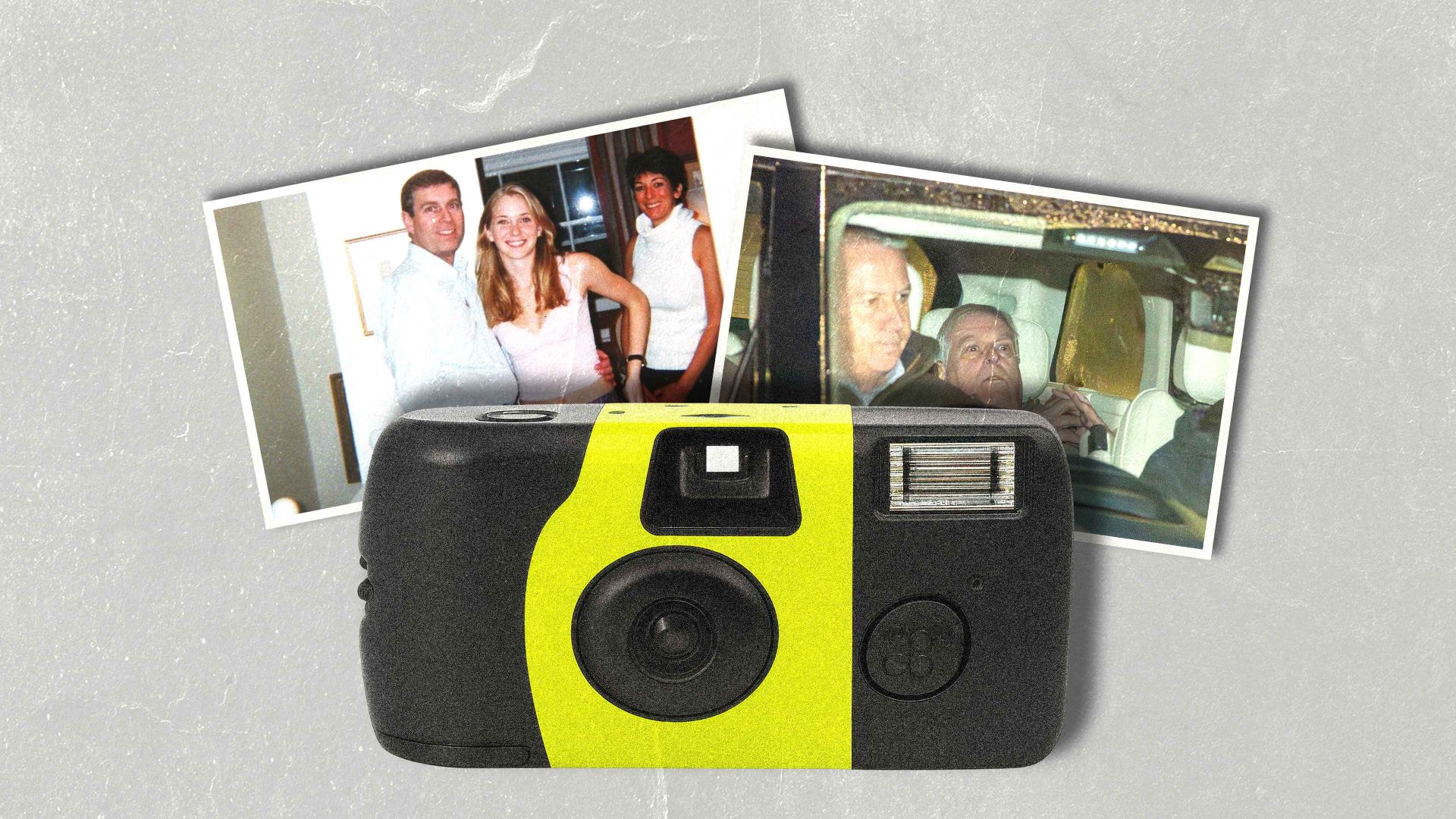
Strange, then, that photographs have played such a large part in Andrew Mountbatten-Windsor’s downfall. Two in particular will haunt him for ever. The first, taken in London almost exactly 25 years ago by Jeffrey Epstein using Virginia Giuffre’s disposable Kodak Funsaver camera, shows him with his arm around the 17-year-old’s waist; the other shows a ghoulish, destroyed figure being driven away from a police station in the back of a car.
Photographs are traces that picture some of their causes. But interpreting what those causes were can be tricky without sufficient contextual knowledge. Andrew played on this when he hinted that the 2001 photograph had been manipulated. Evidence from the Epstein files, however, seems to corroborate Giuffre’s account of where and when it was taken, not Mountbatten-Windsor’s. It’s only with this sort of background information or detailed forensic analysis that a snapshot can provide anything approaching proof. Without it, it is at best circumstantial evidence.
The philosopher Kendall Walton has argued that when you look at a photograph you can quite literally see into the past. The causal chain from whatever was in front of the lens back to you now looking at the image is supposedly unbroken and of an appropriate kind for this to be a form of seeing.
So just as you see through a window, a pair of glasses, a magnifying glass, or via a live video stream, you can see through a still photograph. This, they claim, is what makes photographic realism so special and distinct from other kinds of pictorial realism and provides the source of its psychological power. It’s not just that photographs can be fine-grained representations. Even a blurry image allows us to see, indistinctly perhaps, something that was there; puts us in touch with the past in a special way.
Suggested Reading
Andrew’s reckoning belongs to the survivors
Paintings and drawings from life are always human interpretations, but photographs are supposedly transparent to their subjects because of their largely automated process. When they distort and are hard to interpret, that is like looking through a keyhole or through gauze and not being completely sure what you are seeing.
I’m not convinced by this slippery-slope argument that you can move from ordinary seeing, via seeing through glass, to seeing through photographs. When you see something, change in the object causes change in what you see. Yes, we can probably see via live video surveillance. But still photography introduces so many breaks to causal chains that to talk of “seeing through photographs” is seriously misleading.
We don’t, then, literally see Andrew in the back of the car any more than we see him with an underage Giuffre in the earlier shot. We don’t see his red eye either. Noble’s photograph isn’t even good evidence that his eye appeared red. That was probably caused by the flash reflecting back from his blood-rich retina via his dilated pupil. Perhaps the split-second image was misleading, too, about how rough he really appeared.
It’s looking increasingly likely, though, that the 2001 snapshot is of what it appears to be, and that Virginia Giuffre was telling the truth about it. But the real power of both photographs is what they symbolise, not their status as evidence. Each is worth many more than a thousand words.