
Sigmund Freud identified three revolutions in human thought. First was the Copernican revolution, the recognition that our planet is not the centre of the universe, but rather that it revolves around the sun. The second paradigm shift came with Charles Darwin’s theory of evolution by natural selection: that made it harder to maintain that human beings are fundamentally different from the rest of the animal kingdom. Freud believed that his own contribution, the idea that our deepest desires are unconscious, would bring about a third revolution.
Each of these takes on the world has had far-reaching consequences. Each undermined a different kind of human hubris: the belief that celestial bodies move around us, the belief that human beings are special, the belief that the decisive factors in how we behave are transparent to us.
Of these, the Darwinian revolution is probably the most profound in its implications. The philosopher and scientist Daniel Dennett described it as a “universal acid” that ate into almost everything we had previously believed about ourselves. It provided, for example, a plausible mechanism by which natural processes could have led to the adaptation of species to their environment without any need for a divine creator. Prior to the publication of On the Origin of Species on November 29, 1859, the benevolent God hypothesis provided the best explanation for how animals and plants were so well-suited to their environments.
The apparent design of, for example, the human eye, was best explained by attributing its seeming purposeful construction to the existence of a benevolent, extremely powerful Divine Watchmaker, a view defended by the theologian-philosopher William Paley (1743–1805). After Darwin there was no need for such an extravagant hypothesis to explain this.
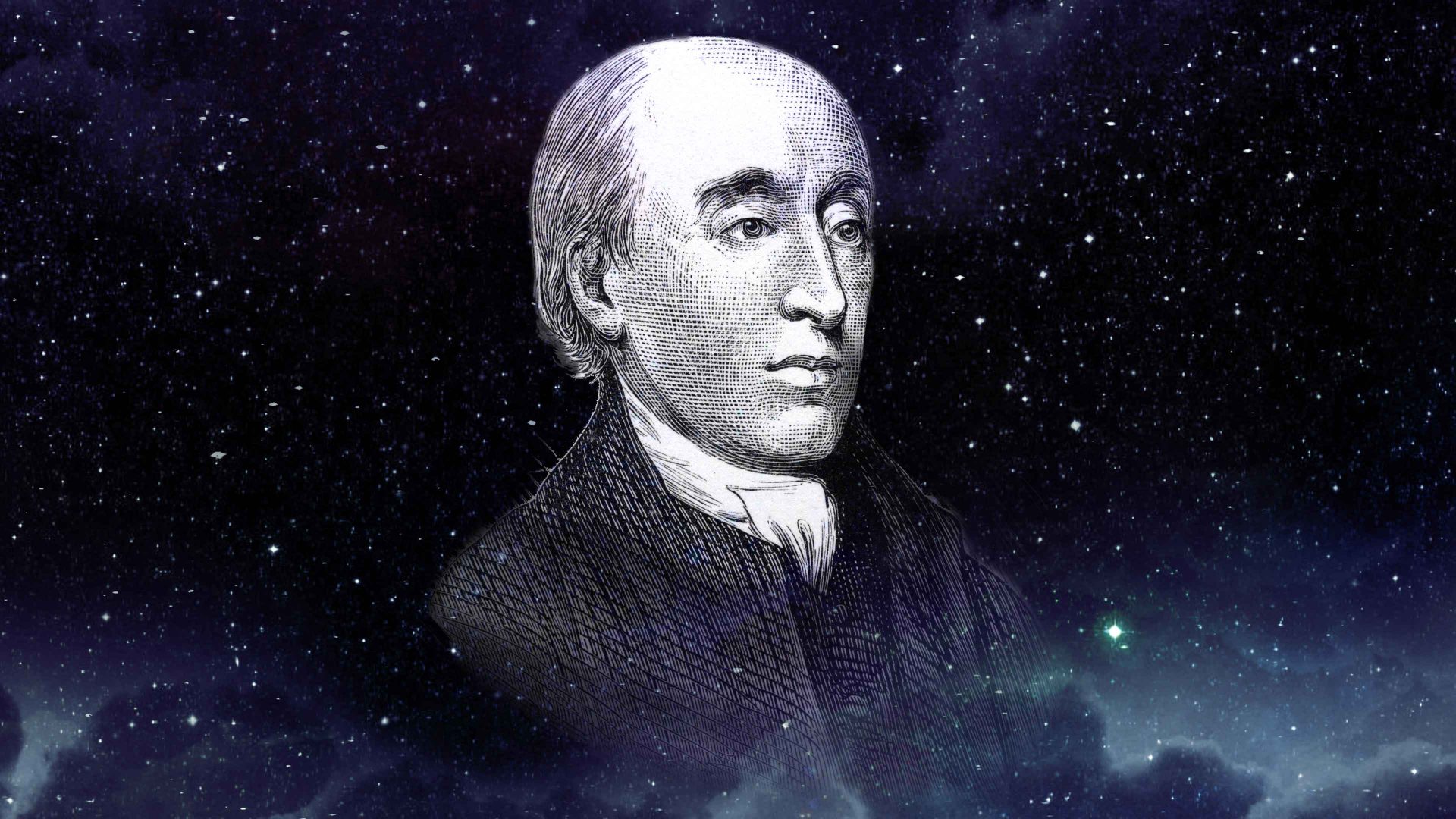
There’s a fourth revolution, however, that Freud neglected to mention, one that occurred in the second half of the 18th century. A thinker who pre-dated Darwin smoothed the way for his theory and shifted humanity’s self-understanding in a different way. Our view of our place in the universe was shaken to the core by a Scot whose name is rarely mentioned, and certainly not in the same breath as Copernicus, Darwin, and Freud.
Suggested Reading

Schopenhauer’s one redeeming feature
I’m referring to the great geologist James Hutton (1726–97). A significant figure in the Scottish Enlightenment, friend of David Hume and Adam Smith, Hutton doesn’t get the press he deserves. I only know about him because I’m reading Jamie Woodward’s recently published A Little History of the Earth (Yale University Press), a book that in 40 short chapters brings 4.54 billion years of Earth’s history alive, and which pays tribute to the scientists and other thinkers who, driven by a passionate curiosity, have helped us understand more about our planet, its past, and our place in that history.
Woodward credits Hutton with overturning the mainstream theories of the Irish theologian James Ussher (1581–1656). In his Annals of the Old Testament (published in Latin in 1650), Ussher had declared with implausible precision that creation happened on October 23, 4004BC.
For 200 years Ussher’s timeline dominated. It was even printed in some editions of the King James Bible. There were sceptics, including Edmond Halley and the Comte de Buffon, who provided evidence to the contrary, but Hutton proposed a far longer timeline, based on his detailed observations of rocks and erosion, which he maintained could only have come to be as they are if Earth had a far longer history than thought.
Earth, on this new view, was not a recent creation, but rather must be an ancient planet. That was the only plausible explanation for the geological traces. This was how Hutton read the rocks. And he was right, though he was unable to determine precisely how far back Earth’s history stretched.
With Hutton’s systematic analysis of the strata the idea of deep time was born. According to Woodward, Hutton was “the first geologist to make convincing arguments about the reality of deep time in Earth History”. The geological evidence provided a powerful case for the view that the Earth had existed for far longer than Ussher and co believed. Eventually Hutton’s views became mainstream. Earth’s creation is now estimated to have occurred some 4.54 billion years ago. That extent of deep time is almost impossible to imagine.
There are clear messages here. We’re a minuscule blip on the timeline of our planet’s history. For billions of years, it would have been uninhabitable for us. There are no guarantees it will remain habitable, and there are signs it might not. The planet doesn’t care. We, however, should.