
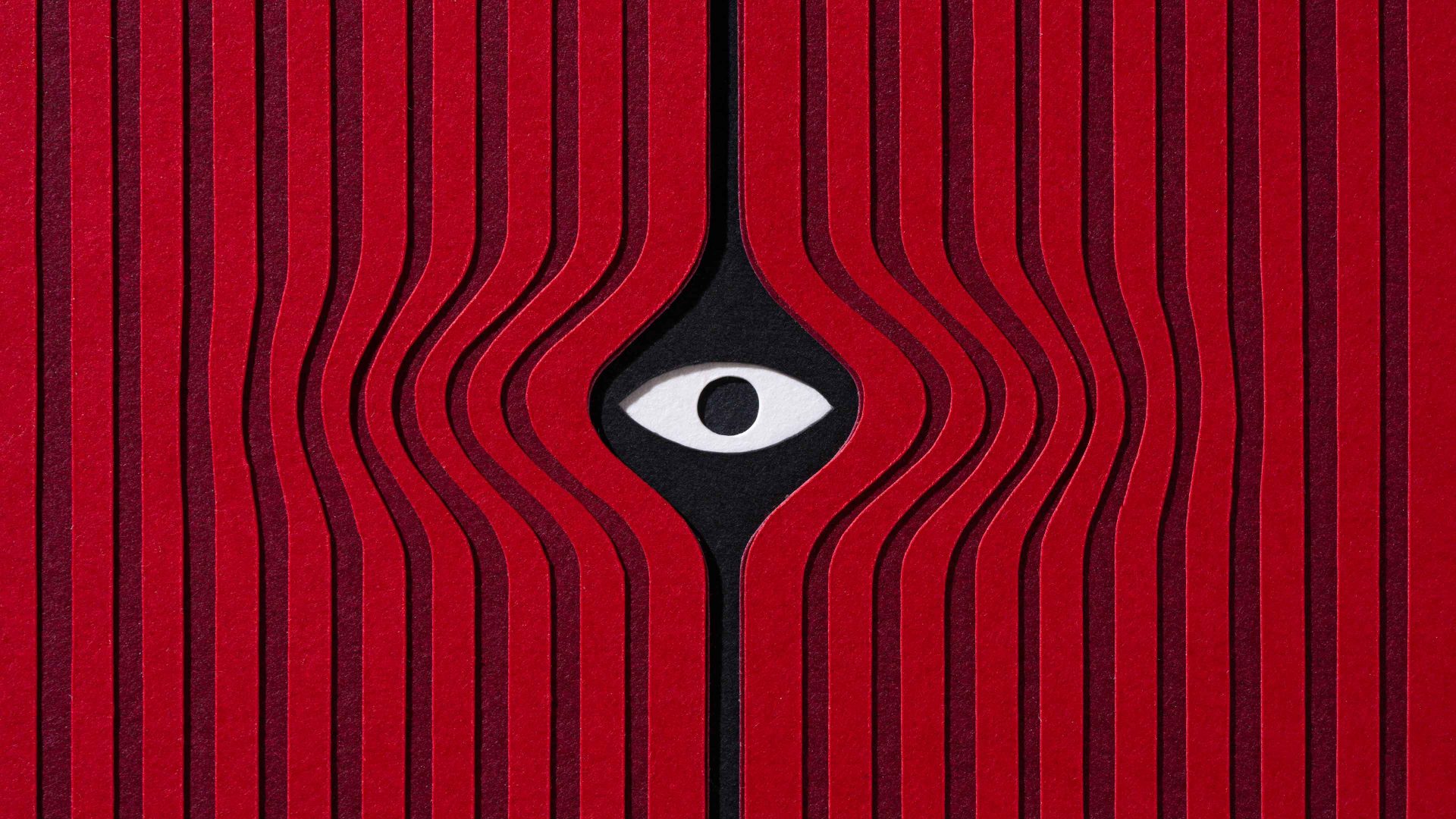
The opening of the Surrealist film Un Chien Andalou remains intensely shocking almost a century after it was made. A man sharpens a cut-throat razor. He looks up at the full moon; a cloud cuts across it. A woman stares into the camera. The man holds her left eye open. Then he slices across it with the razor, replicating the movement of the cloud across the moon. We see the eye slit open and gelatinous fluid oozing out.
The film-makers, Luis Buñuel (who plays the man with the razor) and Salvador Dalí, used a real eye for this shot – the eye of a dead calf, not, as it seemed, of a live woman. Likewise, when William Shakespeare’s King Lear is performed and Cornwall gouges out Gloucester’s eyes, exclaiming “Out, vile jelly! Where is thy lustre now?” as he stomps on one of them, this torture is fictional (the prop is sometimes a lychee). Regan’s sadism – she instructs her servants: “Go thrust him out at gates and let him smell his way to Dover” – is fictional, too.
Our eyes make us particularly vulnerable. There is something especially repellent about damaging another person’s eyes. If they’re blinded, they’ll never see their children again, never meet their lover’s gaze.
How terrible, then, to hear news from Iran of guards shooting metal pellets into young protesters’ faces, deliberately targeting their eyes. Hospitals have been overwhelmed. Many protesters have needed eyes removed. Terrible, too, to learn of two protesters who have lost eyes after being shot in the face with “less-lethal” munitions fired by ICE officers in the US.
Deliberately blinding someone is evil. Most of us believe we would never do such a thing. But we may be wrong about that.
History is replete with ordinary people doing terrible things, particularly in times of war. Circumstance, propaganda, pressure, fear, conditioning, and coercion all play their part. But most philosophers and psychologists who have tried to explain evil acts emphasise dehumanisation as the key factor.
The philosopher David Livingstone Smith, for example, takes this line: The most straightforward way to get a group of people to do horrendous things to other people, he argues, is to get them first to think of their victims as subhuman. Once we cease to recognise victims’ humanity, and think of them as rats or cockroaches, it becomes possible and perhaps even obligatory to harm them without that weighing heavily on the conscience of the perpetrator.
There’s a kind of dual thinking that goes on here, where the aggressor knows the victim is a member of the same species, yet denies that they have any moral right to protection from harm. Whole groups of people get damned in this way.
Suggested Reading

How to stop AI slop from killing the internet
Hannah Arendt declared that “evil comes from a failure to think”. That seems right. It’s a special kind of failure to think, an unwillingness to decentre or to see the moral enormity of the actions perpetrators are committing. Those who do evil by proxy, those who order guards to shoot at the eyes of unarmed protesters for example, are skilled at creating conditions for unthinking brutality. They minimise the chances of dissenting inner voices holding their minions back.
James Dawes’ Evil Men is the best book on this topic I know. It is based on in-depth interviews with elderly Japanese men who in their youths had tortured, raped, and mutilated captives during the second Sino-Japanese war, but who now deeply regret what they did.
In order to create monsters capable of maiming their enemies, soldiers who would bayonet a baby, Dawes suggests; take ordinary young men and erode their domestic identity, collectivise their sense of self by shaving their heads, make them wear identical uniforms, make them eat and sleep together, control the information that reaches them, separate them from family and friends, subject them to physical hardship and to arbitrary harsh punishment. In other words, foster the conditions where obedience is unquestioning. There should be no space for thought.
But the dehumanisation of victims plus a conditioned avoidance of thought by the perpetrators may not be the whole story. The psychologist Paul Bloom has argued convincingly that some perpetrators of evil, far from dehumanising their victims, know how to be particularly cruel because they are expert at imagining what it would be like to be those victims. Far from dehumanising them, they recognise them, through empathy, as fellow humans too. That’s why they know so well how to do the worst possible things to them.