Ludwig Wittgenstein once claimed that a serious and good philosophical work could be written that would consist entirely of jokes. What could he have meant by that?
His own jokes weren’t particularly funny. Once when out for a walk in Cambridge with his friend Norman Malcolm, for example, he “gave’” Malcolm every tree they passed on the condition that he didn’t chop it down or prevent its previous owners from doing anything with it. So long as he was prepared to accept those terms, Wittgenstein declared, the tree was Malcolm’s. GSOH?
But what was it about jokes that made Wittgenstein think they could be of philosophical relevance? A detour into the philosophy of humour might help answer that.
Philosophers haven’t written much on the topic. There are broadly three approaches: humour arises from a feeling of superiority, from a relief of pent-up energy, or as a reaction to certain types of incongruity.
Thomas Hobbes took the superiority line. He wrote in Leviathan that:
“Sudden glory, is the passion which maketh those grimaces called laughter; and is caused either by some sudden act of their own, that pleaseth them; or by the apprehension of some deformed thing in another, by comparison whereof they suddenly applaud themselves.”
Humour on this account is about feeling (not necessarily being) better than other people. Hobbes thought those with the fewest abilities were prone to focus on others’ imperfections to maintain their own self-image, laughing at their perceived weaknesses.
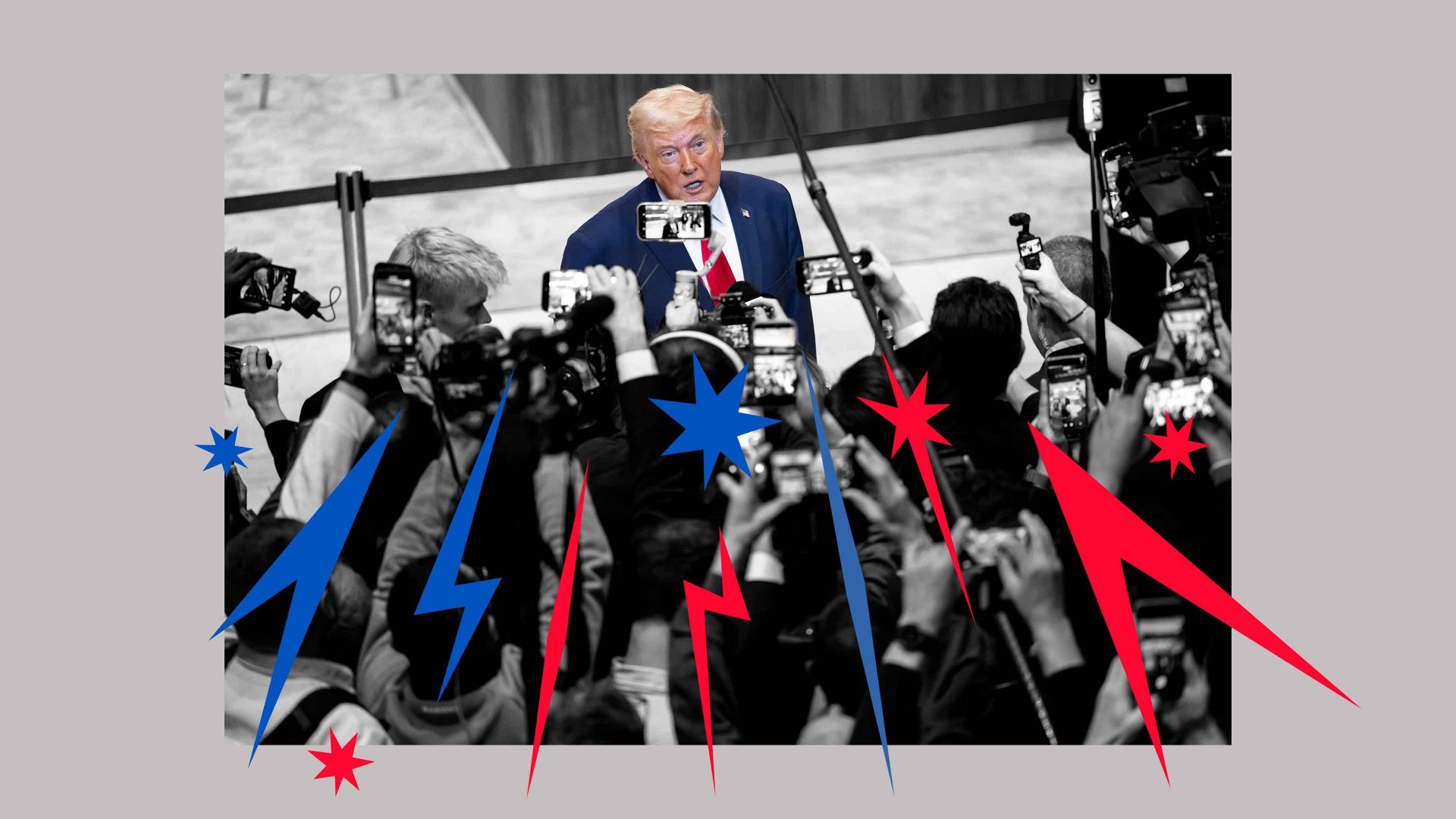
This theory might explain why, back in 2015, Donald Trump found it amusing to mock New York Times reporter Serge Kovaleski, who suffers from a chronic condition that impedes his arm movement. It also explains something about those who find racist, sexist, homophobic and anti-trans jokes hilarious.
Self-deprecating humour could be seen as one part of the individual delighting in its superiority over another part of that same person. But there must be more to humour than this approach suggests. It can’t all be put-downs.
A different theory explains humour as a relief from a build-up of psychic steam. Jokes further increase the psychological pressure and then release it with a punchline or moment of revelation. In Sigmund Freud’s version, the steam comes from sexual repression in the unconscious. This builds up and is then dissipated. It’s like the sudden hiss when you bleed a radiator.
Suggested Reading
How do ordinary people become evil?
Take the joke (which only works when spoken aloud and if you know some basic German and that Freud was Austrian): For Freud, what came between fear and sex? Until I reveal the punchline you’ll be in a state of tension, perhaps exacerbated by the potentially risque revelation that you anticipate me making, a state intensified by your repressed and taboo unconscious desires to…
The answer is “fünf”. Think about it, about the sound of the words: “vier, fünf, sechs” (German for “four, five, six”). If the joke worked, despite my labouring it, you should’ve experienced release at the punchline.
A third approach to humour, the incongruity theory, is more promising. When two things don’t quite go together, we find this amusing and relish the absurdity of the mismatch. A toddler picks up Immanuel Kant’s Critique of Pure Reason and seems immersed in it. Sometimes the set-up of a joke plays on our expectations about what is to follow, and we misread the context (as in the fünf joke); we then have a moment of delight in the mix-up of categories when we appreciate what the real context is.
I suspect Wittgenstein was thinking of this kind of humour, the kind that comes from absurd mismatches, when he imagined a philosophically serious joke book. That fits with his account of aspect-seeing. He used the duck-rabbit line drawing – which can be seen as either a duck or a rabbit – to explain that.
When you see it as a duck, you have the same retinal image as when you see it as a rabbit. Flip between them and a Gestalt shift occurs. The resolution of jokes are “Aha!” moments like this. Perhaps each joke in Wittgenstein’s book would show how language falters when we use words beyond their meaningful contexts, when language “goes on holiday”.
Unfortunately, such a book of philosophically deep jokes would probably also demonstrate that “joke” is a “family resemblance term” (a group of things described by one word which only have overlapping resemblances between each other, not some essential defining feature). There are many different things we call jokes, but they’re not necessarily all funny.