It is because of iron that stars die. Generating energy through the fusing of lighter elements into heavier ones, a giant star creates the stable element of iron within its core, but as the fusing of iron requires energy without generating it, the star gradually creates less fusion.
Once the force of fusion becomes less than the force of gravity, it collapses and triggers a supernova. The colossal energy released forms heavier elements, including gold, silver and uranium, and the material of the star is hurled out into the universe to be gathered by gravity to form new worlds.
Although the accumulation of iron in a giant star brings about its death, the molten iron core of the earth has enabled life to flourish. Around 4.6 billion years ago, the dust and ice swirling through the solar system bonded into planets, and as the earth grew larger it became hotter. As various elements were mixed into the molten mass, heavier elements like iron sank to the core.
Contained within a cooling crust, the molten iron seethes and swirls, creating a geodynamo effect that produces electrical currents, and in turn the Earth’s electromagnetic field. It is this field that shields us from the sun’s terrible solar winds. Travelling at between one and two million miles an hour, these would strip away our atmosphere and bring life to an end.
Iron is the second most abundant metal after aluminium, and it replaced bronze as the metal of utility around 3,000 years ago. For all its strength, flexibility and durability, bronze has a problem. It is an alloy of copper, the 13th most common metal, and tin, the 22nd. Worse, these are rarely found together, and so they needed trade routes to join them. Iron only needs ore, and fuel to smelt it.
For the Estonian composer Veljo Tormis his choral shamanic incantation for peace, Curse Upon Iron, begins with its discovery: “Finding seedling steel in swampland, rusty iron in a boghole.” The destroyer of stars would become the destroyer of nations.
Early smelters created iron that was then hammered and wrought into shape: the origin of wrought iron. Chance and experimentation revealed that if the iron was left in a charcoal furnace for longer, then it became harder and stronger; properties that increased the more it was worked.
Invisible to the smelters, carbon atoms – smaller than those of the iron – fitted within the crystal lattice, making it harder for the iron atoms to slide across each other, and allowing the metal to be heat treated. Smelters had discovered the secret of steel.
Techniques improved through experimentation, and two millennia before Henry Bessemer, it seems as if the Chinese were able to produce high-quality steel in a similar process. It was not the last time that China would develop expertise with this metal.
By the 18th century, Britain was becoming a powerhouse of technological development with iron and its derivative, steel. Demand grew for both materials, iron for construction and steel for utensils and engineering, but the ravening furnaces were fuelled by forests, and they were being quickly felled. Abraham Darby’s solution, proposed in 1709, was to use coke, a high-carbon fuel made from heating coal in the absence of oxygen.
Within coke-fuelled blast furnaces he produced pig iron, a term coming from a central mould that was filled with molten metal, in turn feeding side channels into further oblong moulds, like piglets suckling from a sow.
Deep beneath the earth men dug in search of coal, and delving below the water table, their mines flooded. The solution was Thomas Newcomen’s “atmospheric engine” to pump out the water, the forerunner of the steam engine. By 1775, James Watt had developed an improved steam engine and within 30 years we had the first railways, and a cast-iron lattice bridge spanning the Ironbridge Gorge, built by the grandson of Abraham Darby. The Industrial Revolution had arrived.
For centuries, men had cast cannon to hurl iron in anger. For a young French artillery officer, improvements in metallurgy enabled the weight of the guns he called his “daughters” to be halved, and so Napoleon revolutionised mobile land warfare.
At sea, the Royal Navy benefited from Britain’s more precise casting of both cannon and cannonballs, and better iron from coke-fired furnaces. This gave them the confidence to double-shot their first broadsides – that is, load two cannon balls into each cannon. This helped Nelson to sink Napoleon’s ambitions in Egypt and his 1805 plan to invade Britain.
And so the Napoleonic Wars became the first industrialised global war, a war that reached around the world from the Americas to Asia, from the vastness of Russia to the sands of Egypt. A war in which Washington, Copenhagen and Moscow burned.
As Napoleon faded from view on St Helena and war with the United States sputtered to an end, a structure to change the world was built deep within the Forest of Dean, tight to the border with Wales. A wide gravel path, once a tramway, curves through the woodland to reach it and a break in the trees reveals the site.
The stone walls and furnaces of Darkhill Ironworks stand like a Mayan temple, ranked in tiers, an invocation to iron by the remarkable metallurgist Robert Mushet. Here he solved the problem that was holding back the mass production of steel: how to remove the impurities that damaged its capabilities, without losing the carbon that made it steel.
His solution was to first burn off the impurities and then reintroduce the carbon, and a small amount of manganese; the name coming from Magnesia, a district of Thessaly that also gave its name to the different element of magnesium, and gave us the word “magnet”. Manganese was found in small amounts throughout the United Kingdom, but as these mines were worked out, the furnaces relied on material from many other countries, until large deposits were discovered in India.
Bronze had been a mixture of metals that had created a sum greater than its parts. Three thousand years later, Robert Mushet was about to mix another metal with steel and create the modern world.
Only a few hundred metres from the monolithic Darkhill Ironworks, Robert Mushet built the Titanic Ironworks, now little more than a few low walls and pools of dark water. The site that revolutionised the world was broken up as hardcore for a bridge to cross the Severn estuary.
Here Mushet experimented with tungsten, a metal with the highest of all melting points, its name coming from a combination of the Swedish tung meaning heavy, and sten meaning stone. In the Titanic Ironworks he created a steel hard enough to cut other steel, and so the age of machines was born.
Shafts, bearings and precision components could be machined with tungsten steel tools, and engines of precise tolerance. Further refinement and heat hardening by his successors resulted in high-speed steel, which you now find in the drill bits sold in plastic packages from hardware stores that can spin through metal.
The prodigious cost of building his ironworks brought Robert Mushet to the edge of financial disaster, until Henry Bessemer recognised what Mushet had achieved, and granted him an annual stipend of £300. The technique became known as the Bessemer Process. It was the technological breakthrough that, literally, built America.
Mushet kept his ironworks in the forest, allowing him to experiment far from the threat of industrial espionage. The capabilities of steel alloys were only just beginning to be understood, though like bronze that preceded it, supply routes were needed to draw specialist metals together. Before the middle of the next century, the loss of supplies would become critical for Hitler’s war machine, taking his military to breaking point.
Britain was now the largest steel manufacturer in the world, but the capacity of the United States was increasing rapidly. It demanded steel in gigantic quantities for railways to connect the country and the expanding rural towns, where farm output was growing thanks to an Illinois blacksmith called John Deere. Iron ploughs broke easily and sticky prairie soil stuck to them, so he made polished steel blades to cut through the earth. By 1855 he was selling 10,000 ploughs a year and had revolutionised agriculture. His legacy would be a global tractor brand.
This was also the age of the great industrialists, men such as Andrew Carnegie. Born in a Scottish weaver’s cottage, his parents emigrated to America in financial hardship. Working the railroads for half a dollar a day, he built a vertically integrated steel company that produced pig iron, used an improved Bessemer process, manufactured steel rails and controlled mines and coke production.
By 1889, America surpassed the UK as the largest manufacturer of steel and Carnegie had built the greatest industrial company in the world. In the process, cities grew above rich deposits of coal, iron and limestone, some named as echoes of industrial predecessors, including the Alabama cities of Bessemer and Birmingham. Despite the scale, the types of steel they made were just variations on a theme. It would need an arms race to truly advance steel technology.
A bottle of Australian sparkling wine smashed against the armoured steel bow of a new type of warship in 1906, and HMS Dreadnought slipped into the English Channel at Portsmouth. It took just a year to build her in secret, and every other warship in the world was instantly obsolete. Just a century had passed between the laying down of her keel and the battle of Trafalgar, where Nelson’s wooden warships closed alongside the French and Spanish fleet to pound it to defeat with iron cannonballs. Dreadnought was individually more destructive than the entirety of both fleets, and much of this was due to her advanced metallurgy.
Her armour was special. Krupp Cemented Armour was a hardened steel alloy with around 4% nickel, 2% chromium and 0.35% carbon. With nickel and chromium dissolved into the iron lattice, strength was increased by reducing the distortions that impede dislocation movement; a plasticity in the steel that allowed it to deform without breaking under impact.
Her ten 12-inch guns were not cast, they were made from steel wire wound around a central steel tube, gradually building up the thickness. This wire and the liner were made from a steel alloy of 3-4% nickel and 1-2% chromium, allowing the guns to withstand the extreme pressure and temperature of firing.
From these guns, 850lb shells were hurled over 14 miles with great accuracy because of the rifling of the massive barrels. The grooves cut with tungsten steel tools made the shells spin in flight.
Strangely, it was rifling barrels that improved cutlery. In 1912, Henry Brearley was tasked by Brown Firth Laboratories to find a way of improving the wear resistance of rifled small arms, leading him to a steel mixed with 12.8% chromium and 0.24% carbon. Brearley’s employers were unenthusiastic, so he contacted his old school friend Ernest Stuart, the cutlery manager at Portland Works. Ernest Stuart quickly perfected the hardening process for knives and suggested a name for this new alloy – stainless steel.
The Empire provided Britain with much of its chromium, supplies coming from India, Canada, South Africa and Rhodesia. Critically, little was found in Europe, and as the world emerged from the shock of the first world war, in which 1 to 1.5 billion steel shells were fired, supplies of chromium were essential for anyone planning to rearm.
Hitler relied on the Molotov-Ribbentrop pact with Russia to supply much of the chromium, nickel, manganese and iron he needed. It wasn’t just the falsity of Lebensraum he was after, it was natural resources, and Moscow supplied. That was until Operation Barbarossa.
As the war spread, America discovered it also needed critical metals to meld with steel, the armament industry demanding more than their domestic mines could produce. Manpower requirements pulled in different directions, the need to dig and the need to fight. Supply routes were essential to fill the shortages and until 1944, imports brought in 90% of chromium, 61% of tungsten, 86% of manganese and all the nickel.
‘In 1906, HMS Dreadnought slipped into the English Channel at Portsmouth. It took just a year to build her in secret, and every other warship in the world was instantly obsolete’
For Britain, critical minerals were carried on long sea routes threatened by U-boats and powerful surface raiders. Though the threat of the battleship Bismarck ended in 1941, her sister ship Tirpitz remained lurking in a Norwegian fjord for another three years.
Her destruction was finally achieved when the bellies of Lancaster bombers opened high above the fjord walls to release their Tallboy bombs. These five-ton weapons consisted of a casing of steel alloyed with carbon, manganese, chromium, nickel and molybdenum, filled with explosive. They were the world’s first earthquake bombs, the model for the American weapons which struck Iran’s nuclear facilities in 2025.
Hitting Tirpitz at 750mph, two hardened steel Tallboys cut straight through her. More blew apart the seabed and damaged her hull. First she listed, then a magazine exploded, and then she capsized with around 1,000 men imprisoned inside her steel.
By 1944, Germany had lost many of the lands supplying her with vital minerals to mix with steel, and was making hard decisions on priorities. Lack of nickel, chromium, manganese and tungsten had a critical impact on its military. Even the great prowling cat tanks, the Tigers and Panthers, were affected, suffering mechanical failure, snapping torsion suspension bars and weakened armour.
At the same time, the new tungsten-cored shells of Allied tank guns punched with increased power. Every component of Hitler’s military machine was affected. Gun barrels wore out faster, aircraft engines became less efficient and bearings failed. The German military was, literally, grinding down.
With the war over, there was a hope of leaving behind the furious “Killing, steel and iron, chromium, titanium, uranium, plutonium and multitudes of elements”. It was time to rebuild the war-ravaged world, a time to apply metals to steel for construction.
In the 1930s the Polish Tadeus Sendzimir had invented a way of electro-chemically coating steel with zinc, in a process called galvanisation. Steel could now be protected from corrosion without incorporating expensive metals. The process drew its name from the 18th-century experiments of Luigi Galvani into animal electricity and the animation of bodies.
His findings were read in a Lake Geneva villa by Mary Shelley, who wrote a story of the assembly of dismembered men into a functioning whole, which was galvanised into life. A century and a quarter later, a new world was being created from dismembered parts, complete with imperfections and conflicts. The hope was to put in place the structures to bind countries together on a shared planet.
Suggested Reading
Your next car will be Chinese
Veljo Tormis recognised the shared origins of iron and humans, how “You and I are from the same seed, from the same earth we have sprouted.” Here was a hope for the earth’s minerals to be used responsibly, applying expertise for things other than the monstrous. In 1951, France, West Germany, Italy and the Benelux nations created the European Coal and Steel Community (ECSC), the forerunner of the alloy of nations, the European Union.
Metallurgists also integrated new steel alloys into manufacturing. Tungsten steel was critical to the new high-precision machines and components of jet engines to connect the world. To connect to other worlds, Apollo needed nickel-chromium steel for its engines, molybdenum in its heat shields and stainless steel for its skin – the latter supplied by the Sendzimir Company, a world leader in steel rolling, and a company founded by the man who galvanised steel.
Compounds of steel with nickel, chromium or molybdenum expanded into myriad uses, from gas pipelines to bicycle frames. In 1985 Bernard Hinault, known as “The Badger” for his toughness, won his final Tour de France on a bike frame of steel, alloyed with chromium and molybdenum for strength and lightness – the famed chromoly tubing.
Ironically, the word molybdenum comes from an ancient confusion over whether it was a type of lead, the Greek word being molybdos. Molybdenum and chromium in steel had pierced the armoured deck of Tirpitz, and was now making tough, light bicycle frames. As for chromium, this too comes from a Greek word, in this case “colour”, as its varied natural compounds appear in different hues.
As globalisation expanded, so did the need for more steel. Ships, cars, railways, skyscrapers and bridges demanded more, and the furnaces roared for fuel. Russia had both the fuel and the raw ores, and with environmental callousness it became the largest steel producer by 1990. Into the 2000s, new producers in Korea, Turkey, Brazil and Argentina were competing to forge steel and to improve efficiency.
But it was the vision of Jamsetji Nusserwanji Tata in the late 1800s that helped make India a global producer with a conscience. Tata, like Brazil’s big producing company Gerdau, was founded on respect for its employees and the environment. Gerdau is now Latin America’s largest steel recycler and Tata is a global manufacturer.
Then, of course, there is China, the steel dragon. By 1990 China was producing 66 million tons of steel a year. Within two decades this had increased tenfold and today it makes around a billion tons a year. The steel it made was not just for the world, it was steel for itself. Factories, infrastructure, cars and the housing boom were voracious steel consumers, while a globalised world demanded cheap things from a country with low wages and a low opinion of the environment.
There is a price for everything. Steel furnaces are fed by coal and coke, and so every year the world burns perhaps one billion tons of coal to make around 1.9 billion tons of steel. Since around 1.8 tons of CO2 is produced for every ton of steel made, when computing the entire production cycle, we are getting close to four billion tons of CO2 released… every year. Self-pleasing decarbonisation of home industries is hypocritical, if pollution is simply outsourced overseas.
Amid the ruthless competition for steel output, there have been technological advances. Production efficiency has increased, and there have been huge advances in metallurgy, helping to increase strength while reducing weight.
Car manufacturers use these new steels to make bodywork lighter and enhance crash resistance. Our old companions of chromium, molybdenum and nickel make an appearance, along with Robert Mushet’s breakthrough addition of manganese. Then there are familiar metals like aluminium, copper and titanium, and the less common vanadium, boron and niobium; the latter becoming fascinatingly essential.
Niobium was discovered in 1801 by the English chemist Charles Hatchett and named after the Greek goddess Niobe, daughter of Tantalus – as it was originally thought to be the element tantalum. The addition of just 0.05% of niobium to steel refines the grain so gracefully that the steel used in a bridge can be reduced by nearly a third.
The reduction in CO2 is impressive. So are the other uses of niobium. Spacecraft, jewellery, electronics, catalysts, petrochemical refining and superconductors are all beneficiaries – and 95% of the world’s supply comes from just one mine in Brazil.
Lessons for the future are embedded in the past, and the best of all teachers is foolishness. Herbert Hoover won the US presidential election in 1929, partly through promising farmers he would raise tariffs on imports, as the Great Depression hit. The Smoot-Hawley Tariff Act slammed tariffs on to 20,000 goods, trading partners retaliated, and the US stock market plunged.
Senator Smoot later blamed the rest of the world for not buying more American goods, because they had damaged their economies with a war.
Sanity returned with Roosevelt’s 1934 Reciprocal Trade Agreements Act, giving him the power to reduce tariffs by up to 50%. World economies began to rebuild, just in time for Hitler’s war of petulance, manufactured grievance and greed.
Donald Trump learned nothing from the 1930s tariff wars. Without the necessary minerals, the factories of his imagination, and the products his American citizens would make in them, are fantasies. And China controls those minerals. China was the country that subsidised critical mineral production and paid the human and environmental price.
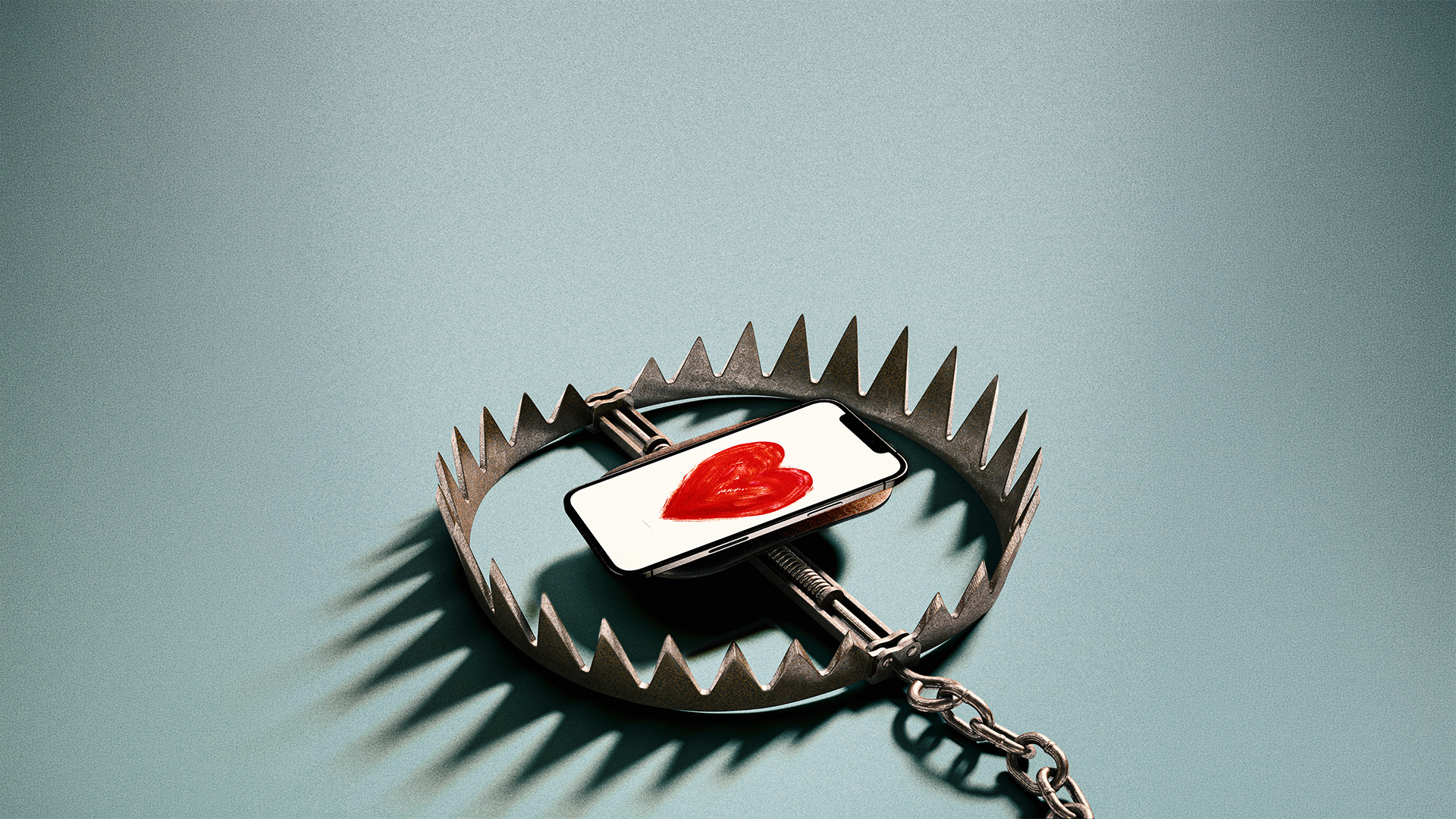
Now it controls the production of 40% of molybdenum, 85% of tungsten, 32% of zinc and 5% of nickel; an outlier being chromium, which it has to import. As for the idea of Americans making iPhones, there are around 30 metals in one of those, and guess who controls their production?
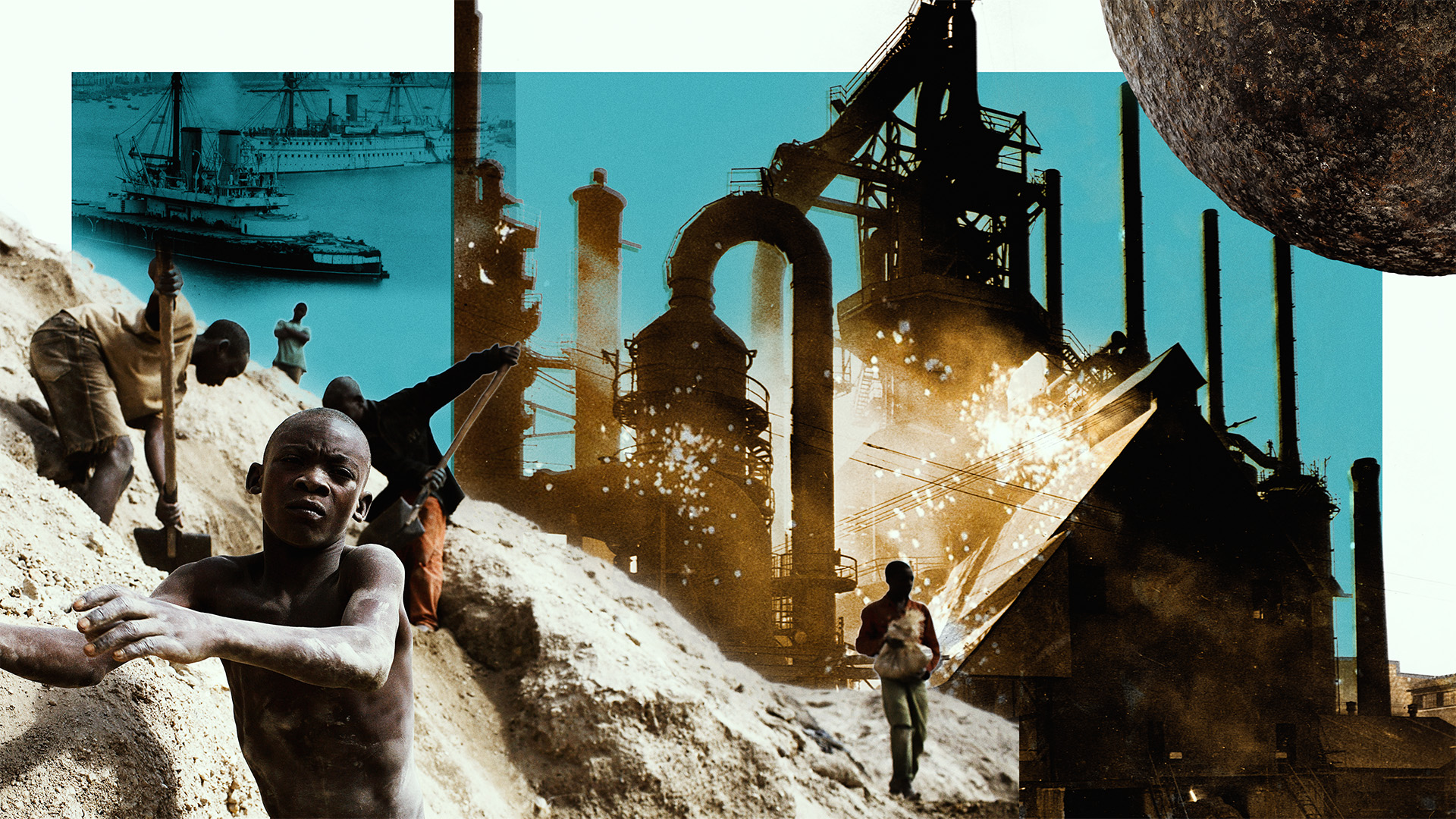
‘In the abused land of the Democratic Republic of Congo, Chinese mining companies extract cobalt ore, Chinese refi neries process it and Chinese logistics ship it to China’
It is not just production in which China has an interest, it burrows beneath the skin of countries with raw materials, including the Democratic Republic of Congo. This abused land is the source of around 70% of the world’s cobalt, which is used in oil refining, batteries, magnets and to strengthen steel, particularly in high temperature cutting tools. Within the DRC, Chinese mining companies extract the ore, Chinese refineries process it and Chinese logistics ship it to China, where it is incorporated into products.
And China extends its interest to metal trading. In 2012, the state controlled Hong Kong Exchanges and Clearing Limited bought the London Metal Exchange, where Nigel Farage once worked as a trader, before he unearthed a more lucrative career in divisive politics.
With China’s final seizing of Hong Kong, it gained significant influence in the global commodities markets, and for many minerals it has built an integrated system from mining, to transport, to refinery, to manufacturing and to trading, just as Andrew Carnegie had done with steel over a century earlier. The west contracted out production to China’s state-subsidised industries in pursuit of low prices and environmental easy options, and there are problems.
The reliance on the good will of an autocracy to maintain supply of such important materials is a significant weakness, as Japan discovered in its 2010 dispute over the Senkaku Islands. The hidden problem is a declining workforce. Just as the US in the second world war was strained by the need to dig or to fight, China is facing a similar manpower challenge as it slides into old age and demographic collapse. The official fertility figures for 2025 are one child per woman, and knowing the flexible relationship of autocracies to the truth, this is unlikely to be accurate. Within the soaring, spreading cities with their backbones of steel, the reality is probably well below half the official figure.
Suggested Reading

The fall of Saigon, 50 years on
The decline began with the one-child policy, which did not end until 2015. It was accelerated by rapid urbanisation, since children in fields are free labour, while children in apartments are expensive. Half China’s population is now over 50, and older people do not work in tough, dangerous environments. Mining and refining are both of these. China was like a star, burning bright, fuelled by the fusion of demand and industrial growth. Now its core is growing heavy and unproductive, lacking the energy to sustain it. Internal collapse is coming.
Donald Trump’s first challenge to China’s manufacturing hegemony was tariffs, provoking the unexpected response from Beijing of export restrictions on critical minerals. A revelation of vulnerability. Despite years of watching China’s demographics with curiosity, little has been done to alleviate the implications of its looming implosion. Only 1% of molybdenum, 2-3% of tungsten and 4% of chromium is produced in Europe.
Of course, we could just try to do without specialist steels, but there are payoffs. Steel becomes weaker, suspension snaps, engines wear, aircraft lumber with low power, and they fail regularly. Perhaps we could manage with fewer iPhones, but this is not a binary choice between infrastructure and the internet. In truth, since we can no longer rely on China, we must recycle more, embrace careful production to safeguard the environment and build new trade routes; and probably accept higher prices. Perhaps these are the true costs.
Veljo Tormis cursed the malignant applications of iron, and its sibling steel, while recognising the shared origins with mankind. The atoms hurled from supernovas formed the elements of creation. Within the abysmal depths of the earth, the metal that has wrought both construction and desolation, flings out its protecting veil to absorb the power of the sun. So, as we confront the challenges of our changing world and the adaptations this will require, it is worth considering that we are all just recycled stars.
Nick Battersby is a photographer and technology developer. He has spent a decade working with the Chinese energy and automotive industries