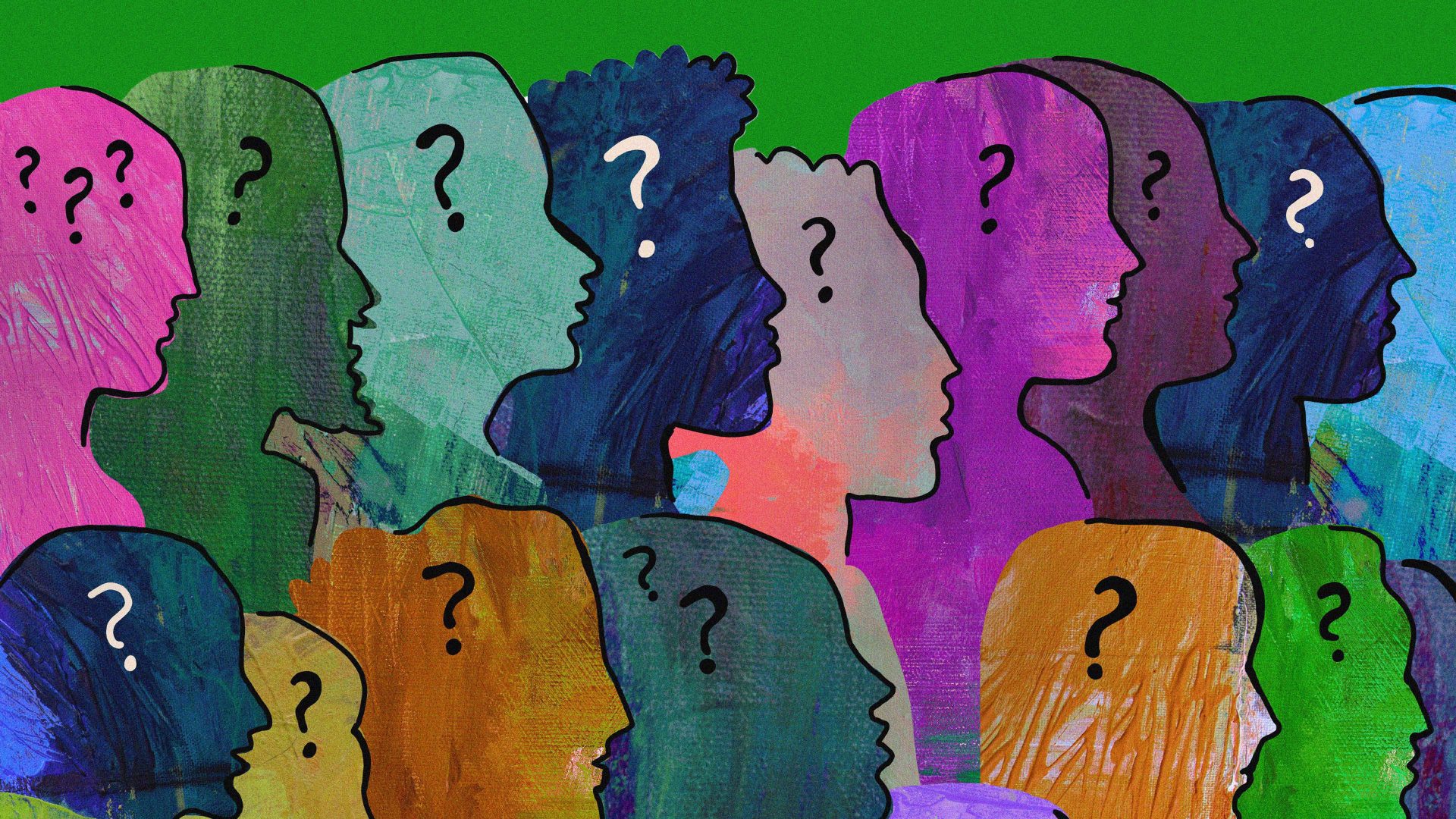
Increasing numbers of Black and Asian Britons are finding themselves politically engaged but with nowhere to turn. They’re paying attention and showing up, but they don’t feel represented by any of the main parties.
Far from being a story about apathy, something more uncomfortable is at play: a growing sense that the political system simply isn’t speaking to them anymore.
Trust has eroded, priorities have shifted, and the old habit of voting along traditional party lines is breaking down. What’s replacing it isn’t indifference, but a more restless, more questioning kind of engagement.
Journalist Habiba Katsha captured this shift in April 2024. She had voted in every general election since turning 18, but had begun to question whether Labour still represented her.
“It feels like Labour have become comfortable relying on the Black vote,” she wrote, “but aren’t doing much to actually support the community anymore.”
She felt like an afterthought – not disengaged from politics, but let down by it.
The numbers back her up. Polling which I had a hand in commissioning after the 2024 general election showed Labour’s support among ethnic minority voters had fallen from 64% in 2019 to 46% – a drop of 18 percentage points.
In other words, the party lost nearly a third of its previous backing from these communities in just five years. Labour remains the most popular party among ethnic minority voters, but a shift that large isn’t a routine electoral fluctuation. It suggests the long-held idea that Black and Asian voters form a reliable, stable political base is no longer something any party can take for granted. In fact, that assumption is crumbling.
Campaign group Operation Black Vote says the shift reflects not disengagement, but a fundamental change in how Black voters are relating to political parties.
“People are becoming disillusioned across the board with party politics, but the impact is felt most acutely in Black communities,” David Weaver, chair of Operation Black Vote, told me.
“What we’re finding now is that it’s much more difficult to get people even to think about registering to vote, let alone actually vote. People are asking, ‘what’s the point?'”
He added: “There’s a feeling that the closer political parties get to power, the further away they move from us. People feel used, and they don’t feel listened to.
“There’s also a sense that racism is being normalised in politics and that’s something Black communities are seeing very clearly.”
David did, however, point to signs of renewed engagement at a local level.
“Where we’re seeing hope is when people feel they can actually make a difference in their communities; that’s when engagement starts to come back.”
One Black voter I spoke to didn’t vote at all in the last election.
“After everything with the Forde Report and how Diane Abbott was treated, I just didn’t feel Labour was taking issues affecting Black communities seriously,” he tells me.
“But at the same time, I don’t see the Conservatives as an option, and the other parties don’t appeal to me either. It got to the point where I felt politically homeless, so I stayed at home.”
Research by UK in a Changing Europe paints a similar picture. Ethnic minority political opinion now spans the full spectrum – these are no longer bloc voters moving in lockstep.
People are making more individual choices, driven by specific issues rather than inherited loyalties or historical allegiance.
The idea of a single, predictable “ethnic minority vote” is becoming increasingly outdated and the research also cautions against overstating how firmly ethnic minority voters align with the political left.
That played out clearly in 2024. Labour won a huge parliamentary majority, but lost ground in several ethnically diverse constituencies. In areas with large Muslim populations, independent candidates running on platforms shaped by foreign policy concerns – including the war in Gaza – took seats that had long been considered safe Labour territory.
In Leicester East, a seat held by Labour since 1987, the Tories pulled off a surprise victory. These weren’t flukes; they were signs of something deeper shifting beneath the surface of British politics.
The patterns vary across communities. British Indian voters have gradually been drifting from Labour over several election cycles, with increasing openness to the Conservatives.
Suggested Reading
Rupert Lowe: the most right-wing MP since 1945
British Muslim voters made a sharper, more abrupt break in 2024, many turning to independents or smaller parties.
Younger voters across communities are increasingly drawn to alternatives like the Green Party, reflecting a broader dissatisfaction with the mainstream that cuts across both ethnicity and age.
But it’s not as though the other parties are picking up the slack. The Conservatives carry serious baggage: polling commissioned by campaign group 38 Degrees found that a majority of Britons believe the party has a racism problem among its MPs, donors and members.
When Kemi Badenoch became the first Black leader of a major UK political party in November 2024, supporters hailed it as proof of the Conservatives’ commitment to diversity – a milestone that capped years of the party promoting Black and Asian politicians to senior roles.
Yet, campaigners and analysts have argued that it doesn’t necessarily change anything because having a diverse leadership neither shifts a party’s policy direction nor improves outcomes for the communities that leadership is drawn from.
This tension runs through much of the debate around Black and Asian Conservative figures more broadly. Despite the Tories boasting about appointing the first Asian prime minister (Sunak), chancellor (Javid), home secretary (Javid), African heritage foreign secretary (Cleverly), some voters have been accused of downplaying racism or holding positions that sit uneasily with the communities they’re seen as representing, lending weight to the argument that visibility and advocacy aren’t the same thing.
For many voters, a Black or Brown face in a senior role doesn’t, by itself, signal political alignment or earn trust. What matters is policy and whether it actually reflects their lives.
Labour, meanwhile, faces criticisms for its stance on immigration and foreign policy, and its record on racial inequality. No single party is managing to command consistent confidence from large sections of Black and Asian communities right now.
While smaller parties such as the Greens have attracted interest from some disillusioned voters, analysis from Operation Black Vote suggests that even where policy frameworks on racial inequality are strong, their impact ultimately depends on consistent implementation and accountability, particularly around policing, employment and immigration. Smaller parties are not immune to their own internal problems.
In January, Demetrius Williams – a former co-chair of LGBTIQA+ Greens – left the Green Party after less than two years of active membership. In a public statement, he cited poor governance, weak communication and what he described as “cliquey behaviour”, alongside allegations of racism and sexism within parts of the organisation.
He still believed in the party’s broader political message, he said, but could no longer publicly advocate for it given what he’d experienced inside it.
His departure is a reminder that smaller parties looking to attract disillusioned voters must also address their own internal challenges – growth brings scrutiny and scrutiny can be uncomfortable.
As Habiba put it: “The problem is, I don’t see an obvious alternative.”
That’s the dilemma so many voters find themselves in, unconvinced by Labour, unwilling to go Conservative or Reform UK, “God forbid’ as some tell me, and not quite finding a home anywhere else. Dissatisfaction is real and widespread, but it hasn’t yet crystallised into a clear direction.
What’s happening isn’t disengagement. Black and Asian Britons are still voting, still campaigning, still paying close attention.
But they are doing so with greater independence and, in many cases, greater scepticism, less of a willingness to stay loyal out of habit and more willingness to withhold support until a party earns it.
Political homelessness, in this context, isn’t about absence. It’s about dislocation: being present and engaged but unable to find a party that genuinely reflects your values, concerns or lived experience. It’s a hell of a conundrum within a so-called democratic society.
For Labour, the drop in support between 2019 and 2024 is a clear warning sign. For the Conservatives, longstanding trust issues remain a barrier, while for smaller parties, the opportunity is real but so, too, are the internal challenges.
For all of them, the message from Black and Asian voters is becoming harder to ignore: their support is no longer a given. It has to be earned.
The Labour Party and the Green Party were approached for comment
 Most popular

Screen scandal: How Ofcom lets GB News get away with it

James O’Brien says the press have gone mad – and it’s worse than you think

The evidence is growing: Trump’s team are using his chaos to get richer on the stock market


Now it’s official: Brexit was a disaster. Next, we must join a new EU