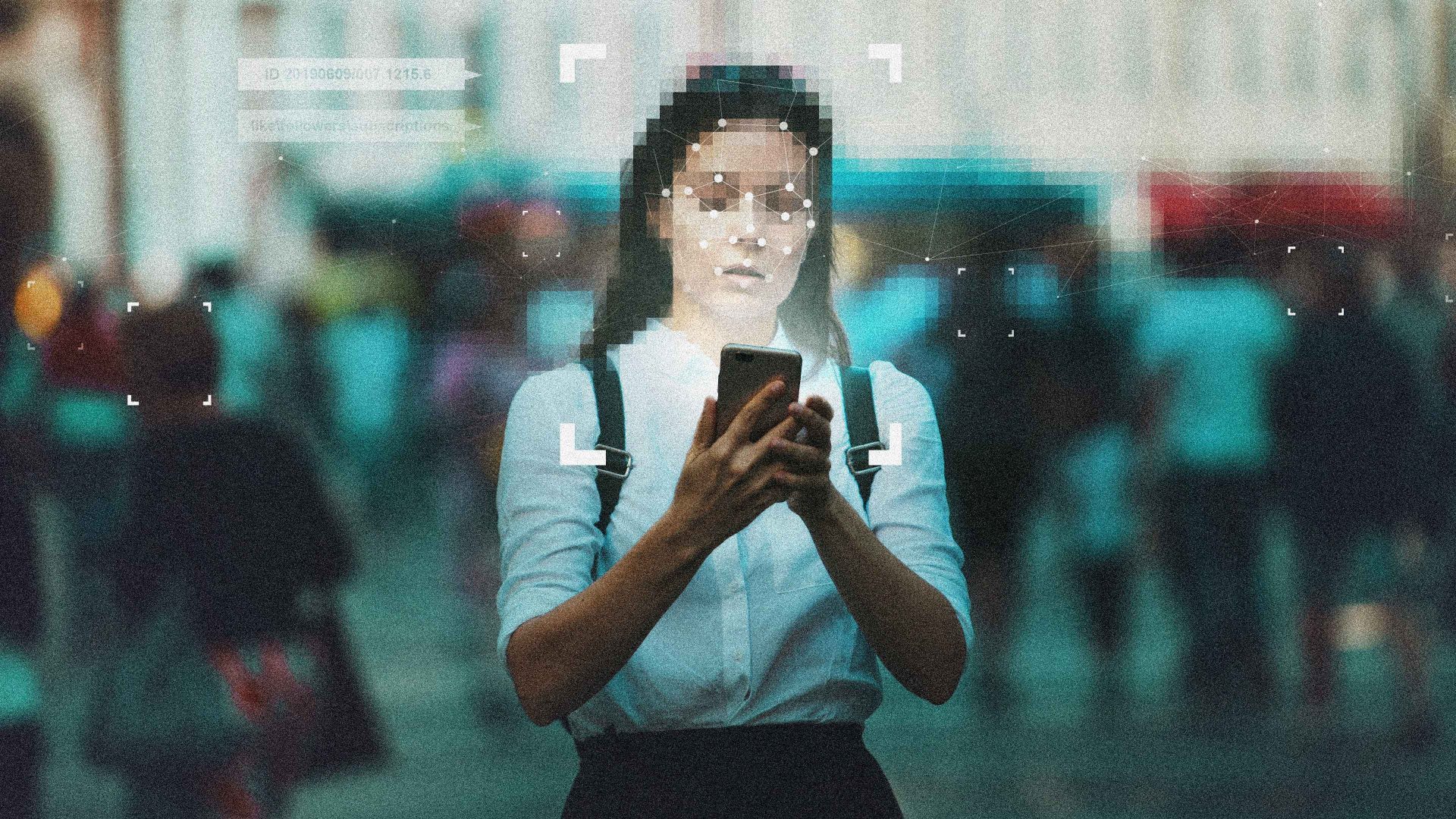
You track your calories, your steps, your sleep. You have a record of the films you watch and how much you enjoy them, thanks to Letterboxd; Spotify knows the shameful secrets of your listening habits, down to the very microsecond.
Thanks to Hinge (or Feeld, or Bumble – insert the dating oubliette of your choice here), a datacentre somewhere in the world knows the exact contours of your unspoken desires. TikTok famously tracks thousands of indicators to determine exactly which qualities a video needs to possess to best entrance you into spending another hour in slack-jawed scrolling. It has never been easier to bend reality to fit your specific wants (explicit or otherwise). So why doesn’t it feel… well… better?
The idea of the “quantified self”, taking data measurements to optimise health and overall lifestyle, first emerged in the 1970s, but the data collection industry really took off in the post-web world of the early 00s. Since then there are very few aspects of our lives that aren’t now measured by someone. The sad truth, though, is that taken at scale our hyperindividual desires tend to cluster in certain ways, and that a world optimised for mass individuality tends to look eerily similar when applied across billions of datapoints.
The effects of this are perhaps most visible in modern pop culture. Thanks to the incredibly granular data available to musicians and record labels about how people listen to songs, there has been a clear convergence in songwriting over the past decade. People tend to skip songs that don’t catch the listener in the first 30 seconds – so there goes the slow-burn intro.
The same goes for shows in the streaming era. When Netflix and the rest know exactly what compels the greatest number of people to click through and watch, why shouldn’t they optimise their scripts, thumbnails, runtimes and plotpoints to attract the greatest number of viewers?
The ur-example of this is Mr Beast, the dead-eyed YouTuber who can lay claim to being the most popular entertainer on the planet. Jimmy Donaldson (for that is his real name) realised very early on that the keys to the YouTube kingdom were to a) work out what people want; and b) keep on giving them more and more of it.
In 2024, a leaked document from Mr Beast HQ laid bare the mechanics behind his video production pipeline. The length of the videos, the prizes on offer, the speed of the edits, even the degree to which Donaldson grins maniacally in the thumbnails… the impact of all of these is analysed to create an optimal product that will keep viewers watching til the end.
Where Mr Beast goes, of course, others follow. Which is why so much of YouTube now looks like Mr Beast, with the length of the videos, the nature of the stunts, even the colour-grading of the thumbnails, all skewed to fit what the numbers say we want deep-down.
Suggested Reading
Can MAGA tech firm Palantir be trusted to run Britain’s data?
So it is that we have found ourselves in a world in which everything looks and feels eerily familiar wherever you go, a phenomenon first observed with the rise of “AirSpace” a decade or so ago, the phenomenon in which city-based short-term lets adopted a global uniform aesthetic. It turns out people were more likely to click on properties with exposed brickwork, light wood, anonymous paintings, motivational quotes, fake plants, and a few randomly placed books on a coffee table. That’s why an apartment in 2026 in Lisbon looks like Berlin looks like Marseilles.
Once you notice this, you will see it everywhere. Data is pushing us to a safe middle ground, the guiding principle of algorithmically determined living being “if you liked this then you’ll like this too – because it’s basically the same”. This is the great unspoken tragedy of the modern age, and what is often missed when we talk in hushed tones about “the algorithm” and its effects.
The dominance of data has flattened everything. Very little good art comes from the middle of the bell curve, very little good literature or music or, frankly, anything. Even interesting conversations tend to happen in places that are slightly off kilter to the median.
The interesting, the weird, the curious and the brilliant all exist, and always have existed, closer to the margins. It’s up to you to go and find it, before your data-led comfort zone becomes an inescapable cultural prison.
Matt Muir is writer of the webcurios.co.uk newsletter on tech and the internet