
Do you remember when technology felt hopeful? There was an era, not too long ago, when we believed in its promise. We thought that social media would collapse barriers and unite the world! We predicted that 3D printing would deal a hammer-blow to material scarcity! We were promised flying cars (still waiting) cruelty-free vat-grown meat (still waiting) and a greener world facilitated by technological progress!
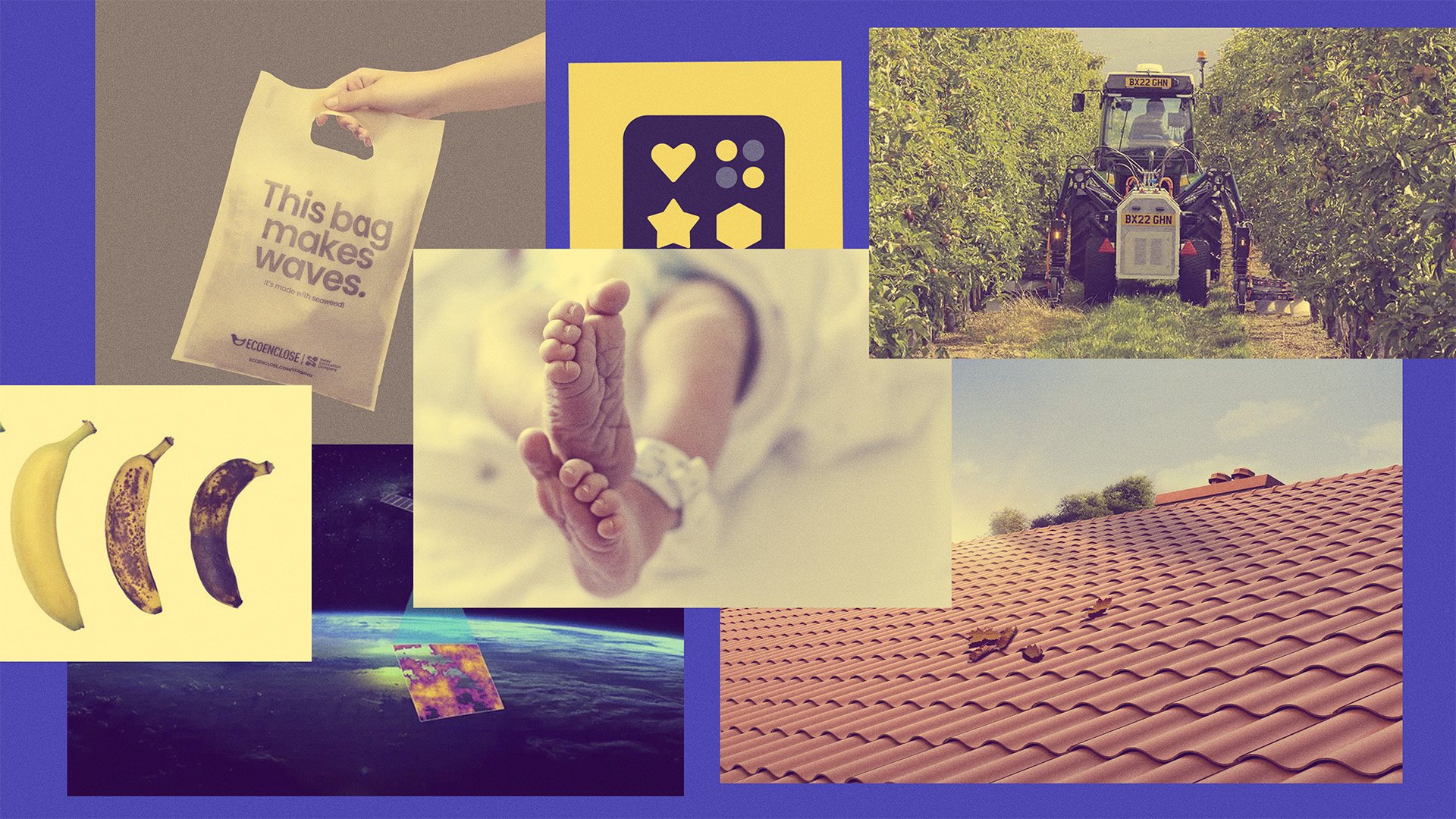
Each year, TIME Magazine picks a selection of 300 tech innovations; we thought we’d highlight some of the 2025 picks in an attempt to make tech feel less miserable. Maybe everything will be all right after all..
1 Non-Chemical Weedkiller
The impact of industrial farming on the environment is a growing concern, and the use of herbicides to cull weeds in orchards has significant potential impact on soil health and the water table. Thankfully, UK-based company RootWave has come up with a technique that uses electricity to effectively target the root systems of weeds, basically burning the roots, killing the plant and leaving crops untouched. It kills 99% of weeds on a single pass-through, and with no impact on soil or water systems (and with no back-breaking labour either).
2 Seaweed Bags
Compostable shopping bags have been around for a while, but for various technical reasons haven’t supplanted polyethylene variants, meaning we still use literally trillions of the plastic versions each year, with visible consequences for the environment. Thanks to tech developed by a company called Sway, though, seaweed can now be spun into a translucent film that can then be used in existing bag-manufacturing processes, meaning we can now use the same production lines to create bags that are as durable as plastics but fully compostable. Doesn’t solve the problem of what to do with all the branded cotton totes, though.
3 Satellite-based Wildfire Prevention
It seems reasonable to assume that wildfires are set to become more prevalent, at least in the short term, as the effects of global warming continue to be felt; thankfully they are going to become significantly easier to detect thanks to a system called FireSat. This takes advantage of the boom in satellite deployment to establish a network of in-orbit devices that use infrared to scan the world’s most fire-prone areas for signs of conflagration every 20 minutes, and alert authorities at the first sign of a blaze.
Suggested Reading

NFTs: a warning from history
4 Pacemakers for Babies
Approximately one in 100 infants is born with a congenital heart defect each year in the UK; treatment of these conditions is necessarily complicated by the minuscule size of neonatal organs. Thanks to research at Northwestern University in the US, it is now possible to create an infant-scale pacemaker, smaller than a grain of rice, which can be injected with a syringe, binds to and regulates the heart, and dissolves after a few days once its work is done, potentially changing the long-term outlook for thousands of newborns around the world with life-threatening rhythm disorders.
5 Aesthetic Solar Panels
Solar panels are, unquestionably “A Good Thing”, particularly given shifting weather patterns and the likelihood our future is going to be sunnier (in some respects, at least) than our past. A shame, then, that they have traditionally been so ugly. But no longer! A new system for crafting solar panels has been developed by Jackery, which means they can now be manufactured to mimic the shape of terracotta roof tiles, meaning solar can now be installed on properties where building regulations (or aesthetic sensibilities) might previously have prevented them, and bringing clean energy to potentially thousands more homes worldwide.
6 An End to Annoying Phone Notifications
Fine, so it’s maybe not an ill to compare with plastic pollution or the threat of all our forests burning down, but the endless barrage of digital notifications is a very modern curse that we could all do without. Step forward Buzzkill, an Android app by UK developer Sam Ruston, which lets you use natural language to control which alerts your phone flashes up via a single interface – so you can get groupchat alerts only when a particular person posts, say. OK, it’s not going to change the world, but it might help you look at your phone less.
7 The Non-Browning Banana
Another innovation from the UK, and possibly the most significant of all. Biotech company Tropic has, using gene-editing techniques, developed a banana that stays fresh for up to 12 hours after peeling and doesn’t brown. The company is also conducting research into making the fruit more resistant to fungal disease, a real threat given their famously homogenous genetic makeup (most bananas eaten are clones of the Cavendish variety, and so at high risk of widespread crop failure).