
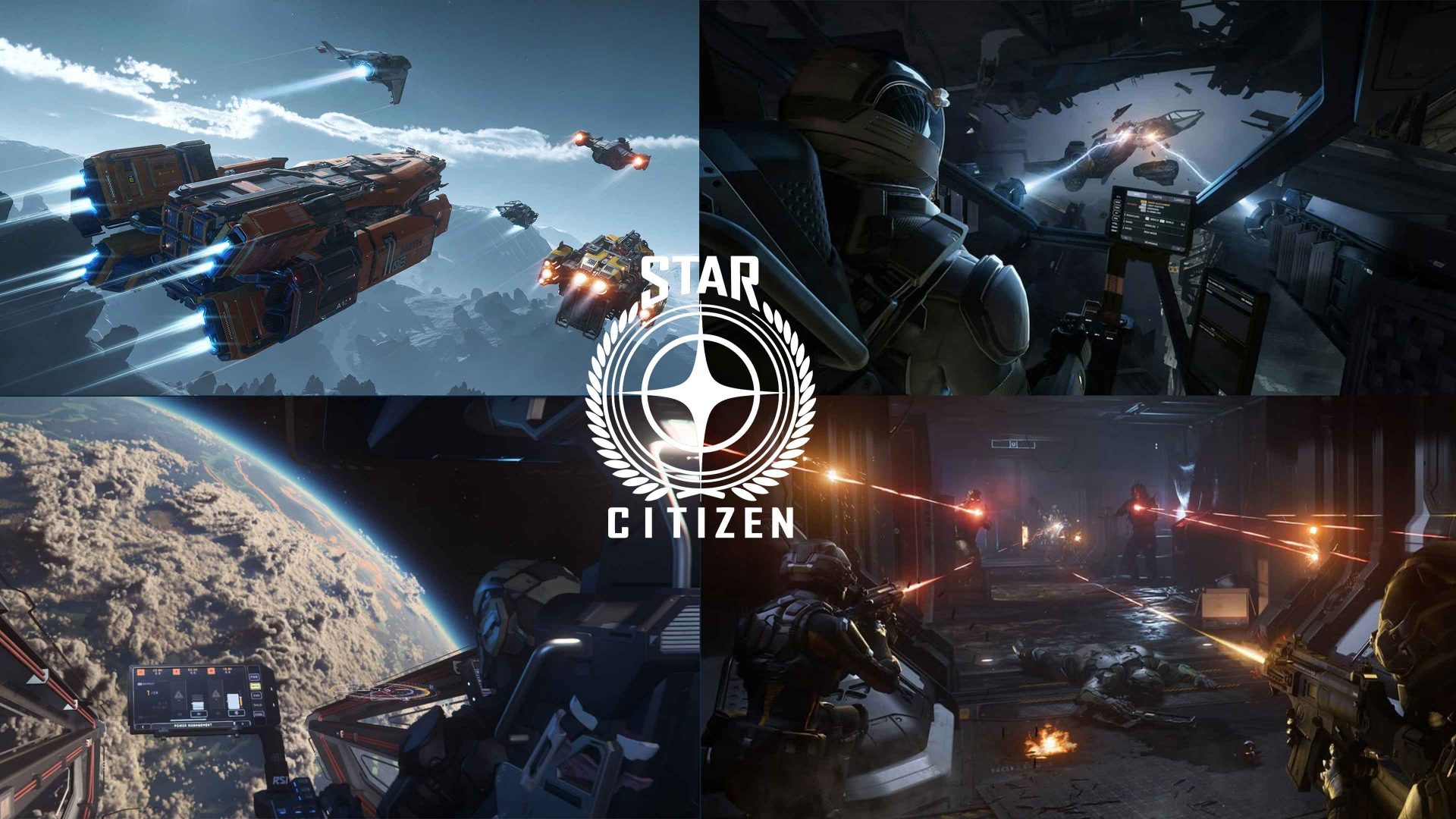
Grand Theft Auto 6’s status as the most-anticipated game of the year is uncontested. But there’s arguably a more interesting, and certainly longer-awaited, title targeted for release in 2026 – one that’s been in development for 16 years, whose development costs rival those of GTA, but which most people have never heard of.
Star Citizen is the brainchild of veteran British-American developer Chris Roberts, whose Wing Commander titles combined space combat with cinematic storytelling in a way that was revolutionary in the 90s. Since 2010, Roberts has been working on his vision for the ultimate space exploration game.
It’s one that will let players explore star systems and build an entire virtual life for themselves in space, killing or collaborating with other players in a persistent universe, one in which you can fly seamlessly from planetary base to space station with no loading screens, dogfighting, trading, mining, building and doing pretty much everything you might wish to. Older readers might want to think of legendary space-trading game Elite, but with a very 2020s glow-up.
Star Citizen was first announced in 2012, having been in pre-development for two years. Its announcement trailer and presentation were a masterclass in grandiose hypebuilding, with Roberts promising a persistent universe, massive multiplayer support, a fully-functioning in-game economy, a hundred star systems to explore, dozens of spaceships to buy and fly, and a standalone single-player experience called Squadron 42 for players to enjoy… all set to be delivered in two years. It was an ambitious timeline, to put it mildly.
All that ambition was going to come at a cost. Roberts’s solution was to use the hype to attract funding, not from corporate investors but from the playerbase itself. Star Citizen decided to crowdfund its development, attracting record levels of backing from gamers who wanted this incredible promise to become reality.
Suggested Reading


Apple’s new computer is a gateway drug
Between 2012-2014, after which, per the announcement timeline, the game should have been completed and released, it raised some $35 million dollars. It turns out, though, that that wasn’t anywhere near enough time, or money, to build what Roberts had promised. So they kept asking for more.
In total, the game has raised a truly eye-watering sum – $950 million contributed by over 6 million people, whether through the initial crowdfunding campaign or through sales of in-game items for real-world money.
This has been one of the most innovative – and controversial – aspects of the Star Citizen story; players who wish to gain a marginal advantage over their peers (or just look a bit cooler than everyone else) can spend real-world money to buy spaceships, weapons and the like, with ship prices ranging from $50 to $600. Real high-rollers can purchase bundles of ships, weapons and the like for literally thousands of pounds, all the way up to the “Legatus” pack, which would set you back $48,000 of actual cash.
Where’s all the money gone? After 14 years, the game remains persistently unfinished; it is currently in a playable, but buggy, “Alpha” state, with a dedicated core of players who are invested – literally and metaphorically – in its development, playing what continues to be a pale simulacrum of the promised all-singing, all-dancing space cowboy simulator launched all those years ago.
If you’re willing to put up with the many, many bugs, and if you have a gaming PC that can handle the processing required to render the (very impressive) graphics and handle the simulation, then there’s some fun to be had. You can pilot huge ships, run around planets, space stations and engage in first-person shootouts, fight pirates or other players, explore distant space outposts, loot treasure, go mining, and even run huge frigate-style megacruisers crewed by dozens of players simultaneously.
Equally, though, you still can’t do loads of the things that were sold to backers back in 2012 – there are two, not 100, star systems, there’s no in-game economy, and players have an annoying habit of occasionally falling through the floor into the infinite blackness of space when the simulation glitches out.
Drop into the Star Citizen community streaming the game on YouTube and you find a very patient playerbase continually grappling with performance issues – the multiplayer component of the game is improving, but there are still significant performance issues which render the experience… sub-optimal, and certainly a long way from “finished”.
Suggested Reading

The problem of vanishing video games
At long last, though, one part of the Star Citizen universe might soon be ready for the world to experience. Squadron 42, the single player game set within the Star Citizen universe which uses the same systems and game engine, and which is intended as a gateway into the eventual game proper, is now slated for a 2026 release; exactly when in 2026 is as yet unclear.
Squadron 42 is being presented as a classic space opera in the vein of Star Wars with epic space battles and a hero’s journey – anyone wondering what all the near-billion quid fundraising has been spent on need only look at the cast list for the game, which includes Gillian Anderson, Mark Strong, Andy Serkis and Henry Cavill amongst others.
There is, though, no guarantee that Squadron 42 will meet the deadline set by its developers. Based on previous failures, it’s as likely to slip to 2027 (or beyond) as it is to compete with GTA6 for the world’s attention.
Meanwhile, Cloud Imperium Games (Roberts’ development company) will continue pursuing additional funding from its fans, some of whom have spent literally thousands of pounds on a game which there is no guarantee will ever be finished, to continue building the game, its mechanics and its universe.
The videogames industry is not in a healthy state right now, with layoffs and studio closures announced on a weekly basis, despite the medium being more popular and lucrative than ever. The traditional model of large studios pouring development costs into a title in the hope of making the money back through sales or subscriptions feels broken, and there’s no indication of what might come to replace it.
Maybe Star Citizen is the future of game development, then: constantly promising digital jam tomorrow if only you’ll keep paying up. Whether this model results in a good game at the end of it, or indeed any game at all, remains to be seen, but it’s certainly a good way of raising a billion quid.
 Most popular


Screen scandal: How Ofcom lets GB News get away with it

GB News Scandal: Read our dossier of their flagrant Ofcom breaches

GB News Scandal: The presenters


Claudia Winkleman’s chat show is afraid of Claudia Winkleman