
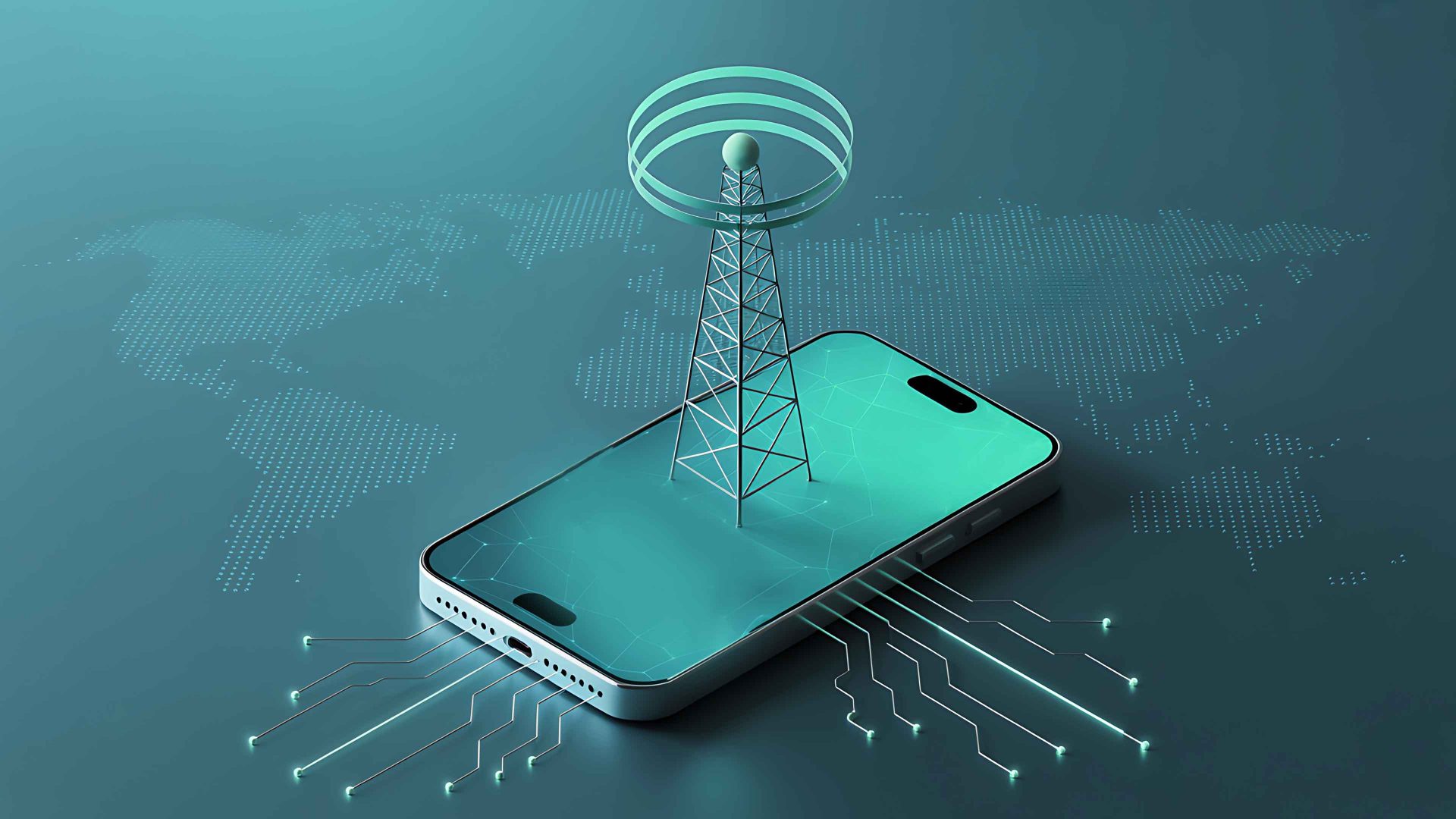
Do you ever stop to think how incredible your phone is? Maybe you’re reading this on one right now, holding it lightly in your hand, a couple of hundred grams of metals and plastics and glass that also happens to be a skeleton key to modern living and a portal to all of the knowledge ever accumulated.
Your phone speaks to a tower, which speaks to a switching network, which speaks to fibre, which speaks to undersea cables, which speaks to data centres, which speak back, in fractions of a second, to do on a 2x6inch machine what would have been unthinkable on an entire mainframe at the turn of the century. Objectively speaking, that’s nuts. So why do we hate them so much?
For all the current excitement (and fear) about AI, your phone remains the most consequential piece of hardware humanity has come up with since Gutenberg did his thing with the printing press, yet we seem intent on ignoring the benefits of the technology in favour of hand-wringing about its effects. Maybe we should grow up a bit.
Moral panics around technology and its effects are not new. Socrates kvetched about the potential impact writing might have on Athenians’ ability to think, and in the 16th century concerned citizens worried that an abundance of books might prove “confusing and harmful” to the general populace.
More recent furores about novels, television, comic books and videogames are just the latest versions of a dance we’ve been doing for centuries – but the current wave of smartphone hate feels particularly perverse.
There’s a reason why 54% of the world’s population owns one, with that rising to “basically everyone” in rich countries – the smartphone has become central to every facet of modern life. Perhaps its ubiquity, its constant presence in our lives, blinds us to the amazing things it lets us do, but it’s worth taking a moment to reiterate just some of what the magic box in your pocket is capable of.
Pay your taxes. Buy food, send flowers, open a bank account, order a passport, refresh your wardrobe, learn a language, take a photo, explore Euclidean geometry, watch a film, shoot a film, edit a film, publish the film online, play games, read a book, write a book, donate to charity, check your heartrate, broadcast to millions, start a revolution…
Entire economies have been reshaped thanks to the mobile-enabled ability to seamlessly transfer money between mobile wallets, transforming personal finance across Africa. This feels like something we ought perhaps to be less jaded about, maybe.
It’s easy, and currently fashionable, thanks to the moral panic around children and technology engendered by high-profile polemicists and a media class incapable of internalising more than one book at a time, to look at a room full of people, often young, staring at their tiny screens and extrapolate Very Bad Things about What That Means.
Suggested Reading

How long will it be before AI starts using us?
Such an attitude, though, ignores the fact that life in 2026 doesn’t split neatly into on- and offline, and that in a post-web world we all live cyborg existences, straddling meatspace and cyberspace, with our devices helping to connect our twin realities.
The paranoia about smartphone “addiction” assumes that “smartphone equals social media”, a lazy conflation that confuses software with hardware; just because you think TikTok is a cancer and Mark Zuckerberg the devil doesn’t automatically make phones evil, any more than the continued publication of the Daily Mail is an argument against allowing paper to exist.
Like all hardware, smartphones are tools; like all tools, their use can have both positive and negative effects. Perhaps we should spend more time thinking about how we can encourage people to use this technology effectively rather than panicking about whether or not it’s causing the rapid degradation of the social fabric.
After all, we’re not going to go back to an analogue world (or, if we are, we can be sure that the manner in which we do so will make us very, very nostalgic for the current smartphone era). A world in which anyone can read these words on the bus while listening to music on a single device that is also their bus ticket is one which perhaps we should all agree is… quite good, actually.
We have on our person: a creative studio, cinema, concert hall, office, newswire, banking system and entire TV network in one. Objectively this feels like something that should be celebrated rather than vilified. If you feel that your phone is a problem in your life, is it possible that the problem is… you? Just a thought.
Matt Muir is writer of the webcurios.co.uk newsletter on tech and the internet