The article by Matthew d’Ancona on this week’s cover establishes the terms of an argument this nation must have with itself; an argument which will last perhaps a generation; an argument that will prove to be the axis around which so many seemingly barely related events revolve.
What, today, does it mean to be British?
The sentence that sent a real shiver down my spine (perhaps in a moment of shameful self-awareness) is the one describing the “disastrous moral cowardice” of those of us on the side of liberal democracy:
“If liberals continue to seek out parapets beneath which to hide, bad actors will simply sweep them aside. In many places, they already have,” Matthew writes.
It’s a rallying call, filled with hard truths, for those of us who believe we are in a fight for the future of our society; a battle for Britain.
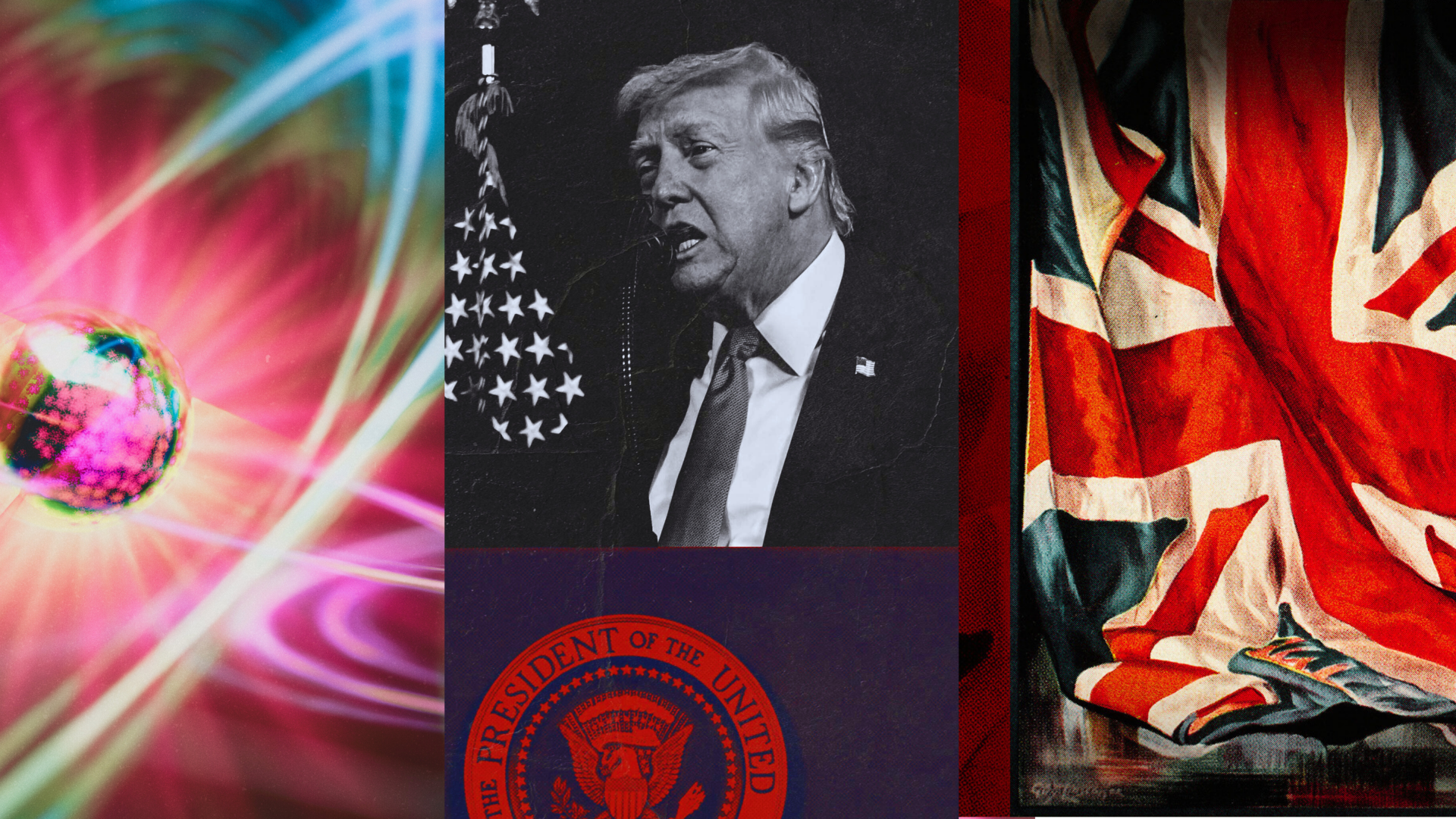
If there’s a better piece on the extraordinary events in the Americas this week than Paul Mason’s, then I’ve yet to read it. If you want to fully understand the bigger picture on what he describes as Trump’s “act of dark genius” — and how Europe and the UK must respond, lest they stop being players on the world stage and instead “become the chessboard” — then this brilliant piece of journalism is for you.
I can’t, sadly, promise that you’ll fully understand quantum mechanics by the time you’ve read Philip Ball’s feature on the theory that has baffled even Nobel Prize winners for exactly one century this year. But you’ll have a great sense of why it’s all so bloody confusing.
“Quantum mechanics is a theory of what is and is not knowable, how those knowns are related, and how they depend on the questions we ask,” Philip writes. Substitute the word “journalism” for “quantum mechanics” in that sentence and you’ve got a decent equation for how we put The New World together each week.
Also this week:
Patience Wheatcroft makes the, perhaps unfashionable, argument for giving a hefty pay rise to our politicians.
Ros Taylor explains what it is about Dubai that such great British patriots as Isabel Oakeshott find so irresistible. And she wrestles with the logic behind Pimlico Plumbers founder Charlie Mullins, who moved there because “we have too many Mohammeds and Abduls” back home — proving he’s something of a master spanner in more ways than one.
Max Décharné unveils the hidden passion of Agatha Christie, who died 50 years ago: surfing.
And Marie Le Conte reveals the secret of how she dropped a couple of dress sizes. It’s an extraordinarily novel approach and may have you reconsidering that expensive subscription to Mounjaro or Ozempic — or whatever quick fix you may be tempted by after an over-indulgent December.
Finally, a belated Happy New Year to you and yours. Thank you for your continued support as we enter our tenth year of publishing. If you’d told me we’d still be here when we set out in July 2016 to publish four editions, I’d have thought you crazy. But crazy seems to be all the rage these days.
We are working on our plans to celebrate our first decade in the summer and hope you will be part of the celebration. I’ll keep you updated anon