2026 is, as the kids say, escalating quickly.
In little more than a fortnight, Donald Trump has kidnapped the president of Venezuela, encouraged extraordinary acts of civil hostility by ICE agents in Minnesota, put his arm around Vladimir Putin and invited him on to his Board of Peace, and is now threatening to completely shatter NATO — for nearly 70 years the greatest defence organisation in history — because he has determined that the acquisition of Greenland, by whatever means necessary, will be his legacy.
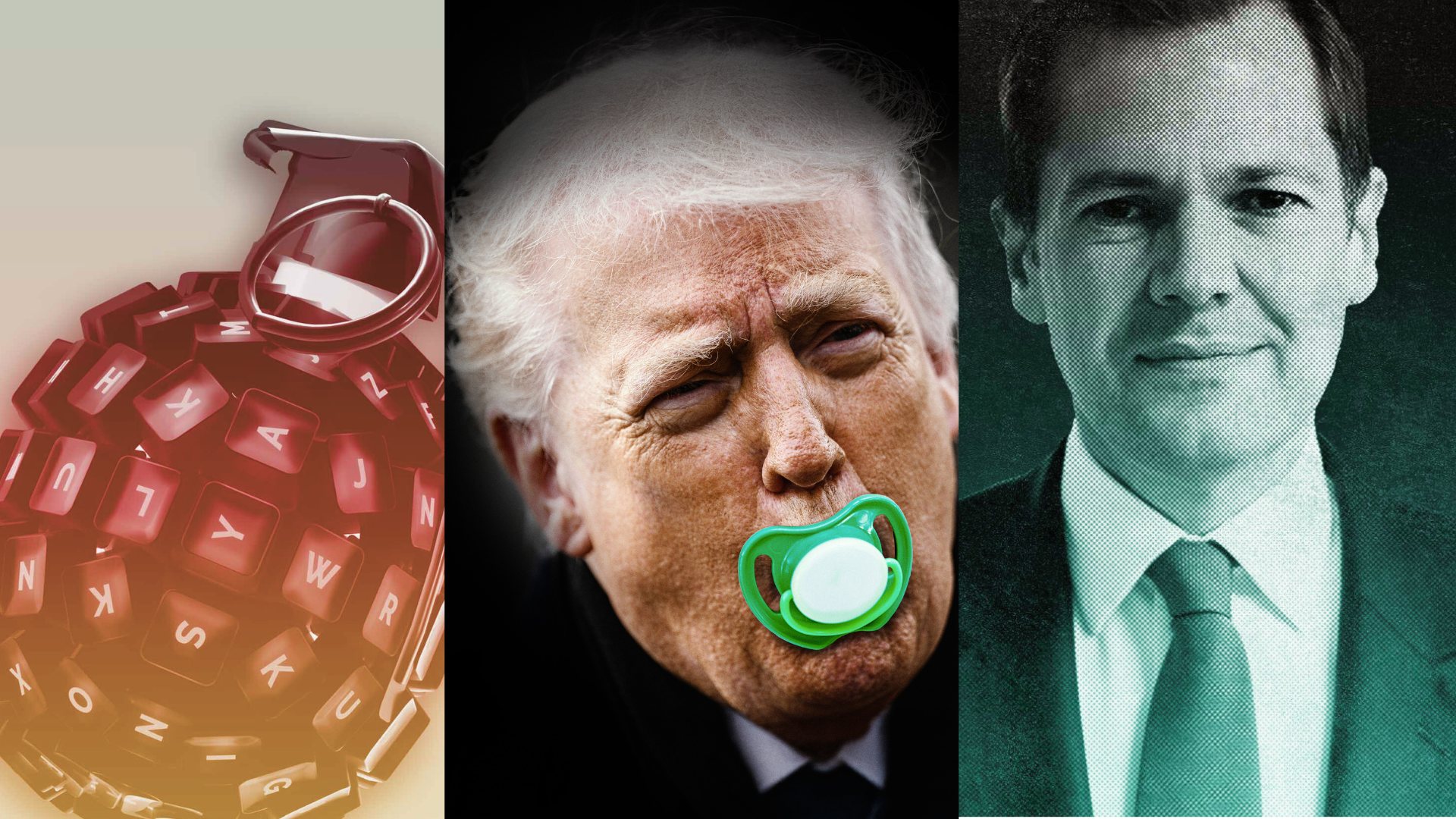
As our cover this week asks, what happens when the world’s biggest baby doesn’t get what he wants? We’re about to find out.
It’s a bleak, bleak situation. As Matthew d’Ancona writes in an essay that takes the long view of this unprecedented moment in time, it is actually far worse than the Suez crisis, which was, at least, a clash of two very rational positions.
Trump’s petulance, his narcissism and his bullying today stand as a grave threat to the very thing he pretends to ensure: global security. The coming days and weeks feel portentous and in danger of spiralling out of control — the consequences of which would be unthinkable.
The UK government’s stated strategy of patient conflict avoidance and de-escalation is increasingly at odds with the resolve of our EU neighbours not to be bullied and belittled. And with every utterance from this wildly uninhibited president, it seems, also, to be completely at odds with the reality of the situation.
Incidentally, dear reader, I hope you are as excited as I am about our latest new signing to team TNW — the great Alan Rusbridger, former editor-in-chief of The Guardian, The Observer and Prospect magazine.
Alan, joining as editor-at-large alongside Alastair Campbell and Matthew d’Ancona, is a genuine giant in the world of journalism whose work has shaped some of the defining stories of the past 30 years. He told me he has “long admired the paper’s ambition, sense of mischief and willingness to swim against the tide. Such free and independent spirits are rare in today’s media and I look forward to returning to my first love of reporting.”
We cannot wait!
Also in this week’s edition:
Shuab Gamote arrives at what I think is a brilliant framing for how the government must protect the prospects of the young: a triple lock of promises to balance the financial triple lock enjoyed by pensioners. I think it’s a brilliant idea.
Nigel Warburton, our philosopher-at-large, recalls one of the most shocking scenes ever filmed for cinema and questions the very anatomy of evil.
In his weekly column, Alastair Campbell remembers some of the high-level political defections he was involved in during his time in Number Ten. And he pours scorn on the efforts of Robert Jenrick, who can’t even defect right.
James Ball gives you the inside track on how Kemi Badenoch responded to Jenrick’s botched defection — and where she, and the Tories, go from here.
Nichi Hodgson reflects on her retirement from a life as a professional dominatrix.
Tanit Koch’s faith in the old Rhineland proverb “Et hätt noch immer jot jejange” (“Things always work out in the end.”) is shaken by the advent of AI.
Sadie Harper looks forward to the Winter Olympics in Cortina, remembering the town’s first turn at this event, when a certain Ernest Hemingway was in residence.
Tim Bradford pays tribute to the recent death of Dilbert cartoonist Scott Adams, as only Tim Bradford can. It’s a treat.
If you need a laugh (and you need a laugh), then Henry Morris’s official history of Britain, as approved by Reform, is here.
Paul Mason struggles to muster sympathy for the Palestine Action sympathisers. It’s not about you, he writes. It’s about the Gazans, who are in grave danger of being forgotten as world events spin at such a furious pace.
Simon Barnes — one of the greatest sports and nature writers of his generation — asks if we should boycott the World Cup. Which, considering what my wife has just spent on tickets to watch her team Scotland against Brazil in Miami, is something I’m not entirely on board with. But you won’t find any form of content suppression here at The New World, so you can read his argument here.
Claudia Pritchard compares Constable and Turner, the subject of an exhibition now on at Tate Britain; John Bleasdale reminds us of David Lynch’s non-cuddly side; and Ros Taylor is enthralled by the BBC drama Industry.
And, finally, Marie Le Conte interviews some of her many trans friends, brilliantly bringing a touch of humanity to a highly charged, highly challenging debate. Real people voicing real experiences, fears and hopes. They should be heard.