Every royal correspondent I’ve ever met has an innate sense of deference to “The Firm”. It’s natural, I suppose. After all, they are, in the main, reporting for fans of the monarchy. But as an exercise in journalism (if you accept journalism’s job is meant to hold power to account for its abuses, not explain them away) it has always been an unhealthy relationship.
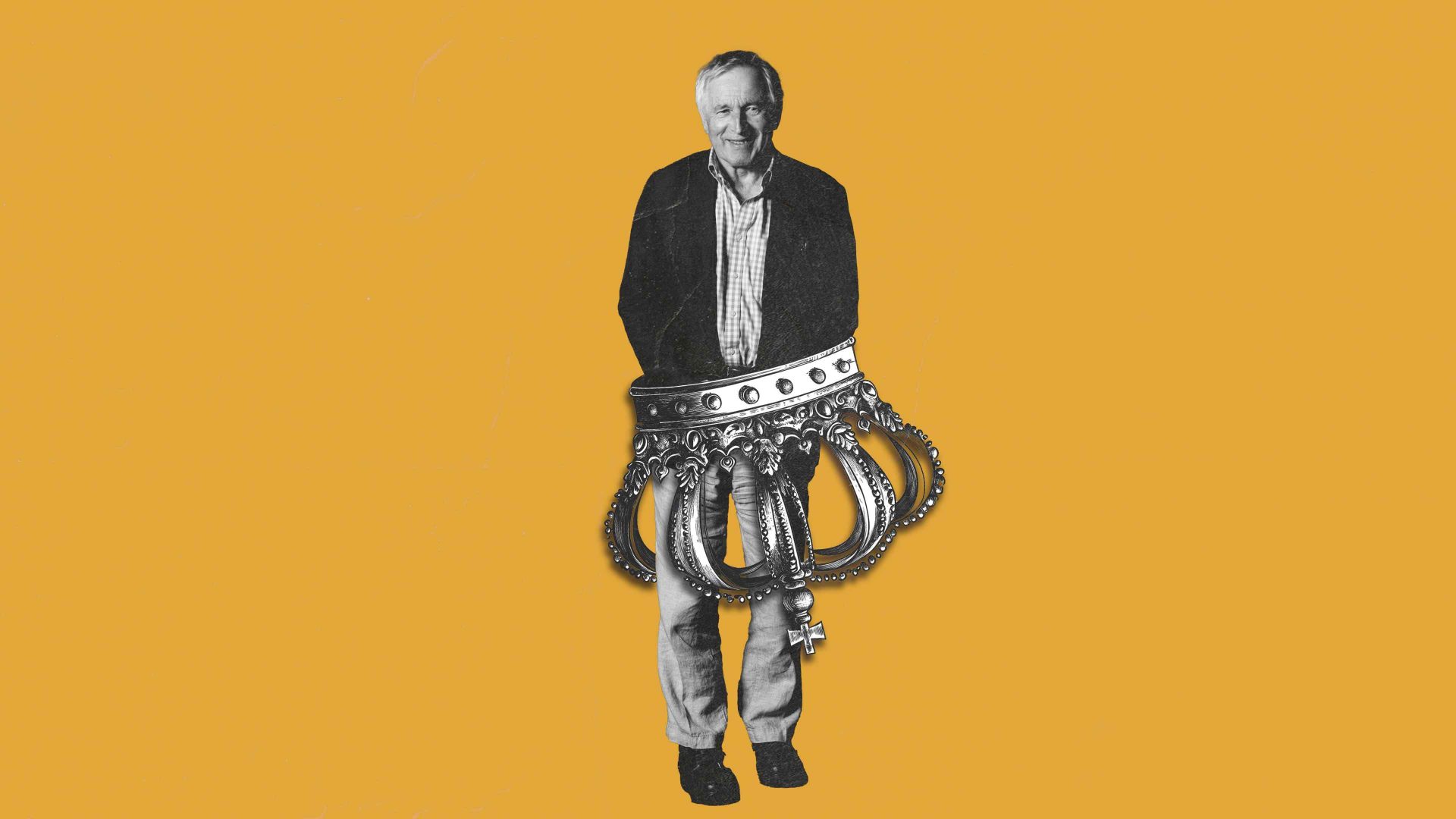
Jonathan Dimbleby, however, occupies a category of his own. A longtime friend, regular dinner guest and authorised biographer of King Charles, he has been rather busy of late; wheeled out wherever a pro-royal voice is required to give a King-friendly perspective on what is becoming an existential crisis.
The latest appearance was on Thursday’s BBC Radio 4’s World at One, and then repeated at length at the very top of Evan Davis’s PM show that same evening. This is what he actually said:
“It’s a personal crisis for them… it’s grievous for them to have to endure the institution being put under such incredible scrutiny. When we look at it more coolly and in perspective, we will see that the institution has emerged from this not weaker, but arguably – seems perverse to say it – stronger. Because it’s working.”
Yes. It does seem perverse to say it. Because in no objective universe does the royal family look stronger thanks to the arrest of the eighth in line to the throne. And in no objective universe could it be said that the monarchy is “working” in this instance, if by “working” he means effectively dealing with this crisis.
The monarchy today looks exactly what it has long feared being seen as: a closed system that protects its own until that protection threatens the institution itself.
The Firm hasn’t processed any wrongdoing. The stripping of titles was more about brand reputation than punishment. The King had no idea that his brother, who has always declared his innocence and who today has the same right to a presumption of that innocence as any other citizen, was being arrested this morning.
When Mounbatten-Windsor was arrested, it was at the new grace-and-favour home the King arranged for him on the Sandringham Estate in Norfolk. We can assume he remains financially supported by the King.
It was the late Queen’s £12million that paid off his accuser, Virginia Giuffre. Giuffre, of course, is not alive to see this day, having killed herself last year.
The King’s statement, delivered four hours after the arrest today, that the law must take its course is not a royal directive. It is not a display of virtue. It is a statement of the obvious — recognition of something that has already happened and is entirely out of his hands, crown or no crown.
To this country’s credit, the one process that is working, albeit belatedly, is our judicial system. Mountbatten-Windsor will now be processed through it the same as anyone else, with the same presumption of innocence our system affords anyone until they are proven guilty.
That this should be reported as the monarchy working is to misattribute credit. The monarchy is the institution that long enabled Prince Andrew; it protected him, comforted him and paid his bills right up until this morning. It will continue paying his bills.
Thursday was an historic day of reckoning for a man now arrested for a serious crime of misconduct in public office, and commonly accused of complicity in heinous sex trafficking by Jeffrey Epstein.
For Jonathan Dimbleby, a member of the most famous dynasty in British broadcasting, to play the role of simpering court-explainer is an embarrassment to journalism.
He may think he’s being loyal. He may even think it’s the truth.
But to those who seek it, his perverse views, so prominently broadcast by the BBC, give absolute affirmation that the commentariat is part of the same closed loop as the institutions it covers.
Matt Kelly is founder and editor-in-chief of The New World
 Most popular

Trump has devastated Iran – and damaged himself
Here's what Zelensky really thinks of JD Vance

A Green wave is ready to wash away Labour London – and this is why

Exclusive: New Ofcom chair appointed – but will he fix Musk and GB News?