
There was this study I reported on some years ago which mostly sank without a trace, but which still colours many of my views about the internet. It came out in 2018, and was published by Duke University and Princeton. Over a month, researchers had made some Republicans and Democrats follow bots on Twitter which retweeted pundits, politicians and news from the other side.
At the end of the experiment, they’d found that participants, far from having become more enlightened and understanding, had instead become more partisan and entrenched in their views. Being made to leave their ideological bubble, even for a short while, had made Republicans more conservative and Democrats more liberal. Isn’t that fascinating?
For years before that, people had gone on and on about online siloes being bad for us, yadda yadda, but turns out they’d been wrong all along. Sadly, the study didn’t really escape containment and, even today, you’re more likely to see the “echo chambers” view (ironically) repeated than you are to come across its opposite.
In my defence, I tried my best. A lot of my last book, Escape: How A Generation Shaped, Destroyed And Survived The Internet, argued that the human brain and soul simply weren’t built to be around everyone else all the time. We’re fundamentally social beings and, as a result, are at our best when we can be malleable, and shape ourselves depending on who we’re spending time with. Social media killed all that by squishing us all into the same claustrophobic spaces. What happened next will astound you.
More seriously: it’s a dynamic you’ll notice once, then keep spotting everywhere. Left wing people and right wing people make each other more tribal by spending time on Twitter, sure, but this whole “generational conflict” thing almost certainly wouldn’t have happened without social media either. Millennials and boomers don’t meaningfully hate each other in real life, but algorithms made them spend a lot of the late 2010s shouting at each other.
It’s also possible to argue that the woke wars, or whatever you want to call them, were stoked by a similar dynamic. We, as a society, need in-groups and out-groups in order to keep going, and we need them to be able to socialise and speak to one another without always being within earshot of the other.
There is, however, one area in which this dynamic has been especially overlooked: gender. Now, there is no world in which I would argue for greater segregation between men and women – as a former French child, I despise the idea of girls and boys going to different schools – but the internet may have taken our mingling too far. That’s my theory anyway.
As I see it, it is bad for young and youngish people – especially the straight ones – to always feel like they’re being watched by the opposite gender. I think it’s driving everyone a bit mad, and making a lot of people more reactionary – sometimes on purpose, and sometimes by accident.
Suggested Reading


For the love of God, stop taking your Zoom meetings in cafes
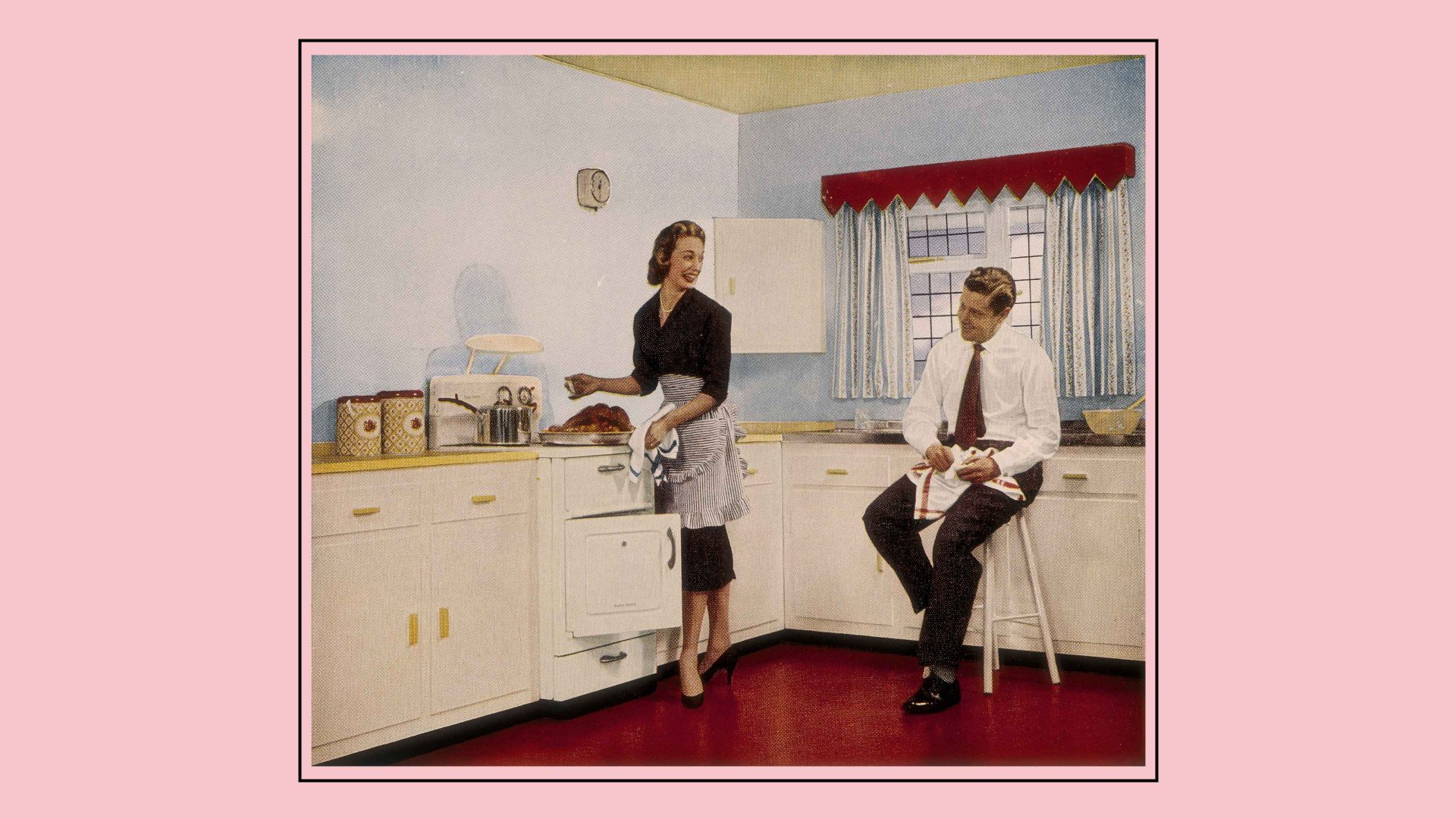
Mostly, it’s what I ended up thinking about as I read this latest study on the “tradwife” movement, which promotes a return to submissive domesticity for women. Academics from the University of Nevada sought to understand the phenomenon and, more specifically, what people saw in it. As they explained, the hypothesis was that “protective paternalism, a facet of benevolent sexism encompassing beliefs about women’s need for care, would play an especially important role in explaining men’s favorable impressions of the #tradwife movement”.
After quizzing 595 American men aged 18 to 29 on their various beliefs, they came to a very different conclusion. Instead, the strongest predictor of male support for the “tradwives” lifestyle was “hostile sexism”, which includes all the pleasant beliefs about women you’d imagine.
“We were taken aback”, the lead researcher told the press, which was an impressive sentence to form for someone only born yesterday. As any hardened cynic could have told you, no good can come out of a man wishing to send their spouses back to the kitchen.
Why are all these female tradwife influencers doing these videos, then? Well, that’s an easy question to answer: male attention is lucrative. On the internet, there simply is no wrong way to get views, and eventually turn those views into cold, hard cash. That’s all there is to it.
Of course, any woman in their right mind would think twice before betraying her entire gender in exchange for a few bucks, but not every woman is in their right mind. Because we’ve built an information ecosystem where any of those gender traitors can easily preen in front of hundreds of thousands of mean, lustful marks, there is nothing standing between them and their ill-gotten gains.
On the other side, the men watching these overly manicured, uncomfortably sexualised pretend-homemakers can just fall further and further down the rabbit hole, and straight into Andrew Tate territory. Meanwhile, the rest of us can only stand by and suffer.
Well, technically, there is something that could be done, which is to mostly ban social media algorithms so online culture stops rewarding growth for growth’s sake, like it’s a cancer. In the meantime, though? I guess we do just have to become better at being around each other, all the time.
 Most popular

Exclusive: New Ofcom chair appointed – but will he fix Musk and GB News?


Screen scandal: How Ofcom lets GB News get away with it
Matt Goodwin’s new book: The missing chapter
I worked at BuzzFeed. Here’s the truth about why it’s on its last legs