
You could easily blink and miss the few hints dotted alongside the high street. For the most part, Great Neck, an affluent and quiet suburb in Long Island, a half-hour train ride away from Manhattan, could be home to just about anyone. Still, if you looked a bit closer, you would probably notice a few unusual things. You could, for example, spot the discount store down on Middle Neck Road, with adjoining signs on the window that read “Free Iran” and “Passover Nuts: Fresh & Tasty”.
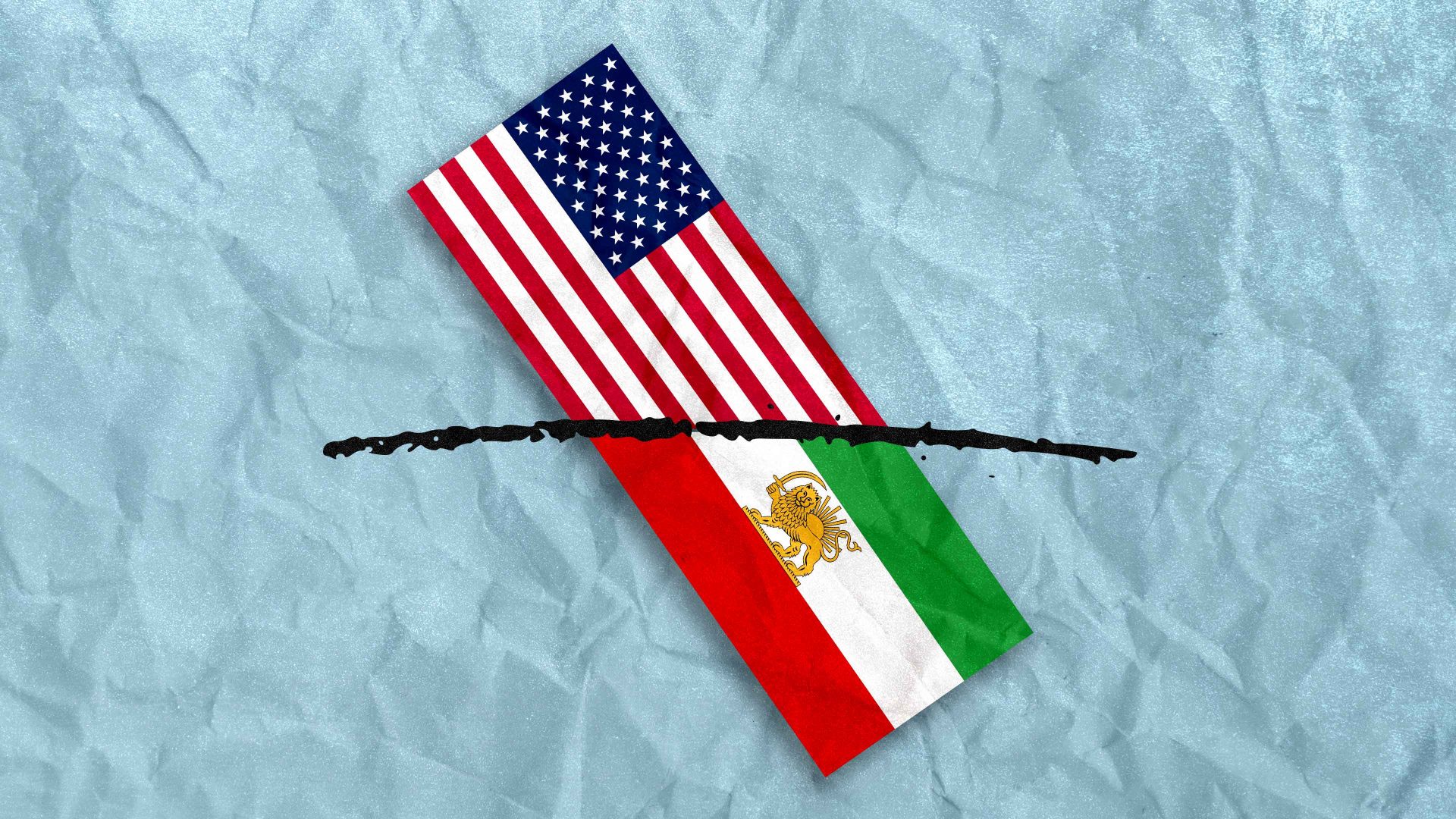
A few doors down on that same road, you could stop by the fishmongers and wonder where one would even buy a huge half-and-half flag, with the US’s stars and stripes melting into the Iranian flag’s pre-Revolution colours, complete with its sun and lion design. Oh, and if you fancied a sweet treat in the middle of the day, you could feasibly be intrigued by the sign at the kosher bakery, loudly announcing that it stocks both faloodeh and ice cream. Faloodeh is a traditional Iranian frozen dessert.
Great Neck is one of the only Persian Jewish neighbourhoods in the entire world. “For most of this community, the phrase ‘Persian Jew’ is commonplace. It’s so common that people don’t think twice about it,” Rebecca told me as we met for a snack by the train station. “However, for most people in the United States and on planet Earth, the phrase ‘Iranian Jew’ is an oxymoron.”
A lawyer in her fifties, she moved to the area three decades ago, and she is well aware of being part of what she calls “a unicorn population”. In the aftermath of the Islamic revolution of 1979, she said, other children at her Hebrew school would call her names, and bully her for being Iranian. It seems especially unfair, as their roots in the region stretch back over 2,700 years, making them one of the oldest Jewish communities in the world.
Still, in the 1970s, around 60,000 of them left their homeland, with only a minority deciding to stay in the country. Though most of them settled in Israel, many ended up in America, both in Los Angeles and New York. Nearly half a century has passed since they left, and most are yet to look back. What do they make of this war currently unfolding between three places which they could reasonably call home?
When the news of the airstrikes first broke in late February, Nabila felt excited. “My family’s been waiting for almost 47 years to see something like this, to get closer to getting that freedom which they never really got,” she told me. Another Great Neck resident, the 40-something now works at a Jewish non-profit organisation in New York City, where we met for coffee. She’s a first-generation American and part of the Mashhadi community. Theirs is a thorny story.
In the middle of the 19th century, the shah moved around 40 Jewish families to Mashad, in the northeast of the country, and put them in charge of looking after his treasury. Around a century later, under a less friendly regime, the once-flourishing community was attacked, and the survivors were forced to convert to Islam. Instead, many of them kept practising their faith in secret. This uneasy truce lasted for around a hundred years.
Following another wave of attacks, many Mashhadi Jews then moved to Tehran, where they lived alongside other Jewish communities. “They felt safe,” Nabila said of her relatives. “They were able to practice their religion. I have pictures of my mom in tank tops and bell-bottoms on the streets of Tehran!” Then things took a turn for the worse.
Because it was common for wealthy Iranian families to send their sons to study in the United States in the 1970s, it quickly became seen as the best place to escape to when the situation started looking perilous.
Suggested Reading
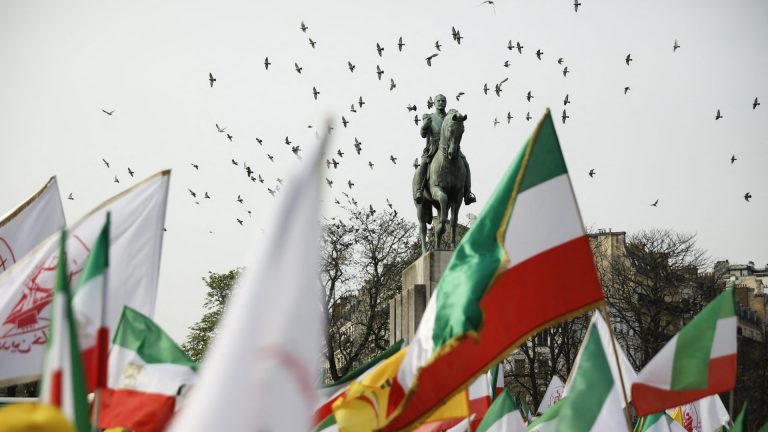
Iranian protesters: we don’t want the shah, the mullahs or the war
“These were young guys in dorms – three, four guys in a one-bedroom space on top of each other – and now each one of them is getting a call from their family saying, ‘make room, we’re coming with mom, dad, and all the kids’,” she said. This is what her parents and grandparents did, a few years before she was born. Once the family was settled, despite the risks her grandfather returned to Iran to formally close the jewellery company he owned in Tehran. He nearly got away with it.
“He managed to get on the airplane [to the US], and they made an announcement. They read out his name and said ‘unless you deboard, the flight won’t take off’.” He left and was imprisoned but, thankfully, word of his arrest quickly made it to the community that still remained in the capital.
Some of his friends got together and managed to bribe a prison guard in the capital, breaking him out of jail in the middle of the night, then helping him flee to the border. Once in Turkey, he flew to New York on a false passport, and was reunited with his family.
At first, the community ended up in Kew Gardens, a neighbourhood in Queens with quite a broad Jewish population. Once settled, they decided to start their own community in Great Neck. They now represent the largest minority in the area, with Kings Point, one of the local villages, being nearly 40% Persian Jewish. Mostly, they lead nice lives, but things aren’t always easy.
“I’ve never made my peace with any of this,” Rebecca said, “like anyone with a triangulated identity”. “If the world is doing badly, you feel torn – and then on days where there’s relative peace, you feel whole.”
She still remembers the time when her grandparents joined her and her parents in America before the Revolution. “I was understanding Hebrew and Farsi and English, and my family was intact… At that time, there were diplomatic relations between Iran and Israel and the United States. For my little girl’s brain, I thought things were fine.”
There was even a point when she nearly got to visit Iran as a small child. Half a century later, she’s yet to make the trip. “I would love for it to be safe to return,” she said before catching herself. “I mean, return is the wrong word. I’ve never been”. She paused for a moment. “I have no idea what it is I would even want to see there anymore. From what I understand, many of the national sites have been destroyed.” Some of the natural landscapes are supposed to be beautiful, she eventually added.
It’s a tough, emotional topic for many members of the diaspora. As Nabila explained, her father used to live between Iran and the US, and would happily go back the moment it’s safe for him to do so. Her mother, on the other hand, refuses to ever step foot there again, and sometimes pretends she’s from elsewhere when someone fails to place her accent.
Nabila would love to visit the country, though, and she knows exactly what she would want to do if she got there. One of her great-grandfathers remains in a cemetery in Iran but no-one can visit him, as all his relatives have left. “I have one uncle who uses Google Earth, and on the anniversary of my great-grandfather’s passing, he’ll just zoom in and check in on the grave every year,” she said. “I want to be the generation that’s going to go and visit my great-grandfather’s tombstone and clean it up.”
It just isn’t clear it will happen anytime soon. Nabila was frustrated by what she saw as the US and Israel “tippy-toeing around Iran”, while Rebecca remained more evasive. In any case, it felt clear that we were a long way from the beginnings of the war, which was once sold to the world as quick, clean and efficient. So far, it has been none of those things, and there is little sense that things will or even can change for the better.
Really, there is only one silver lining here, which is that Great Neck has turned into a safe, thriving, tight-knit community for Persian Jews. As recent history has shown, that isn’t something to be taken for granted.
 Most popular
The race to save the Beatles
How Jon Stewart told me the brutal truth about Trump and Hegseth
Matt Goodwin’s road to derision
Yes, it's a genocide