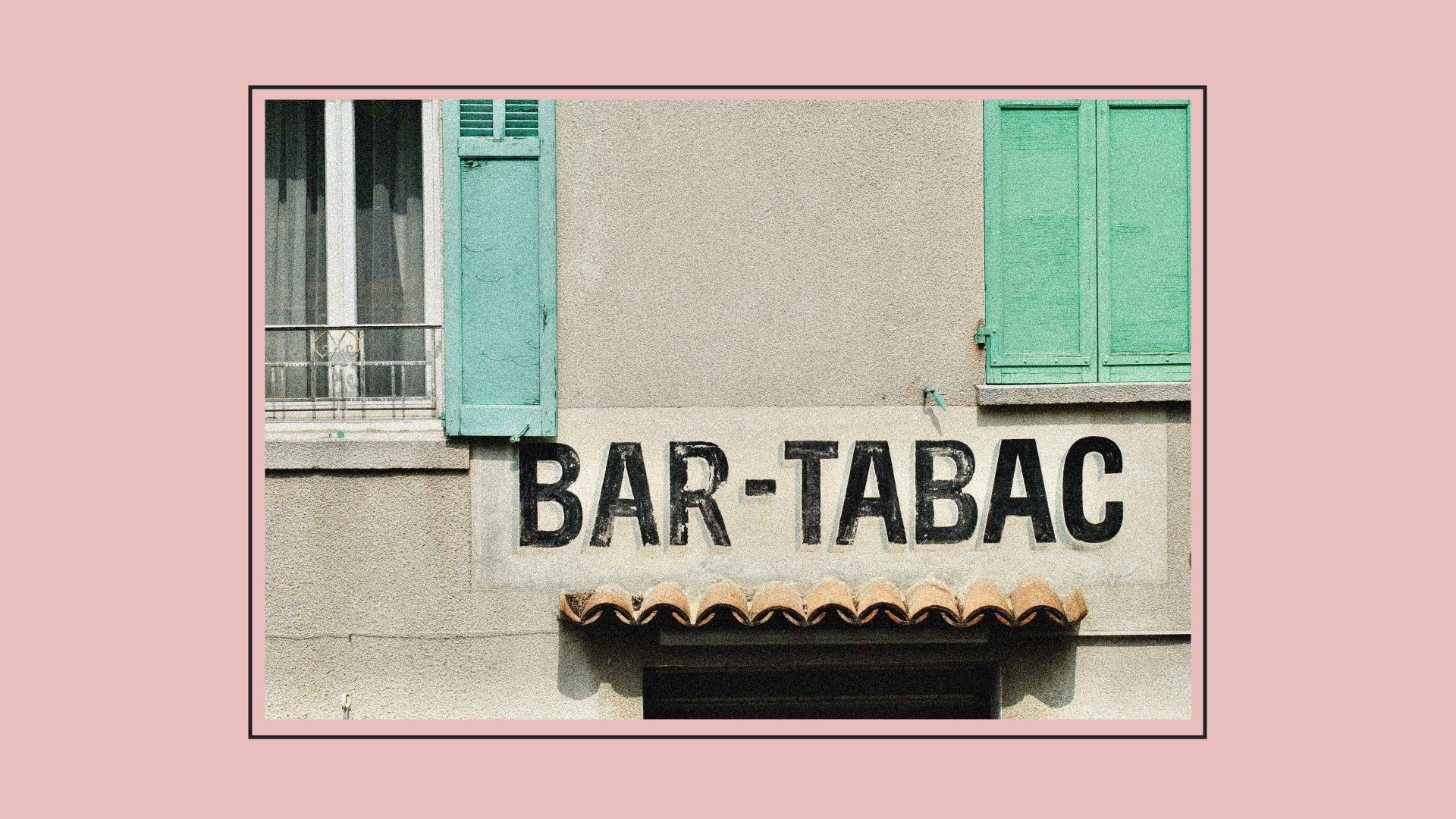
Every person who has spent even a few days in France, especially outside of Paris, will have come across a bar-tabac. New York has its bodegas, with their cats and chopped cheese sandwiches, and Britain has its corner shops, which are somehow stocked with anything a person could ever need.
The French bar-tabac offers something else; half shop, half bistro, it’s a world unto itself. You can buy cigarettes and other tobacco products there, of course, but it’s also a reliable favourite for anyone in need of lottery tickets and stamps. Customers’ children will also usually be able to replenish their sweets and gum stash at the counter.
The other half of the business takes place a few steps away from that transaction; in the bar area, locals – usually men, sometimes women, often people of a certain age – will be sitting at little tables, drinking their wine or their coffee, and generally passing the time.
Bar-tabacs aren’t the most glamorous of places; you wouldn’t send a tourist there, or spend an afternoon in one yourself unless you had few other options. Still, like the humble local pub, communities tend to miss them when they’re gone. This is a problem as, according to a recent study, their number has fallen dramatically over the past few decades, going from around 200,000 across France in 1960 to a mere 38,800 in 2023.
You could probably argue that the shift isn’t wholly negative, as it may show that, among other things, people just don’t smoke or drink as much as they used to, and they have access to better coffee at home and elsewhere. Still, bar-tabacs aren’t merely convenient, but an important part of the fabric of French society.
Between 2000 and 2022, the distinguished CEPREMAP research centre studied the closures of 18,000 bar-tabacs across the country. They found that, even adjusting for factors from immigration to unemployment rates, areas became more likely to vote for the far right in the years following the closure of the local bar-tabac. Crucially, no other small business was found to have such an effect on the way a neighbourhood voted.
Speaking about his work, academic Hugo Subtil explained that “these closures receive little media attention, but we have noticed that this dearth of local social interaction has a long-term impact on the [electoral] performance of the National Rally”. Though the figures aren’t huge – usually between 1.3% and 3.6% – they are enough to change the results of close races. France has had many of those over the past few years.
Suggested Reading

Why I hate the French film classic everyone else loves
What they reveal is also a sad change in the way people increasingly interact with the world. As Subtil said of this new state of affairs: “Individuals see each other less, they socialise differently. They will find themselves… refocusing on their family and friends, people with whom they already share many social characteristics and opinions. With this relational withdrawal, there are… fewer different points of view.”
As a result, “politics becomes a confrontation between atomised individuals and national media narratives”. Stripped of a social middle ground between the individual and the national, people then become less open to new ideas, more entrenched in their own opinions and, clearly, increasingly likely to favour politicians who will enable their more reactionary beliefs.
At risk of stating the obvious, this dynamic isn’t solely concerning in France, and applies to Britain’s pubs, America’s diners, and any other places where people may gather despite having little in common, save for the neighbourhood they happen to live in. Every country will have its own version of beloved but often ignored or mistreated third spaces; all of them will keep getting worse if those places don’t start getting a bit more love sooner rather than later.
That is the one silver lining the study found. If a new bar-tabac opens in an area, the far right will, over time, end up losing an average of 1.25% of the vote share there. In short: those social and political changes aren’t irreversible.
Though much has been made of people becoming lazier and the internet making it too convenient to never leave the house, the CEPREMAP’s work did show that people are still fundamentally influenced by their environment, and will, if given the opportunity, socialise with their fellow man, becoming less amenable to far right ideas in the process. Or, in even fewer words: if you build it, they will come. Santé!