I suppose I should discuss my biases before making my argument. Having just looked through my Instagram account, I must declare that five out of the last ten posts on my grid either featured or focused on some artworks I’d seen in a gallery. Some of them were posted without context, though I’d recognise the pieces everywhere – Georg Baselitz’s monumental, haunting painting of what I thought were perhaps angels being an obvious example. I saw it at the White Cube gallery near London Bridge, not too long after the artist’s passing.
Other posts had more substance to them, and included a brief review of whatever exhibition I’d gone to see. I will, for instance, always be able to remember that, sure, I broadly enjoyed the Barbican’s show on Panafricanism, and especially loved the Lynette Yiadom-Boakye pieces that closed it, but ultimately didn’t feel it had enough depth.
Of course, I could have told you about those without needing to turn to Instagram for help. All of these outings took place recently enough that they remain fresh in my mind. What the platform can tell you that I couldn’t, however, is that one year ago, to the week, I went to Tate Britain and discovered that I loved Edward Burra and loathed Ithell Colquhoun. The museum had brought the pair together in a show – I’d previously heard of neither – and I came out of it feeling both very fulfilled and entirely cold.
I’d mostly forgotten about that show, and am glad I can, as I write this, flick through the pictures I took of Burra’s disturbing wedding scene, and the colourful but anxiety-inducing civil war he portrayed, and the homoeroticism of his round, shapely soldiers. It makes me feel like I somehow managed to get even more bang for my buck; that I paid to see some art a year ago but now get to enjoy those pieces forever.
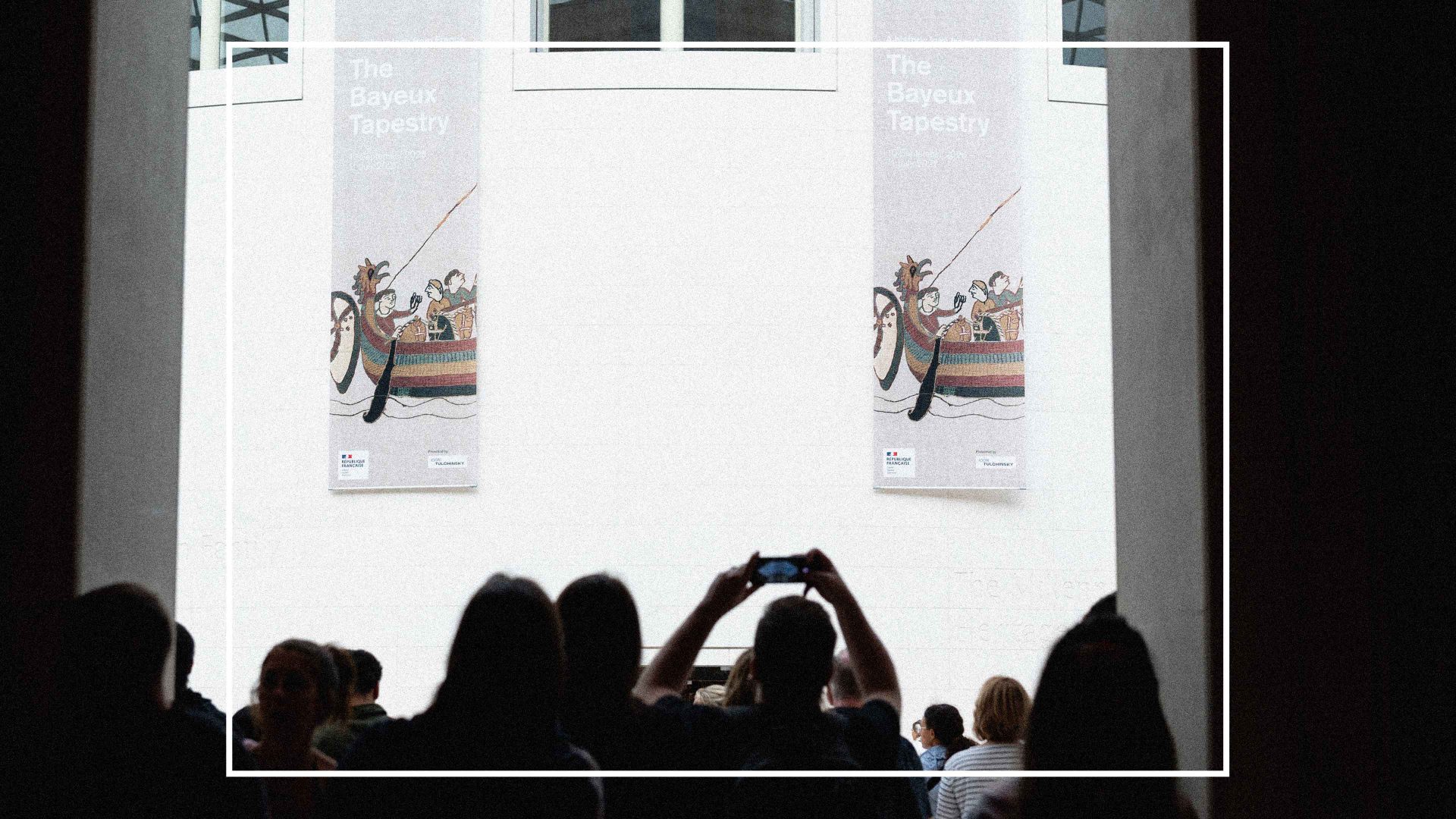
This, then, is where I stand as I tell you that I struggle to know what to make of the British Museum’s decision to ban photography from their exhibition of the Bayeux tapestry. While pictures were originally allowed, the museum decided to change its mind a few days into the show, as it witnessed people waiting and waiting and waiting for their turn, as others slowly made their way down the embroidery, wasting everyone’s time by taking endless snaps of it all.
Suggested Reading


Twitter, Bluesky and the death of social media
I’m yet to get tickets to the exhibition – if anyone from the British Museum is reading, I’m open to a quid pro quo – but already feel disappointed by the rule change. If I do end up going – no really, I can give you books, a bottle of wine, anything – I can just tell that my inability to immortalise it in some way will annoy me more than ought to be reasonable.
On top of this, I expect to feel unfairly targeted by it, and quite sorry for myself. I used to hate it when blokes would bellow “not all men!” on Twitter but somehow that’s where I’ve ended up.
Yes, I do take pictures in museums, but I promise I never barge in front of anyone, and I give up if I’ve not managed to get a good shot within a few seconds, and I actually do look at the pieces first instead of merely photographing them and moving on. My behaviour in galleries is spotless, so – I ask, plaintively – why am I being punished because of people who were raised by wolves?
Then I remember that they probably were raised by regular, well-meaning humans, and that’s the whole problem. I mentioned good smartphone etiquette just now but, to the best of my knowledge, no-one died and made me king of deciding how to use and not use these gizmos which have only been in our lives for under two decades.
I have these rules I set for myself, and which I believe to be common sense, but I also think most vegetables are disgusting and only ever take baths instead of showers. What I think of as normal won’t be widely applicable, and shouldn’t need to be.
Suggested Reading


The Bayeux Tapestry and the continuing allure of all that Norman wisdom
The issue here is that modern tech changed our lives too swiftly and thoroughly to be incorporated into what we believe to be obvious good behaviour. We still discuss whether it’s okay to take pictures of strangers in the street and clearly we’re still unsure whether music should be played out loud in the street or on public transport, and we blatantly haven’t reached consensus on the topic of work Zoom calls in cafés. The less said about phone calls on speakerphone, the better.
Crucially, because many of those changes feel so personal and linked to our day-to-day lives, any attempt to tweak those behaviours now will often feel either passive-aggressive or wholly snobbish. As the British Museum clearly found, the only thing to do at this stage can often be to eschew half-measures altogether, and merely go for clear but drastic measures.
It is understandable, as the institution can hardly be asked to try and solve the complicated and often poisonous relationship millions of people have with their smartphones, but it is still a shame. Well, it is to me anyway. Maybe you feel entirely differently; that’s the whole point, right?
 Most popular

Sky’s The Wargame might be prescient – but it’s also propaganda

The right wing media hounded Jason Arday and ignored James Orr. It’s obvious why

A new film about Elon Musk reveals him as so awful it’s almost tragic. Almost
Mark Twain warned us about AI over a century ago