
2026 has, so far, followed its recent predecessors by dishing out the bad news while stingingly holding onto the good. Once upon a time there would have been a world where “for the most part, the non-evil candidates won by a slim margin” would have been seen as worrying instead of encouraging, but 2026 isn’t that world.
Instead, current affairs aficionados in France and elsewhere ought to breathe a large, deep sigh of relief this week, as the mayoral elections quite simply did not go as badly as they could have. In Paris, the left managed to hold onto the top job, something that didn’t necessarily feel like a given after the first round.
The Green candidate led in Lyon, the second biggest city, and in the third largest, Marseille, the left ended up decisively defeating the far-right in a race that’d once appeared to be neck-and-neck. Though Bordeaux’s fling with the Greens has now ended, the city has merely gone back to its centre-right roots, something that probably was always going to happen. Nantes and Lille, meanwhile, remained mostly predictable, electing and re-electing left-wing mayors.
Some more dramatic results came from smaller places: local stalwart and often-mocked former prime minister François Bayrou lost his stronghold of Pau to the left, and traditionally right-wing Nîmes, which looked like it would swing even further right this time, instead chose a mayor from the left.
Really, the only upsets for the political mainstream came from Roubaix, where the far-left emerged victorious, Carcassonne, where the far-right claimed a sweeping victory, and Nice, where two big beasts of the French right battled each other, and the candidate closest to the Rassemblement National ended up winning.
In short: the bar was low, but France managed to lumber over it. Of course, cities have long been to the left of more rural communities, which is where Marine Le Pen’s party tends to dominate, but the RN had some electoral hopes this time around, and it was a joy to watch them mostly sink without a trace. The presidential election may be in a year’s time, and the polls may not be where we would ideally want them to be, but the French left has gained a bit of breathing space.
It’s also gained some lessons which may prove useful over the next year. As mentioned in these very pages earlier this month, the days of national coalitions spanning from the centre-left to the far-left are now long gone. In 2024, the pressure of opposing the far-right was such that parties with relatively little in common agreed to work together, at least for a little while. In 2026, many of those parties decided to go at it alone, and are yet to live to regret it.
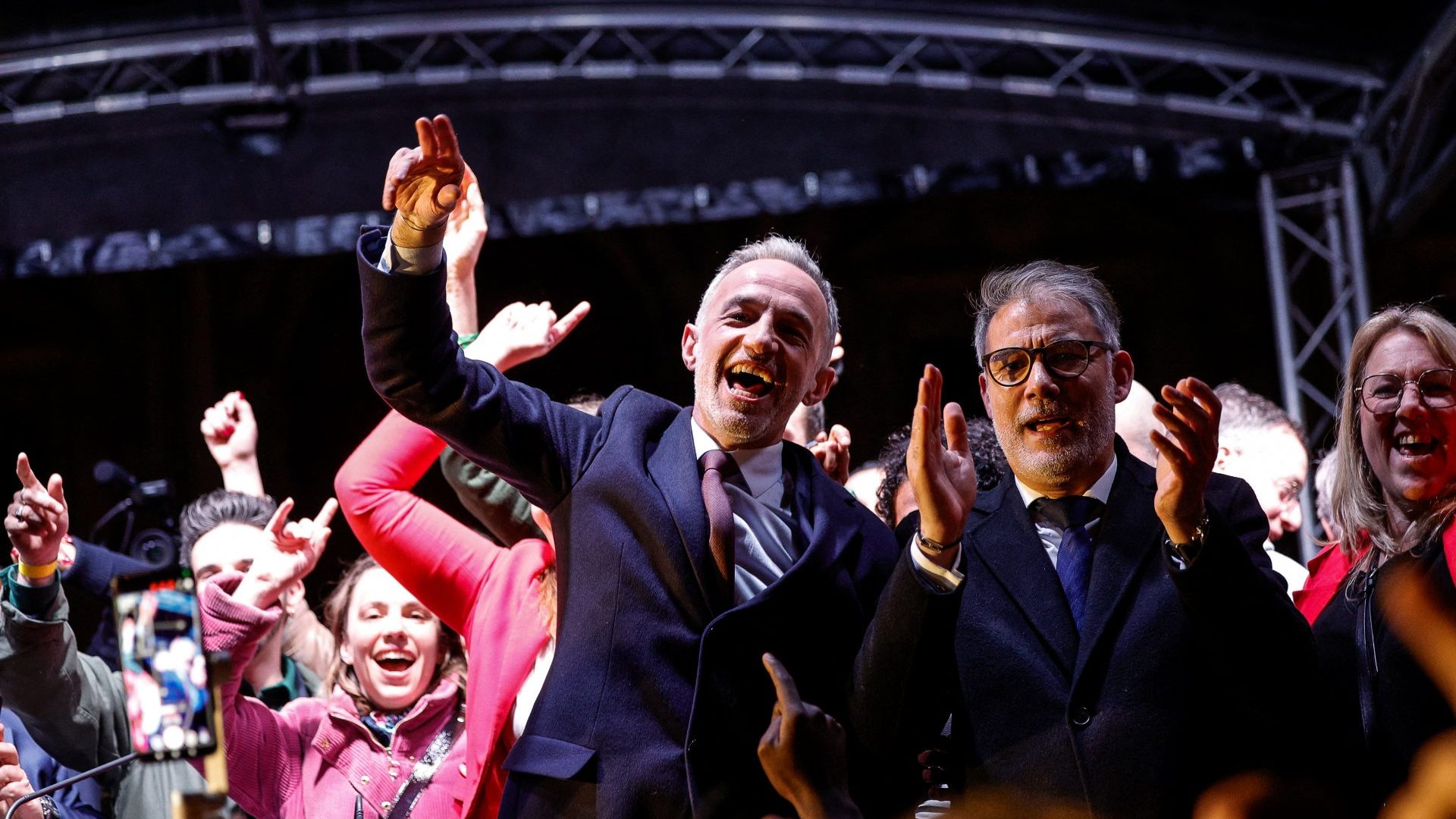
In the capital, Jean-Luc Mélenchon’s party refused to stand down their candidate and support the centre-left’s man at the second round, even if it meant potentially handing the city to a candidate representing a united right. In the end, that didn’t matter, as socialist Emmanuel Grégoire won over 50% of the vote, and joyously cycled to the mayor’s office to celebrate.
Down south in Marseille, Benoît Payan, who won 54% of the votes to the Rassemblement National’s 40%, reminded Le Monde that, back in 2020, the city had already made waves by winning with a coalition that didn’t include Mélenchon’s party. According to him, it should be possible for an electoral ticket to be wide-ranging and popular without succumbing to the bullying of the far left.
Perhaps most crucially, the mayor also mentioned, as one of the reasons behind his victory, the fact that the traditional right no longer exists in Marseille. By convincing itself that it needed to ape the far-right in order not to lose to them, the mainstream simply made itself redundant, and morally unconscionable to many.
This may, in a way, be the best thing to have come out of this election. Until recently, most figures in the French centre-right resisted, and refused to associate themselves with Marine Le Pen and her ilk. Over time, however, a heady mix of cynicism, a hatred of the left, online radicalisation and a poisonous desire to win again made a lot of them give up on their old republican ideals, and embrace deals with various devils.
While much was being made of the electoral pacts the left would or would not do with its extremes, comparatively little was said of the equivalent calculations made on the other side of the political spectrum. It is absolutely true that many reasonable centre-left voters are so turned off by Mélenchon that they wouldn’t consider voting for a coalition that includes him. The same, however, applies to reasonable centre-right voters and Le Pen. Hopefully this will remain true next April, as Macron’s successor is chosen.
 Most popular

Screen scandal: How Ofcom lets GB News get away with it


My late friend’s final message: Never work for the Daily Mail

Now it’s official: Brexit was a disaster. Next, we must join a new EU

GB News Scandal: How Ofcom let GB News corrupt British media