
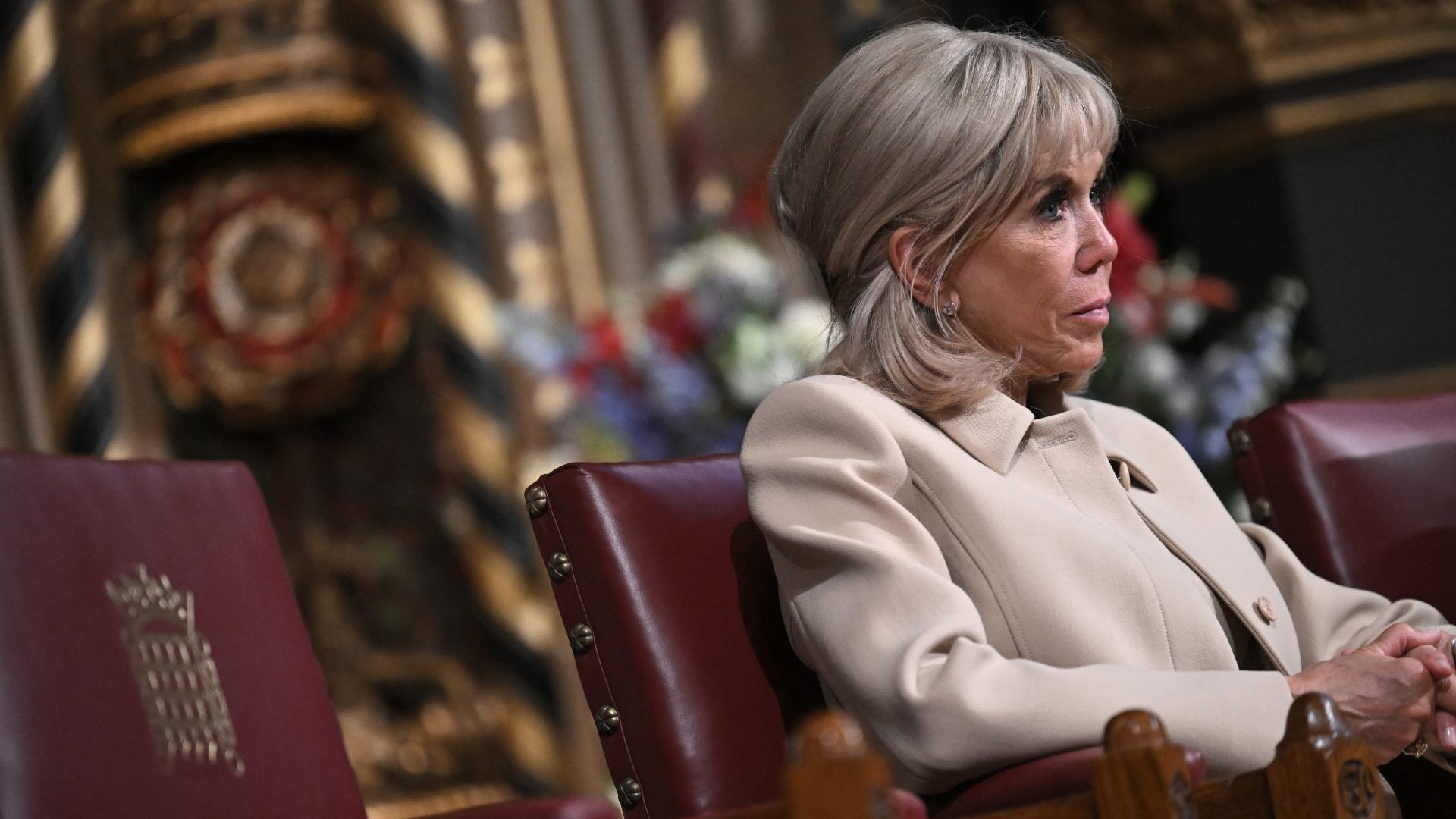
That at least a portion of the trolls weren’t able to get away with it is good news. Earlier this week, ten French citizens were found guilty by a Paris court of harassing Brigitte Macron, the wife of the president. All of them had posted or reposted content arguing that the French first lady wasn’t who she said she was, but instead a man named Jean-Michel Trogneux.
Among the convicted were an art gallery owner and a school sports teacher; the youngest was 41 years old, the oldest 60. The sentences differed from person to person, with some mandated to receive a compulsory course on online harassment, and others landing prison sentences.
There were ten of them in court but the conspiracy theory has been shared by thousands and thousands online. It came to life in 2021, in the aftermath of the yellow vests protests. The story was invented wholesale on the YouTube channel of a “spiritual medium”, and somehow it went viral. Why? It’s hard to tell. No-one can quite explain what works online and what doesn’t; what falls flat and what ends up being seen by millions.
In any case, Macron has, for the past four years, had to deal with the persistent rumour that she is a transgender woman. Last year, she and her husband took the unusual step of filing a US defamation suit against the podcaster Candace Owens, as she had been spreading the theory stateside. For whatever reason, the Trogneux affair just won’t go away.
This is why the French court’s decision probably ought to be applauded. There is so much that women have to deal with online, especially if their life or work takes them into the public eye. In some ways, the expectation is now such that it feels silly for them to complain about the threats and the harassment, and how constant and overwhelming it all feels.
That at least a handful of those small, miserable people will now have to deal with the consequences of their actions is a good and rightful thing. Of course, one could argue that little will change until the platforms themselves are held responsible for the content they choose to host and monetise, but this remains a step in the right direction. What happens online isn’t separate from what happens in real life: people should learn how to behave, or face the full extent of the law.
Still, despite all this, something quietly rankles. Brigitte Macron getting justice should absolutely be celebrated, but a few things stand out. Firstly: the original accusation was daft and baseless, but is it really a crime to argue that someone is not of the gender they live in?
Suggested Reading


Brigitte Macron’s nasty little words
Now, you must answer this carefully. After all, much of the press and the political sphere in Britain seemingly agree on the fact that transgender people cannot possibly ever be offended by people using pronouns that do not suit them. Why should rules be different for people whose gender has remained stagnant throughout their life?
It may seem like a pointless question to ask, but it is a serious one. Apparently we live in a world where people can go to prison for calling someone transgender yet transgender people can never complain about the insults people throw at them. You may agree with this state of affairs but, if you do, then you ought to be honest about the degree of discrimination you wish to promote.
Another sticking point will be familiar to any other woman with a profile online, namely: well, what about the rest of us? The wife of the French president can get justice if people on the internet say that she is a man, but I can be threatened with rape and other female journalists can receive graphic death threats and not much ever happens to the people who do it.
As this piece is being written, Twitter’s Grok is still churning out false nude after false nude of women who would rather be minding their own business, and still the government refuses to intervene, and the whole of Westminster keeps posting on the platform. Apparently, our universe is one where the only true crime you can commit against a woman online is to say that she was born with a different sex; anything else will gather little more than a frown then a yawn.
Obviously France isn’t Britain, different courts aren’t comparable, and all of this is one hell of an oversimplification. Still, it is sometimes worth talking about what things feel like and, right now, they just don’t feel great. It’s been a good week for Brigitte; the rest of us can wait, I suppose.