
There are always items in a budget which end up flying under the radar. The big items – on tax and spend, and any major revenue raisers or people pleasers – tend to make the headlines, and the rest return to oblivion mere seconds after being mentioned by the chancellor at the despatch box.
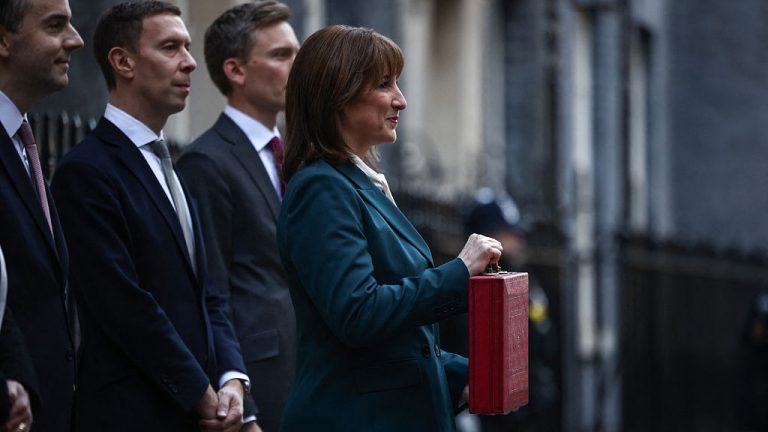
As a result, you may have missed the news, announced by Rachel Reeves in the Commons on Wednesday, that the government would be spending £5 million on increasing book supplies to secondary schools in 2026 and 2027. The money may feel like a drop in the ocean, and the story might feel minor, given the scale of Britain’s problems, but it is news worth celebrating.
It is also the latest instalment in a series of policies announced across the year, and aimed at getting more young people reading. Back in Liverpool, at Labour’s annual party conference, Reeves pledged to deliver a library in every primary school in England. The funding is, sadly, sorely needed.
As things stand, a study from the National Literacy Trust has found that one in seven primary schools in the UK does not have a library. The stat goes up to one in four in disadvantaged areas.
More broadly, the NLT also found that one in eight school-age children do not have a single book of their own at home. Crucially, it looks like things are getting worse. Back in 2016, nearly 80% of 8 to 11-year-olds and over half of 11 to 16-year-olds said they enjoyed reading. In 2025, those figures had fallen to under 50% and 30% respectively.
Suggested Reading

Growth and debt will come back to haunt Reeves
In order to try and overturn this, education secretary Bridget Phillipson announced in July that 2026 would be a National Year of Reading. The third of its kind, with the first taking place in 1998 and the second in 2008 – can anyone remember which party was in power in 2018? – it will seek to address the steep decline in reading among children, young adults and adults.
That last part may be the most crucial one. The government’s efforts to get kids reading should be applauded, and heaven knows that state schools need all the help they can get, but we shouldn’t be surprised if those policies end up having a limited impact.
Children are ultimately products of their environment, and said environment just doesn’t feel conducive to getting lost in a good book. As a quietly harrowing survey found earlier this year, only 40% of parents with children aged 13 or under agreed that “reading books to my child is fun for me”. Another depressing finding was that 41% of children under four are being read to frequently, down from 64% in 2012.
Now, there are probably a number of reasons why parents both stopped reading to their kids and stopped enjoying it as much, but it doesn’t take a magician to guess who or what may be to blame. Back in 2012, social media was on the rise but still nowhere near as prominent as it is today.
More importantly, smartphones were still clunky and slow when used for the internet, and “short-form social video shown within a never-ending algorithmic timeline” was a collection of words no-one had ever had to think about before. 2012 was, in other words, a different world.
Back then, politicians struggled to know what to make of these changes. After several more years of denial, confusion and tentative policy-making, Westminster decided to more or less embrace Big Tech with open arms, and chose to believe in its benevolence.
AI, we are told, will solve all of Britain’s productivity problems, alongside pretty much everything else. Twitter, despite being behind much of the radicalisation of the political sphere, is still the platform where most of the government publishes all its news and updates. Chinese-owned TikTok, far from being a target for more regulation, frequently sponsors events at party conferences.
Of course, no-one is saying that technological advancements only have downsides; in many ways, our lives have changed for the better. Still, a government that recognises that merely sitting down and reading a book for half an hour can do wonders for your life and brain is a government that must reckon with the complexity of progress.
Making sure that children who want to read are able to do so at school is good; convincing their parents that they, too, could do with putting their phone down and picking up a novel for once is even better.
 Most popular


Iran war: It’s time for Europe to become a superpower


Yet another Brexit prediction turns to dust


Attacks on Iran: this is going to spread

Dear Matt Goodwin, why are you such a bad loser?