In a traditional wooden courtyard house in China’s south-western Yunnan province, an elderly woman slowly unwound the bandages from her feet to show me what a thousand years of fashion had done to countless generations of Chinese women like her.
She could not look me in the eye. Her feet were something intensely private, to be seen only by her husband. Yet here she was, exposing them to a foreign stranger.
What she showed me was testament to the torture she had endured for almost 80 years. Her toes had been flattened beneath her feet, atrophied and dried, the nails blackened, the arches crushed, the big toes forming unnatural points.
For a millennium, the ideal of feminine beauty in China was the three-inch golden lotus, a foot crushed and folded inside an exquisitely embroidered silk slipper.
I still have a pair of that woman’s shoes. They are among the footwear I have accumulated over decades of travelling and working around the world, although they occupy a very different place in my collection from the unworn Louboutins and Manolos I recently unpacked when I arrived in Melbourne.
Suggested Reading


Help! Is my Pilates workout fascist?
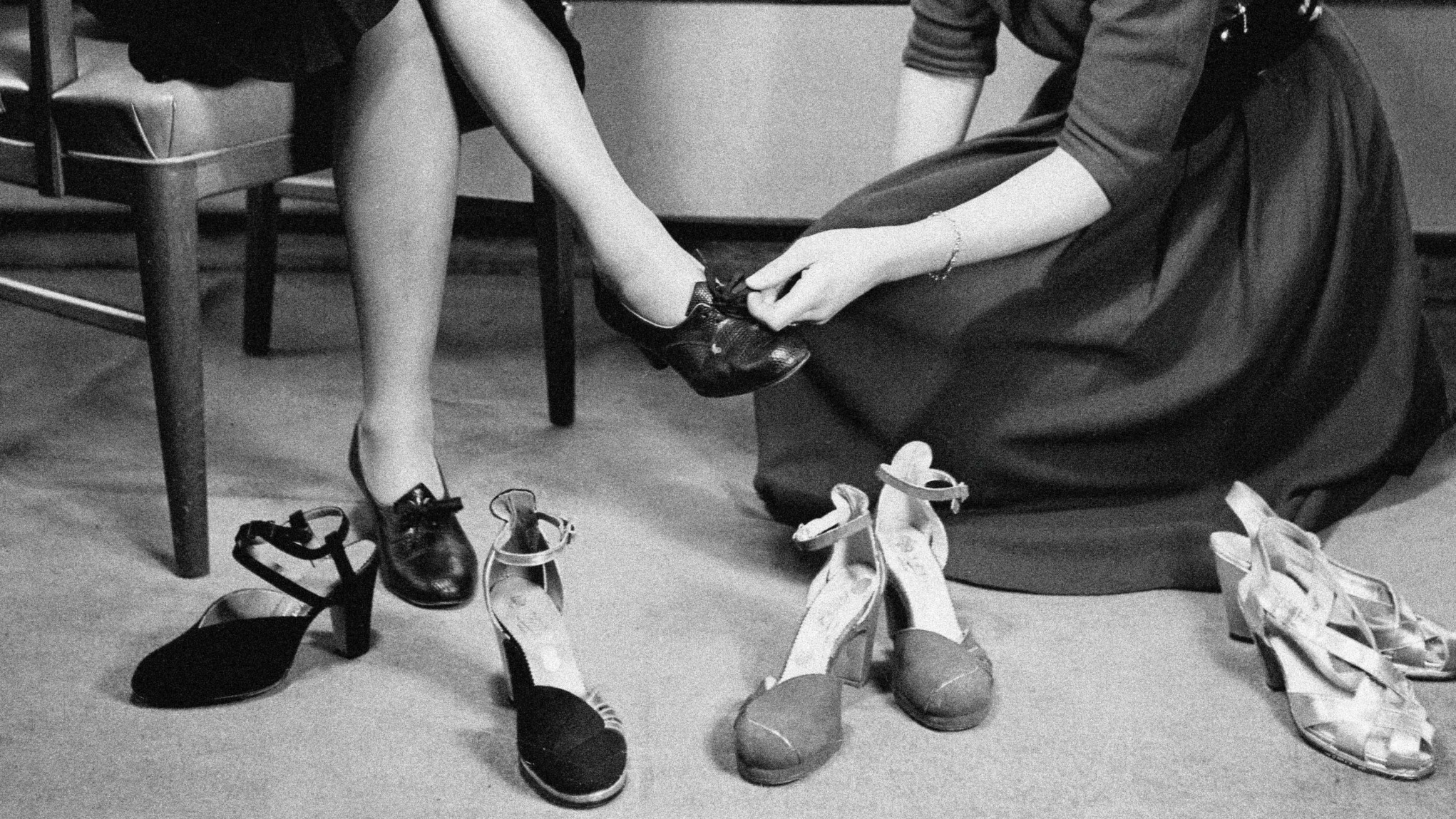
The Chinese were not alone in their willingness to sacrifice comfort to the demands of fashion. In 16th-century Venice, upper-class women tottered on towering platform shoes known as chopines, which were typically five to 20 inches high. They were impossible to walk in, but helped to show off long, sumptuous dresses and kept them from dragging in the mud on filthy streets.
Across centuries and cultures, from Imelda Marcos to Carrie Bradshaw, feet and their adornments have occupied a peculiar place in the human imagination: objects of fascination, fetishism, desire and status.
Some are so beautiful, or so valuable, their owners cannot bear to wear them. Others are so imbued with memories that they are impossible to throw away.
The obsession is not confined to women. Young men collect limited-edition sneakers, paying hundreds, sometimes thousands, of pounds, for shoes they will never wear, displaying them like trophies or preserving them in boxes as investments.
After an interminably long wait for my belongings to arrive in Melbourne earlier this year, I was impatient to unpack. In my shipment were half a dozen pairs of shoes, still new in their boxes, pristine but well-travelled after accompanying me through a career around half the world.
Suggested Reading
Sorry influencers, but most of you are just dicks
For some, like the sparkly silver Christian Louboutin Mary-Janes, I’d never found the right occasion. Others, like the slouchy red suede Manolo Blahnik boots with their embroidery and funky wooden heels, had always seemed too beautiful – precious artworks that wearing would degrade.
Now as I downsize my life, I am confronted with my own part in a vast global industry and its growing mountain of waste. Around 24bn pairs of shoes are manufactured annually for a global population of 8.3bn people – that’s roughly three new pairs a year for every person on Earth. Many of those people have no shoes at all. Hundreds of millions are discarded each year.
In a former convent in Melbourne, the artist Pennie Jagiello and Alex Sherlock, founder of the Footwork Research Network and a lecturer at the School of Fashion and Textiles at RMIT University, host “deconstruction workshops” for people who bring footwear they have loved and worn close to death, to pull apart and use the component parts to make something new.
Some arrive with shoes that have walked across the world, worn beyond repair but impossible to throw away.
“I cannot part with them because of the journeys we’ve had together,” Jagiello recalls one workshop participant saying.
Others bring shoes associated with painful periods of their lives, kept for years in cupboards or boxes. Taking them apart can become an unexpectedly emotional experience, she says, sometimes accompanied by tears.
I contributed a pair of bright green, high-heeled rubber gumboots I spotted on the top shelf of an almost empty shop in a tiny village in rural China. I had stopped on a reporting road trip to find a loo. And there they were – irresistible, gloriously green and exquisitely waterproof.
I wore them once or twice, then carried them around the world for years before deciding it was time to let them go. Now I find myself wishing I hadn’t.