“When I left Tehran, I looked at the international news about what was happening inside Iran. I immediately understood how much disinformation was being spread. It is the biggest I have ever seen.”
These are not the words of a regime loyalist, or an apologist for repression. This was a 33-year-old academic who was home in Tehran during the January anti-government protests. He joined the demonstrations, spoke to friends across Iran, and then watched in disbelief as a different version of events hardened into international consensus.
“Let’s start with the ‘tens of thousands of dead’. How can that be possible?” the Iranian academic said. “What’s the methodology for these figures? I was in the centre of Tehran, in the protests, in the bazaar. No one was asking how these estimates were coming out. I am very sceptical.
“When I went home three months ago and talked to people about what happened in Syria, my family and friends said: ‘OK, no sanctions. The president [of Syria] is al-Qaida? Who cares? Anything but sanctions’.”
His account to TNW, made anonymously to protect his family, does not deny the anger, the fear, or the Iranian regime’s brutality. It challenges something else: the certainty with which numbers of dead are being asserted far from the streets where the protests took place. That certainty is, in turn, leading to certainty in the US about how it should respond.
With the internet routinely throttled and the state controlling domestic media, independent reporting from inside Iran is fragmentary, delayed and often impossible to verify. Initial claims, often unattributed or sourced to activist networks operating outside the country, have been repeated across anti-regime media outlets.
Saudi-linked Iran International TV, for instance, reported that the death toll during the two-day government crackdown of January 8-9 was 36,500, “making it the deadliest two-day protest massacre in history”.
By comparison, the BBC reported that the US-based Human Rights Activists News Agency had confirmed 6,445 deaths of protesters. The Iranian government’s toll was 3,117.
The protests appeared to mark the most significant outbreak of dissent in Iran since the death of Mahsa Amini in September 2022, and the “Woman, Life, Freedom” uprising that followed. They come less than a year after the Twelve Day war that pushed the region to the edge of open conflict.
This is not only a crisis unfolding on Iran’s streets. It is also a struggle of our age, over how events are described and understood. It is a contest in which certainty travels faster than verification.
This disparity has been seized on by elements of the anti-regime diaspora, some of whom have rallied around the son of the last shah of Iran, Reza Pahlavi, as a cypher for regime change. Pahlavi has lived in the US for decades. The idea of him taking power in Iran is shaped more by exile politics than by the realities inside the country.
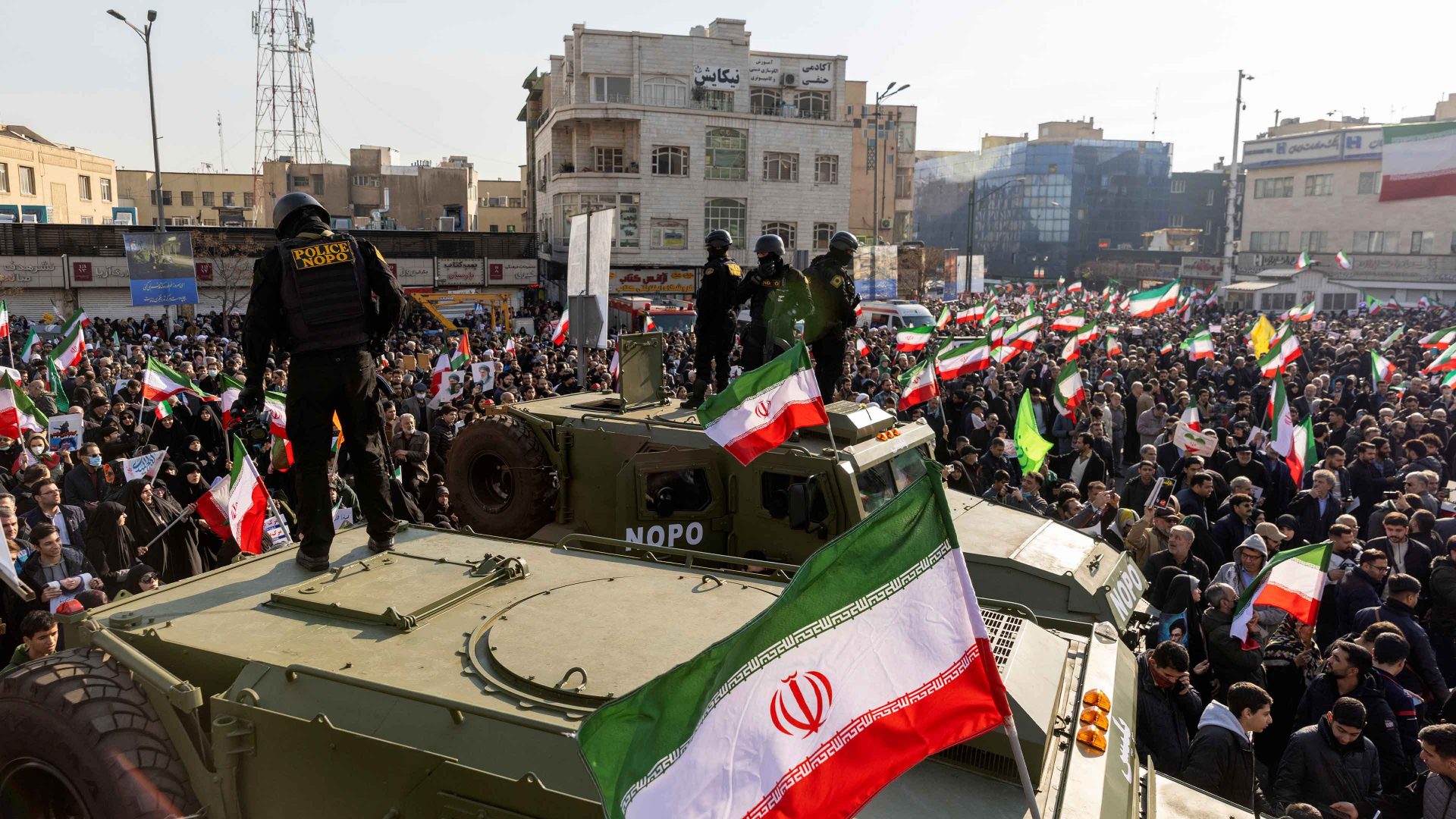
There, on the streets, the Iranian academic recalls an all-new level of violence. Some of the protesters were armed, he said, which he had not witnessed in a lifetime of joining demonstrations.
Street protests, he said, “are a natural, routine part of life in Iran. There are some demonstrations every month. Teachers, students, public workers. Over their salaries, pensions, the cost of living.
“When I talked to friends in other parts of the city and elsewhere in the country, they said the only new thing was organised groups chasing police and burning buildings.
“This was not just a demonstration. It was a fast track to the Syria-isation of Iran – of war,” he said.
Davood Moradian, an Afghan academic, was in Iran’s second city of Mashaad when the protests began.
The demonstrations were modest, he said, until Pahlavi called for nationwide protests. That was when the violence began, followed by the supreme leader Ali Khameini’s warning against agitators.
Moradian also said that the numbers bore no resemblance to the reality he witnessed. It was at this time that Donald Trump warned that the US was “locked and loaded” if Iran continued killing protesters.
Against this backdrop of contested facts and amplified certainty, the US and Iran opened talks on Friday, the first since last year’s war, in what the BBC said “could be an off-ramp for Trump from his military threats”.
Suggested Reading
The message to Trump, Putin and Xi: big countries lose wars
Missing from that framing are the Iranians themselves, whose lives are shaped less by nuclear centrifuges than they are by sanctions, inflation and a political economy permanently suspended between crisis and punishment.
Their message, the academic from Tehran told me, is that Iranians “don’t want war, they don’t want sanctions, they don’t want to tolerate inflation. But you can’t hear their voices.” Sanctions have strangled growth, the currency has collapsed and prices have surged.
After sanctions were lifted under Barack Obama’s 2015 nuclear deal, Iran’s economy rebounded; growth reached about 12.5% in 2016 – its only double-digit expansion in decades – as oil exports returned. When Trump withdrew from the deal, it all collapsed.
For many Iranian families, the impact isn’t abstract pressure on the theocracy, but the steady erosion of work, savings and basic security. That is why sanctions sit at the centre of so much private anger inside Iran, even among people who hate the regime.
A 32-year-old Iranian economist living in western Europe, who also requested anonymity, told me: “If negotiations collapse, the only alternative is war, and that would be disastrous for all sides. Iran will not accept what it sees as surrender – even if that means risking war.”
Lynne O’Donnell is a contributing editor at The New World