Three and a half centuries after modern political thought began arguing that all human beings stand equal before the law, slavery and domestic violence have been written into the legal order of a theocratic state.
The new criminal code of Afghanistan sets punishments according to social status. Some who breach the law are warned and others are flogged. Others are owned.
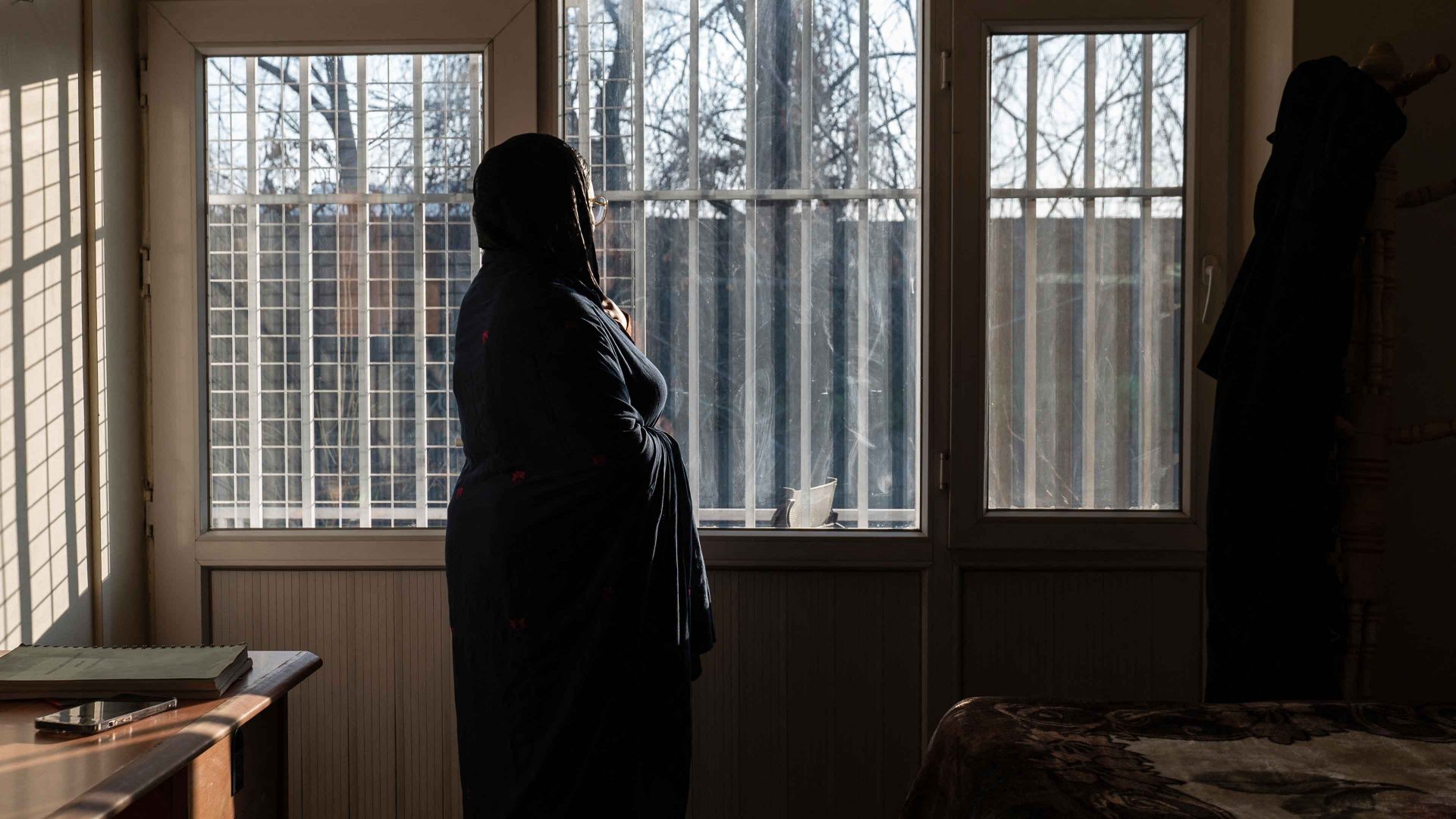
A husband may beat his wife, but not so badly that he breaks bones. A woman who flees to her parents’ home without his permission can be jailed. Harming animals carries harsher punishment than violence towards women.
The document was endorsed in a decree by the Taliban’s Supreme Leader and distributed to courts across the country. “It codifies what is already being practised anyway based on previous instructions,” said an official in Kabul with an international organisation. Under the new rules, people are either free, “masters” or “enslaved”. Citizens have religious and legal obligations to issue on-the-spot punishments for perceived crimes, effectively endorsing torture and imprisonment without due process.
The document arranges society into a hierarchy: clerics sit at the top, above punishment; slaves and women are at the bottom. The poor can be beaten, flogged, locked up.
Belquis Ahmadi, a human rights lawyer, analysed the 90-page document for the Georgetown Institute for Women, Peace and Security. It legalises vigilante violence, criminalises dissent and violates the principles of legality, proportionality, and equality before the law, she said.
The code “fractures Afghan society at its core” and “replaces trust with suspicion, law with ideology, and justice with punishment based on class, gender, and conformity”.
By obliging ordinary citizens to issue punishments, “families are transformed into enforcement units, communities into monitoring networks, and citizens into instruments of repression,” Ahmadi says.
In that sense, the document also marks the final collapse of two decades of Western-funded state-building. Hundreds of millions have been spent attempting to construct a formal justice system.
Throughout the 2001-21 republic, “Afghans persistently preferred informal justice mechanisms,” said a source in the charity sector.
“Attempts to build a modern legal system failed,” he said. “This is one reason there’s no internal reaction to the new penal code. Formal justice and a culture of respect for the rule of law never took root.”
While many governments seek to hide social stratification behind procedure and language, the Taliban have dispensed with ambiguity, making class explicit and rights conditional. The law offers neither protection or precedent.
Such arrangements rarely appear in this form – they arrive gradually, dressed up as security, stability or cultural necessity. The Taliban’s “Criminal Procedural Regulation for Courts” removes that uncertainty. It sets out openly what systems tend to obscure: that order can be built on rank, that obedience can be a virtue, and protection under the law depends on position not personhood.
Supreme Leader Haibatullah Akhundzada endorsed the code without public discussion or circulation. It only came to light two weeks later, on January 22, thanks to Rawadari, an exiled Afghan human rights group.
Two days after that, a senior UN official met Taliban leaders in Kabul. There is no public indication that the penal code was discussed and no UN official has commented on it. It might be raised in UN Security Council briefings in March, said a source in Kabul.
The document appears to be a reflection of how authority works inside the Taliban administration, with power centred on the Supreme Leader and the clerical circle that governs in his name from Kandahar, the group’s “spiritual capital” in the south.
Direction comes in the form of religious rulings issued outside any formal state machinery, by Akhundzada himself. There are no competing claims to be adjudicated, no disputes to settle, and crimes are not weighed against due process. The courts simply punish.
Suggested Reading
Attacks on Iran: this is going to spread
“Dissent, nonconformity, and even private life are placed under state and community control. In practice, the regulation renders ordinary behaviour criminal and converts citizens into enforcers of Taliban ideology,” she said.
Enforcement may be uneven. Many of Akhundzada’s decrees are not fully implemented beyond core Taliban areas, and sometimes not even across Kandahar itself. His ban on women working for NGOs, for example, is applied inconsistently.
How uniformly the new code will be enforced nationwide remains uncertain, with traditional judicial mechanisms such as jirgas and shuras likely to carry on regardless.
That enforcement will now be even more challenging after Pakistan – once the Taliban’s major sponsor – launched what officials described as a major cross-border operation against targets in Kabul and Kandahar. Pakistan’s defence minister, Khawaja Mohammad Asif, described the situation in blunt terms: “Our patience has run out,” he said. “It is now open war.”
The precise location of the strikes couldn’t be immediately confirmed. One resident said he believed the presidential palace in the centre of the capital, and the Darul Aman area where many senior officials live, were among the areas hit. “I couldn’t sleep the whole night because of bombs and gunfires, and when I did sleep, I had nightmares,” he said.
Afghanistan’s new legal code should not be a surprise; the Taliban have long described their intentions, but as so often with rulers who speak plainly, they were not taken at their word.
As the official with the foreign organisation in Kabul put it: “One thing you have to respect about them is that they do what they say. Nothing in the decree is new – it’s the same social re-engineering project, written down.”
Lynne O’Donnell is a columnist at Foreign Policy. She was the Afghanistan bureau chief for AFP and AP 2009-2017