
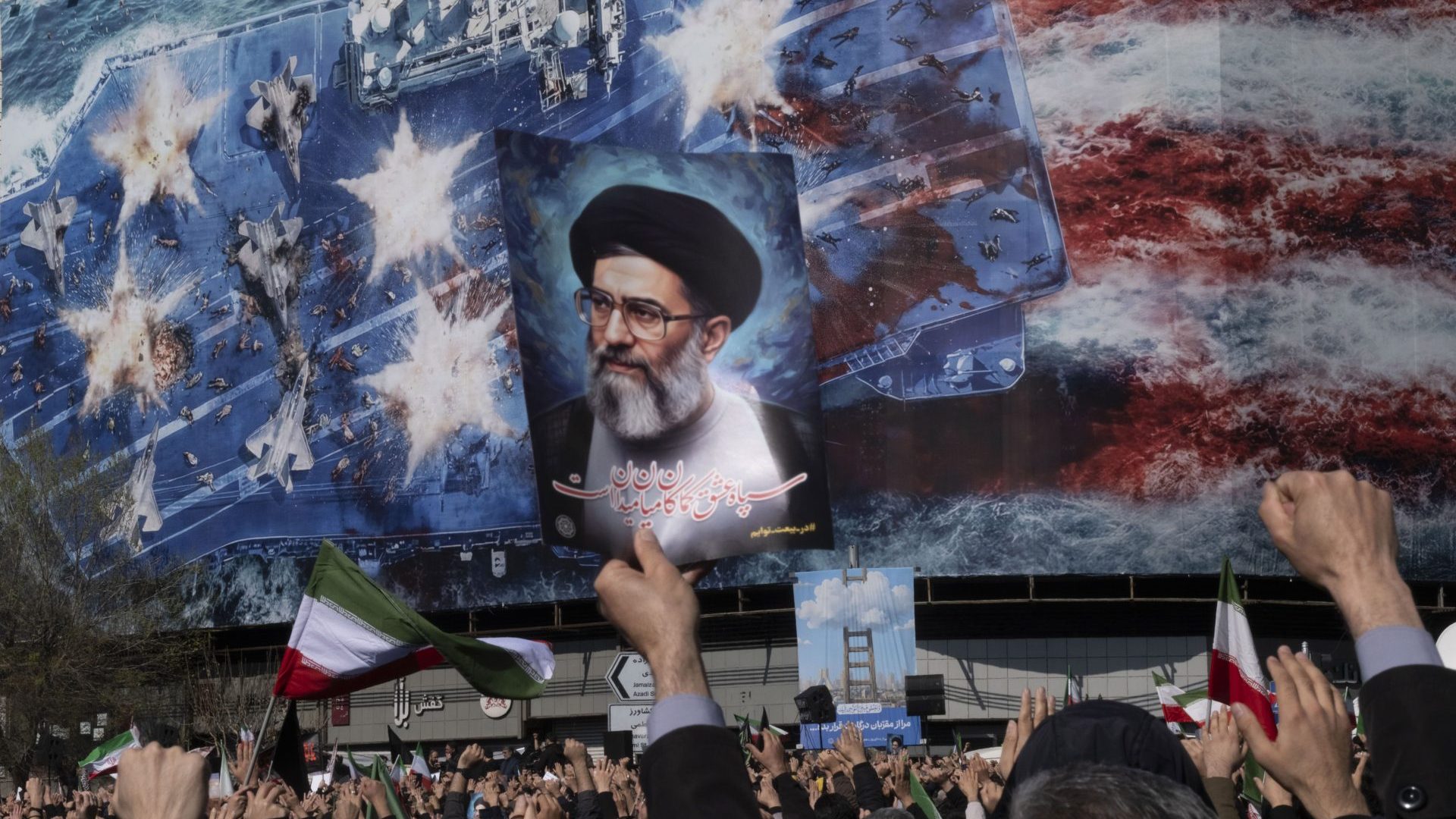
The United States and Israel have detonated more than missiles over Iran. In claiming to have killed the Supreme Leader Ali Khamenei, and having pounded sites across Iran associated with the regime, they have blown open a new and volatile phase of Middle East confrontation.
What began as a shadow war of cyberattacks, assassinations and proxy skirmishes now threatens regional stability, global energy markets and the fragile balance between deterrence and catastrophe.
For months, anticipation has hung over the region, a growing sense that escalation was no longer a question of if, but when. When the strikes came, the Israeli defence minister Izrael Katz called them “pre-emptive”.
Now the strikes have hit, and Iran has responded by firing missiles at US-linked targets across the Gulf, triggering air-defence alerts in Bahrain and the United Arab Emirates, the sense of anticipation has curdled into dread.
A source familiar with White House thinking said, of the speed of the Iranian response: “This tells me that Iran is all in.”
Tehran, he warned, retains multiple avenues for indirect escalation – from Hezbollah in Lebanon to the Houthis in Yemen and networks, such as Al Qaeda, that are capable of operating beyond the region. The strategy would be to widen the conflict without assuming sole ownership of it.
Regional security experts have been warning for a long time about the vulnerability of critical infrastructure, particularly the Gulf’s desalination plants. Energy facilities and shipping through the Strait of Hormuz are also at risk.
Within hours of the first exchanges, Reuters reported disruption to oil shipping through the Strait of Hormuz. Traders reported heightened insurance costs and temporary pauses in some fuel movements.
Suggested Reading

US attacks on Iran push the world towards chaos
William Jackson, a senior economist with Capital Economics, was quoted as saying that a prolonged conflict could add almost 1% to global inflation. An Iranian economist, who asked not to be named, said that Trump “has not only risked his own people, soldiers and assets but the whole global economy”.
But, he added, regime change would be unlikely without “boots on the ground” and doubted the American public had the appetite to follow the failure in Afghanistan with another bout of foreign intervention so soon.
The broader shock will not stop at energy markets. Vienna-based economist Behnam Zoghi Roudsari said a direct US-Iran confrontation would not remain a contained military episode but would quickly spill into financial systems already strained by sanctions, supply-chain fragmentation and the war in Ukraine.
“Persian Gulf states sit at critical junctions of global trade and capital flows. Instability in hubs such as Dubai, Abu Dhabi, Doha and Riyadh would risk accelerating capital flight from exposed markets, allowing disruption to transmit rapidly through the international financial system,” he said.
Even without a prolonged closure of the Strait of Hormuz, just the volatility would act as “a tax on global trade” as insurance premiums rise, shipping reroutes and investment decisions stall.
“European economies that have grown more reliant on Gulf supplies after disengaging from Russian energy would feel the pressure first but the impact wouldn’t remain confined to oil and gas, it would bleed across sectors,” he told The New World.
At a moment when the EU is still confronting Russian aggression, Washington’s decision to strike Iran risked further weakening allied resilience.
Suggested Reading
War on Iran: you can’t cause regime change from the air
“By opening hostilities with Iran, Trump signals to long-standing partners in Saudi Arabia and the Emirates, and to allies in Europe, that the United States is prepared to expose them to the fallout of its strategic choices,” Roudsari said.
As Iranians rushed to stock up on food and water, and find safety from the missile attacks, sources among the diaspora warned that Trump appeared to be gambling on an uprising that history suggests rarely materialises under bombardment.
Retaliation is structurally embedded in the Islamic Republic’s doctrine of deterrence. The only uncertainty is its scale – whether it is calibrated and deniable, or direct and spectacular – and how many borders it will cross.
In Tehran and beyond, the abstract language of deterrence and escalation has already translated into something far more intimate: severed phone and internet services, cancelled lectures, emptying shelves, traffic jams out of cities bracing for bombardment.
The Supreme National Security Council had urged residents to leave Tehran and other cities for more remote areas amid the threat of further strikes, said a source in Iran’s second city of Mashhad.
“It is difficult for me to understand my own feelings. I am very worried,” he said. Reports that strikes on Minab, a small coastal town in the southeast of the country, had killed multiple civilians, including school children, had deepened the sense that events are already out of hand.
“The only thing that gives me some inner stability is holding on to what I believe is morally right: defending the sovereignty of my homeland against foreign aggression,” he said, speaking on condition of anonymity.
Like other Iranians I spoke to, he was concerned that Washington may be persuaded by hawkish advisers and right-wing media that Iranians will rise up and topple their own government under fire, and that Tehran, framing the confrontation as a matter of survival, may be prepared to sacrifice far more than outsiders anticipate.
“From Tehran’s perspective, suicide may now be on the table,” the Washington-connected analyst said.
Between those assumptions lies the most combustible risk of all: a war entered on the belief that the other side will break first.
 Most popular

Yet another Brexit prediction turns to dust

Matthew Goodwin’s by-election diary

Dear Matt Goodwin, why are you such a bad loser?

Labour tried to become the nasty party. Big mistake