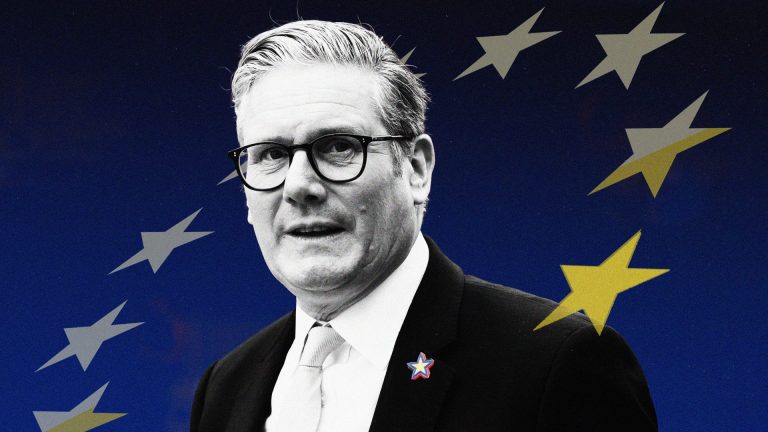
For all the political pain Keir Starmer has endured since coming to power, he has won admirers in a place that is these days remote to British politics: Brussels.
Despite his tanking poll numbers and never-ending domestic crises, Starmer is still viewed by his EU counterparts as a stable ally and someone they are happy to work with.
British Europhiles who hope for a dramatic pro-EU pivot will no doubt read this with delight, along with Starmer’s recent Brexit bashing and rumours that he could be rolling the pitch for a more encompassing reset at the next election.
The stars are certainly likely to align, with public support for better relations only moving in one direction and the government seemingly more confident in criticising the decision to leave. As Danny Finkelstein predicted in the Times earlier this week: “At the next election Labour will campaign to overturn Brexit. The political and economic logic of this is overwhelming.”
However, Finkelstein included a crucial caveat: “The only thing that might foil this prediction is the party leadership’s ability to defy overwhelming logic.”
He has a point. It has only been a matter of days since our latest reminder that the bin fire of Westminster politics still burns hot enough to force the government into making decisions against the national interest to keep a minority of malcontents happy.
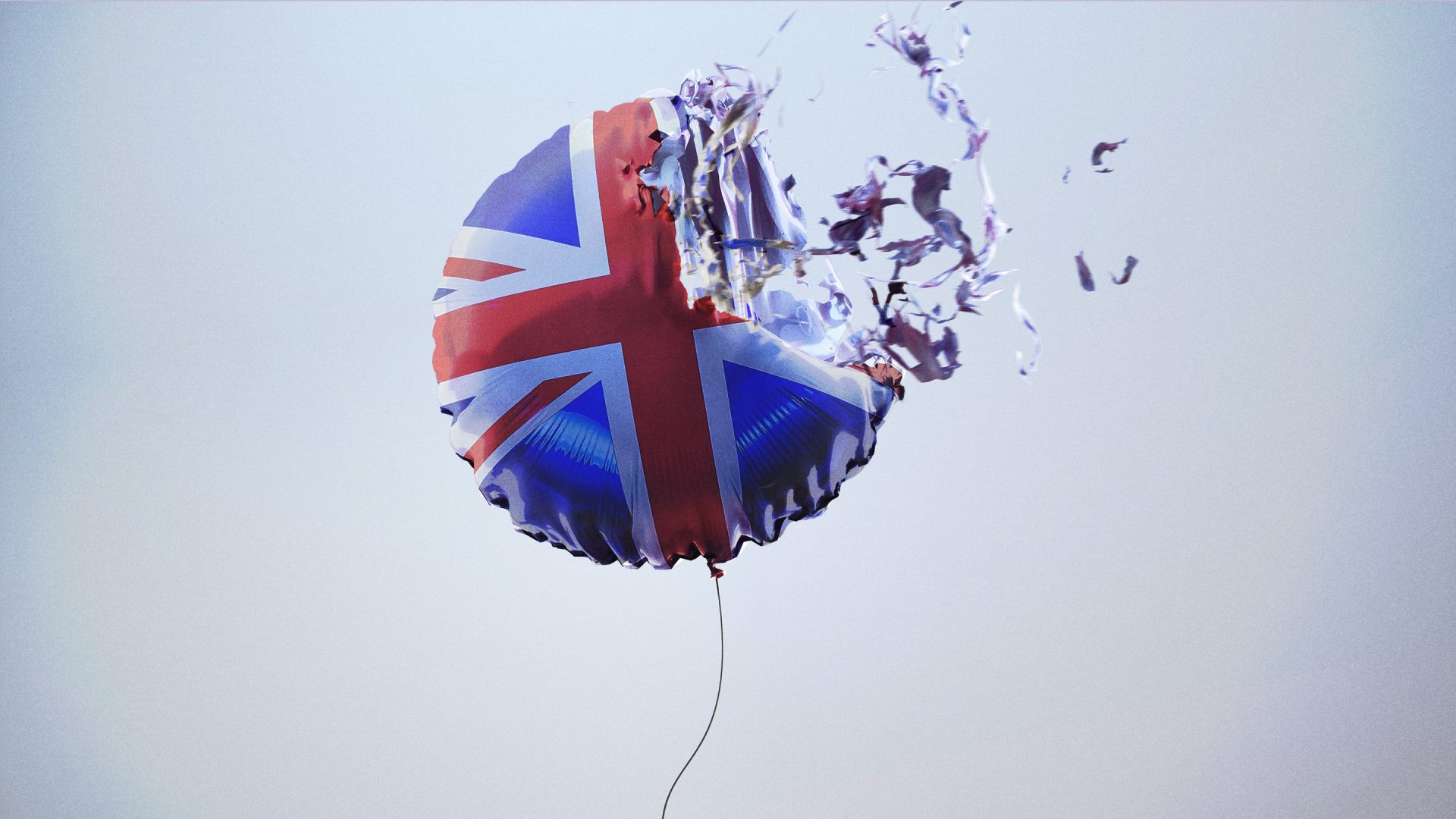
Britain’s failure to join the EU’s Security Action for Europe (SAFE) defence scheme is a classic example of the post-Brexit dumb policy genre. Talks broke down after the UK decided that full participation in SAFE was not worth the buy-in of between two and four billion euros – the number varies depending on who you ask.
That seems like a good deal when you consider that SAFE will hand out €150bn in loans to spend on defence contracts and Britain has one of the most advanced industries in Europe. A reasonable counterpoint to this is that British companies can still participate in SAFE contracts up to 35%.
Defence programmes tend to be done by collaboration between countries, so how much are we really likely to miss out for not coughing up a couple of billion upfront right now?
As ever with post-Brexit arrangements, it’s all a bit more complicated than that. SAFE is part of a wider EU defence spending plan, Readiness 2030, which plans to spend over €800bn on defence by the end of this decade. The bulk of that is to be spent by member states how they want, meaning that in theory Britain is still pretty well-placed to profit from Europe’s looming splurge.
“In theory” is key here. By not participating in SAFE, Britain may well exclude itself from contracts that keep it outside Europe’s wider defence ecosystem.
As one industry insider put it: “It was an opportunity to signal and we didn’t give that signal which could have ramifications.” The same source, who was close to the SAFE negotiations, said that even as late as October it was assumed by Brussels that Britain would participate in SAFE as a full member.
Suggested Reading

How Labour will make Brexit a key battleground at the next election
“Squaring the politics and business needs of this will now be difficult. As a non-EU country we want to champion deals like AUKUS and present ourselves as a big player on the global market, but we must also appreciate that Europe will be our biggest market and opportunity to sell gear.”
It is true that Brussels had assumed Britain would cough up and join SAFE after Starmer and Ursula von Der Leyen made an initial series of agreements, including on security, between Britain and the EU back in May. European officials had accepted that having Britain inside the tent on defence was in everyone’s interest, given the size of our defence industry and shared geopolitical objectives. It is inconceivable that the SAFE decision wasn’t primarily made to avoid a row with Brexiteers in Westminster over some kind of Brexit sellout or capitulation.
The official response from Brussels after talks collapsed was relatively muted. A spokesperson for the Commission said: “Even if an agreement could not be found at this time, let’s not forget that SAFE is open by design. Without an agreement, the UK can still participate in up to 35% of SAFE procurements… We remain fully committed to delivering our ambitious UK-EU Security and Defence Partnership… And we are making progress on the other commitments agreed in the Common Understanding.”
This hardly sounds like a panicked statement – and that’s because it isn’t. The reason so many in Brussels were astounded when the UK ultimately declined to pay-for-play is because it made so little sense from a British perspective. As they see it, Britain stands to gain far more from deals like this with the EU and placating those few Brexiteers who want nothing to do with Europe seems insane.
An EU defence source said that “we are of the position that it’s upsetting Britain isn’t on board yet, but we are OK with it and can keep moving forward.”
That, effectively, has become the dynamic between Brussels and London in so many critical areas. It was the same story with the Youth Mobility scheme, which the public broadly supports, and Erasmus, both of which arguably deliver far more benefits to the UK than the EU.
Even if these things are ultimately good for Britain, people who have made careers out of crying betrayal over Brexit still scare the government sufficiently that progress can be slowed down or halted, regardless of merit.
Starmer’s biggest sin over SAFE was not presenting the idea as beneficial to Britain. Outside of the defence industry and policy wonks, most people have no idea what the scheme is. The government saw a big number earmarked for the EU and decided the blowback was not worth it.
The only upside to this debacle is that, as the government becomes bolder in pointing out the downsides of Brexit, it may have learned that criticising it is one thing, but to make any real progress, they must begin telling a positive story as we reintegrate with our neighbours.
Starmer has a lot of friends in Europe who want to work with him. He may only have a short window to take advantage of that. He must not allow fear to overtake common sense in that time, or he will fail to capitalise on one of the few successes of his government – restoring international faith in Britain.
 Most popular
‘Operation Epic Fury – as it happened’
Is Star Wars dead?
Morrissey returns.. and heaven knows he’s mythical now

Iran War: Trump has now sealed his own fate